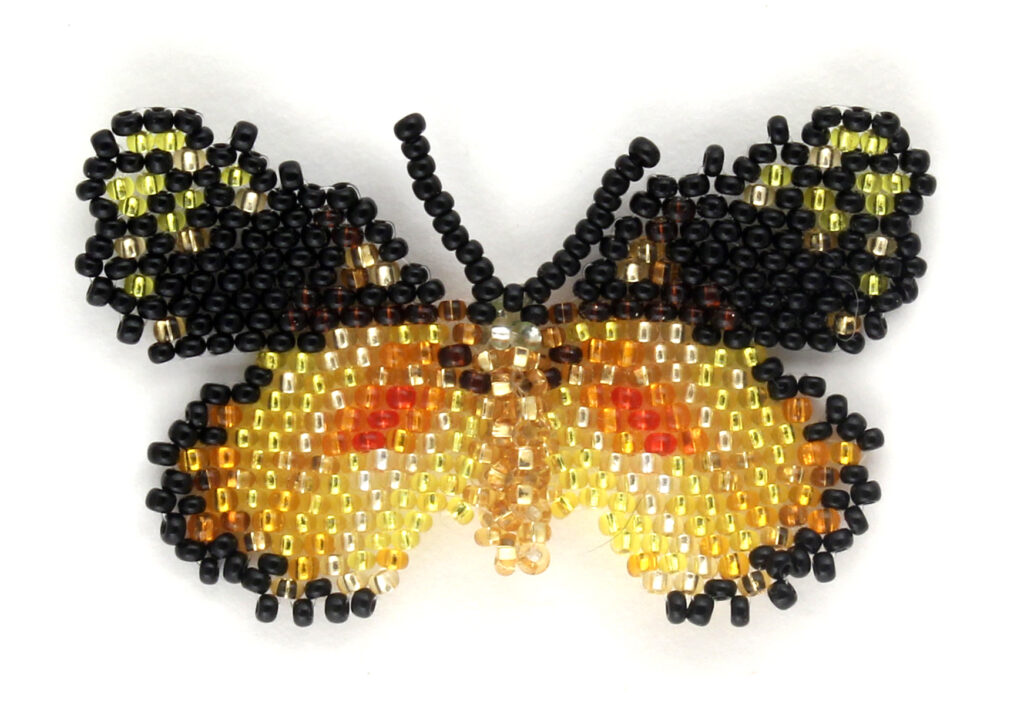
Delias lemoulti (Talbot, 1931) inhabits Timor, South-East Asia.
Its wingspan is 4 cm.
The bead butterfly is woven of 12 colours.
Delias lemoulti (Talbot, 1931) inhabits Timor, South-East Asia.
Its wingspan is 4 cm.
The bead butterfly is woven of 12 colours.
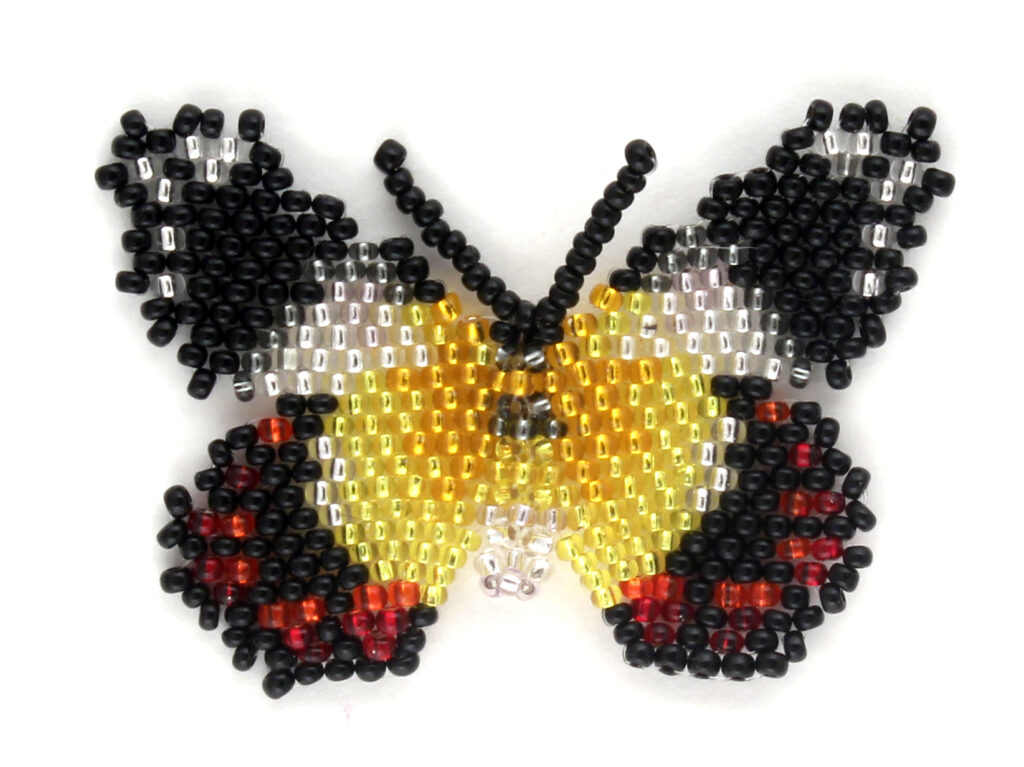
Delias timorensis (Boisduval, 1836) inhabits Australia and Asia.
The wingspan is about 60–70 mm for males and 64–71 mm for females.
The bead butterfly is woven of 10 colours.
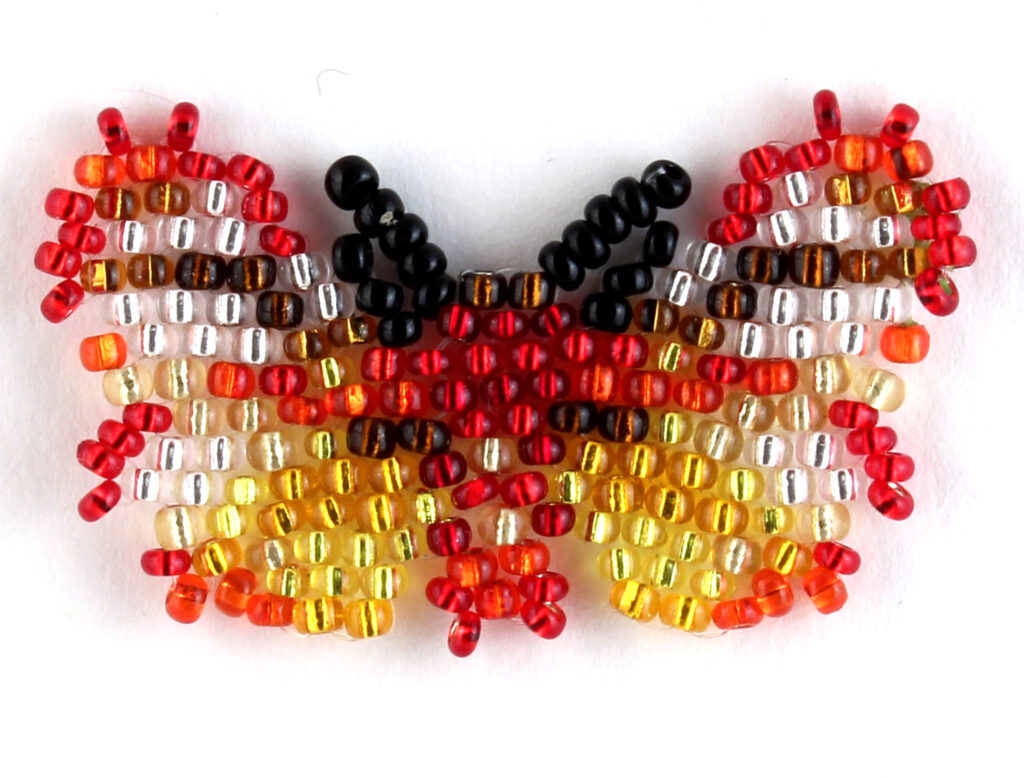
Epicallia villica (Linnaeus, 1758) , or the cream-spot tiger flies in western and southern Europe, Anatolia, western and northern Iran, West Siberia, Southwest Asia and North Africa.
Its wingspan is about 45-60 mm.
The bead moth is woven of 10 colours.
The bead pattern is available at https://bead-patterns.com/beadpattern/cream-spot-tiger-moth-epicallia-villica-mini
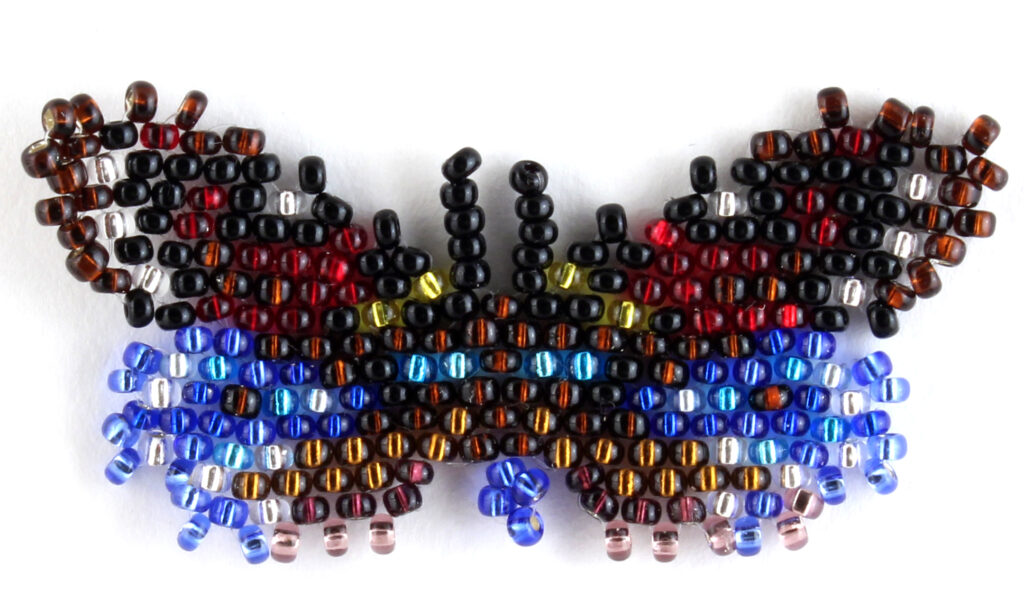
Erasmia sanguiflua (Drury, 1773), or the Indian Blue Moth is found in Burma and Indonesia.
Its wingspan is 75–85 mm.
The bead moth is woven of 14 colours.
The bead pattern is available at https://bead-patterns.com/beadpattern/moth-erasmia-sanguiflua-mini
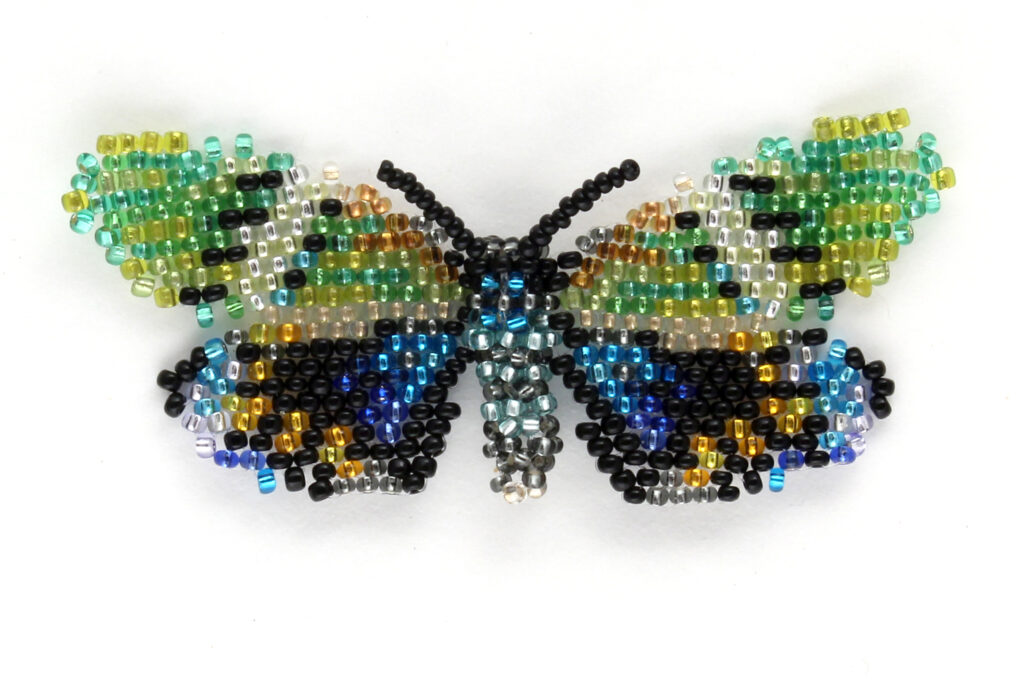
Eterusia repleta (Walker, 1864) is an Asian moth found in Thailand and India.
Its wingspan is 78 mm.
The bead moth is woven of 23 colours.
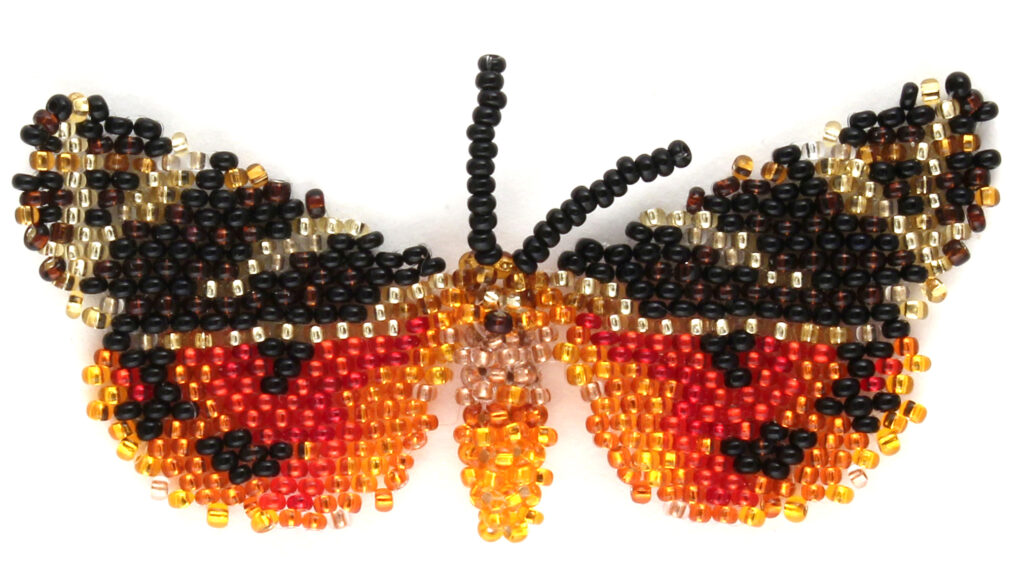
Euplagia quadripunctaria (Poda, 1761), or the Jersey tiger, is a day-flying moth. Its wingspan is 52–65 mm. This moth flies in Europe from Estonia and Latvia in the north to the Mediterranean coast and islands in the south. It is also found in West Russia, South Urals, Asia Minor, Rhodes and nearby islands, the Near East, Caucasus, South Turkmenistan, and Iran. It is also frequent seen in the Channel Islands and was rarely met in the British Isles in Victorian times.
The bead moth is woven of 12 colours.
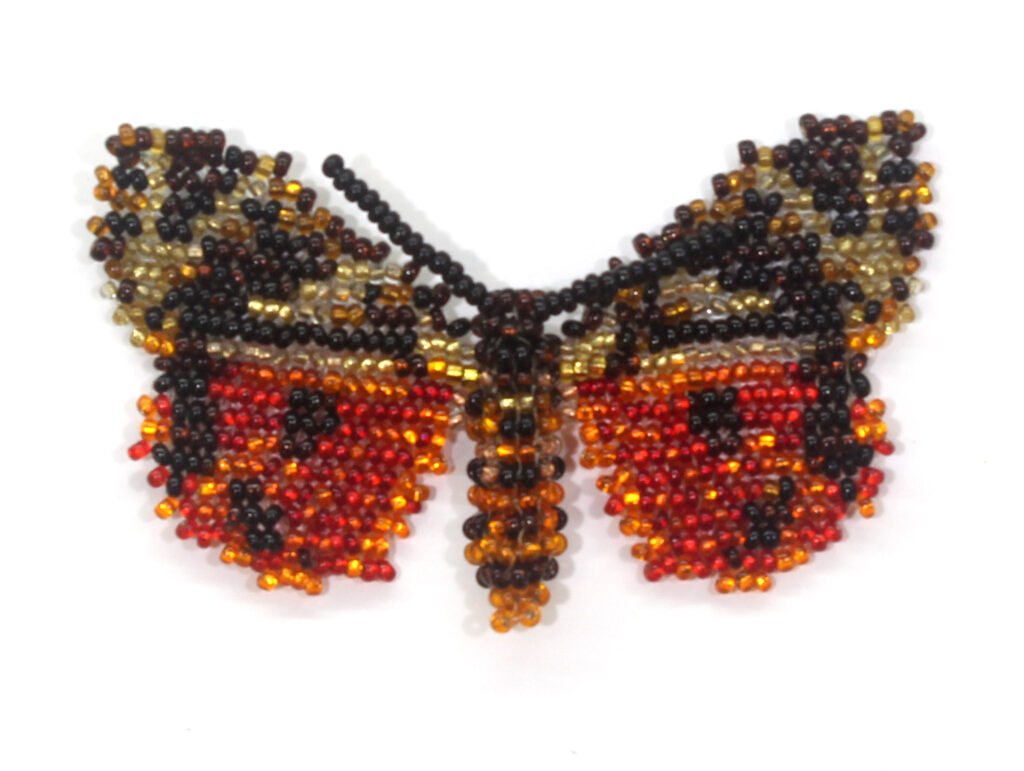
Euplagia quadripunctaria (Poda, 1761), or the Jersey tiger, is a day-flying moth. Its wingspan is 52–65 mm. This moth flies in Europe from Estonia and Latvia in the north to the Mediterranean coast and islands in the south. It is also found in West Russia, South Urals, Asia Minor, Rhodes and nearby islands, the Near East, Caucasus, South Turkmenistan, and Iran. It is also frequent seen in the Channel Islands and was rarely met in the British Isles in Victorian times.
The bead moth is loomed of 12 colours.
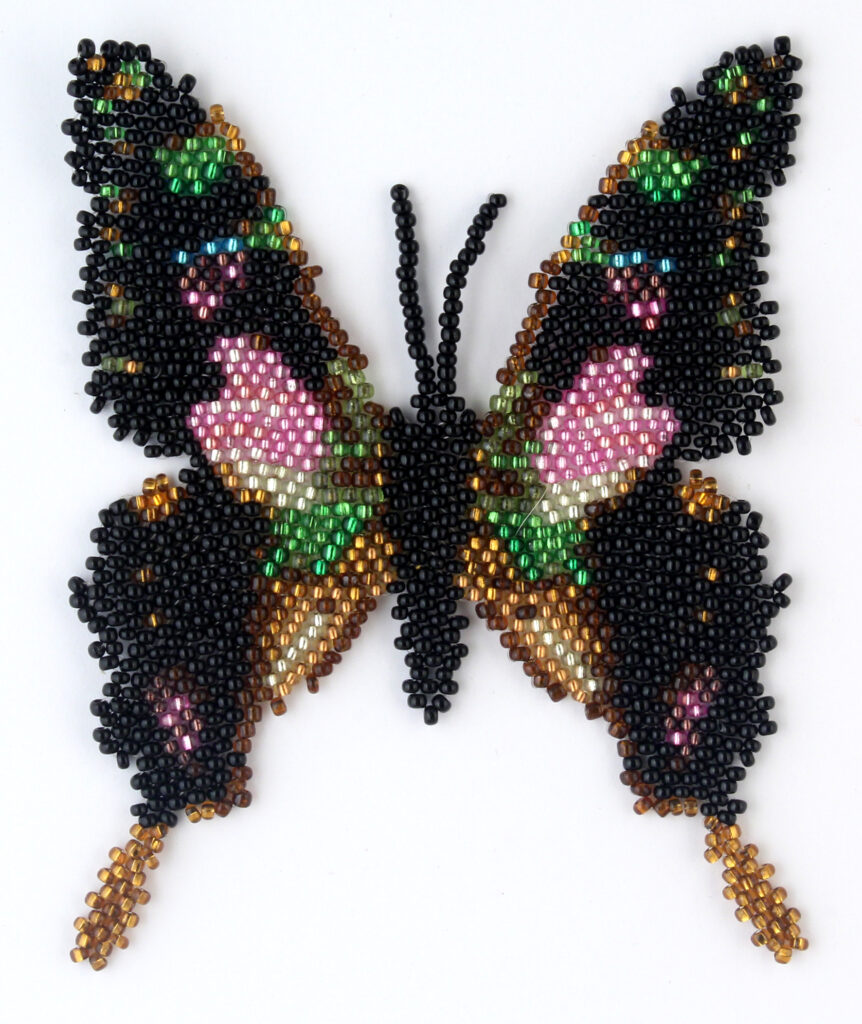
Graphium weiskei (Ribbe, 1900) or Purple Spotted Swallowtail inhabits only mountain regions of Papua New Guinea. It lives at the height 1200-3000 meters above sea level and spends most of its time high in the forest canopy.
The wingspan is 5-6 cm.
This bead butterfly is woven of 16 colours.
The bead pattern is available at https://bead-patterns.com/beadpattern/butterfly-graphium-weiskei
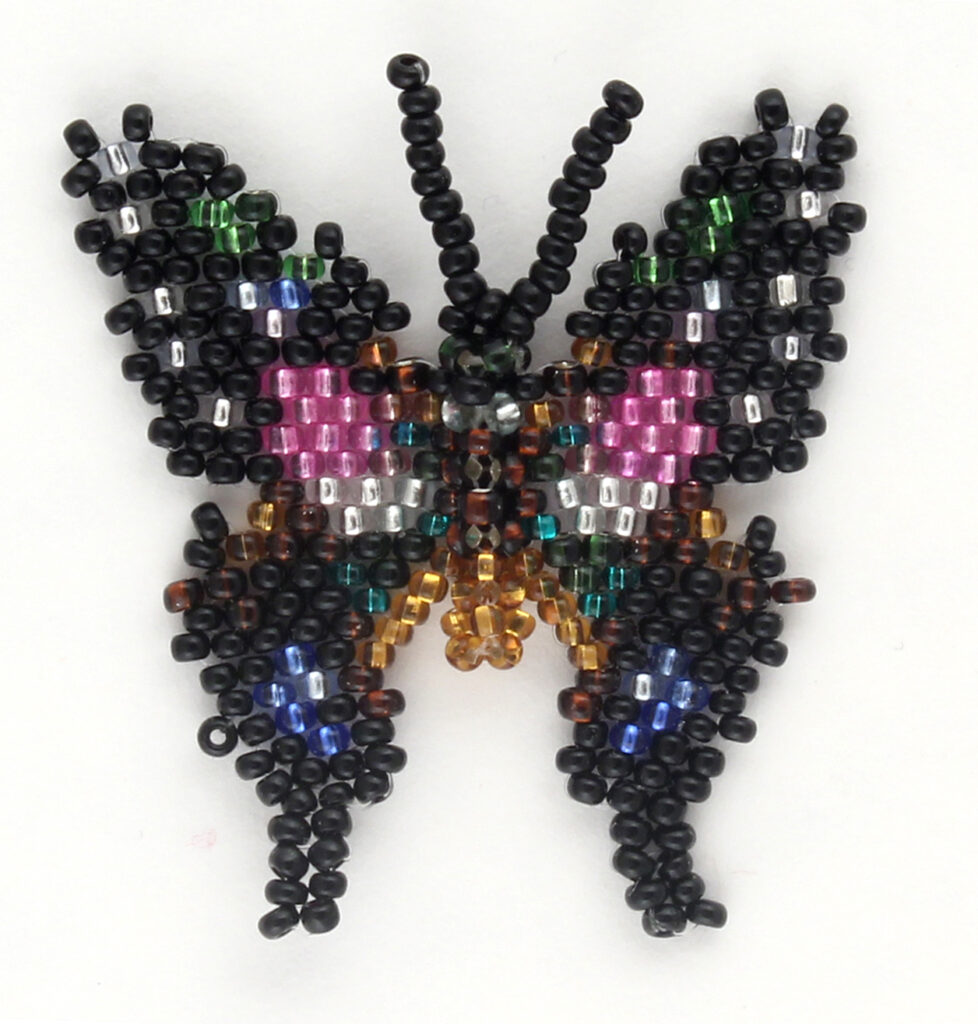
Graphium weiskei (Ribbe, 1900) or Purple Spotted Swallowtail inhabits only mountain regions of Papua New Guinea. It lives at the height 1200-3000 meters above sea level and spends most of its time high in the forest canopy. The wingspan is 50-60 mm.
This bead butterfly is woven of 16 colours.
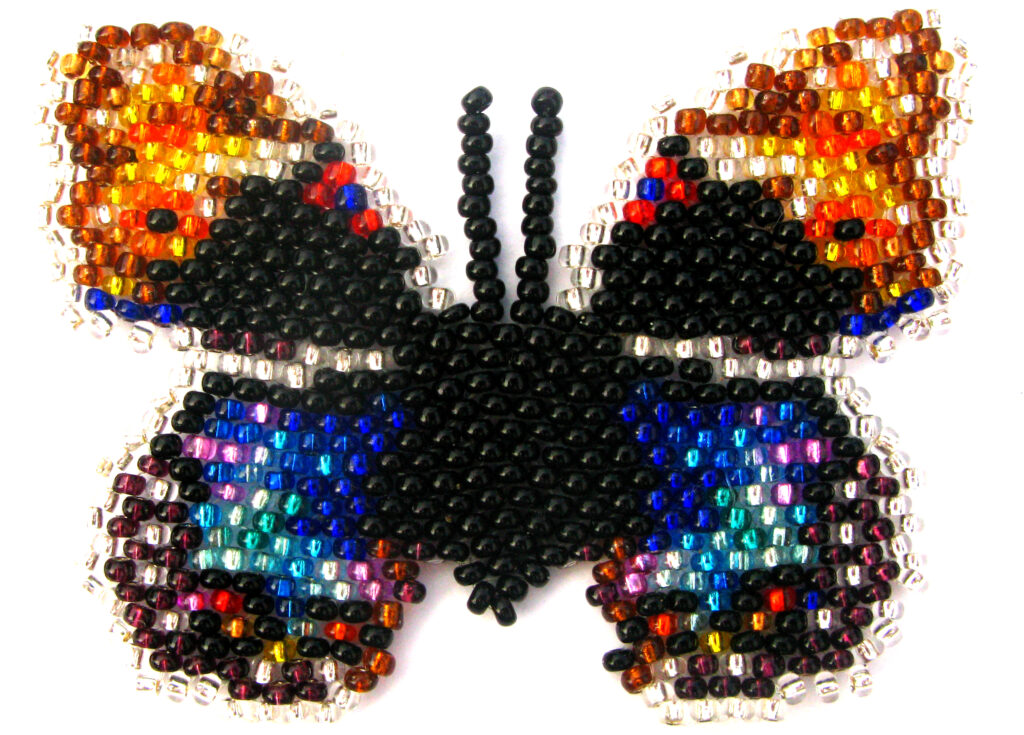
Junonia orithya (Linnaeus, 1758) is a butterfly which flies in Africa, southern and south-eastern Asia, and in Australia.
In India it is known as the Blue Pansy, in southern Africa its common name is the Eyed Pansy.
In Australia this butterfly is called the Blue Argus.
The wingspan of the butterfly is about 4 cm.
This bead butterfly is woven of 16 colours.
The bead pattern is available at https://bead-patterns.com/beadpattern/butterfly-junonia-orithya
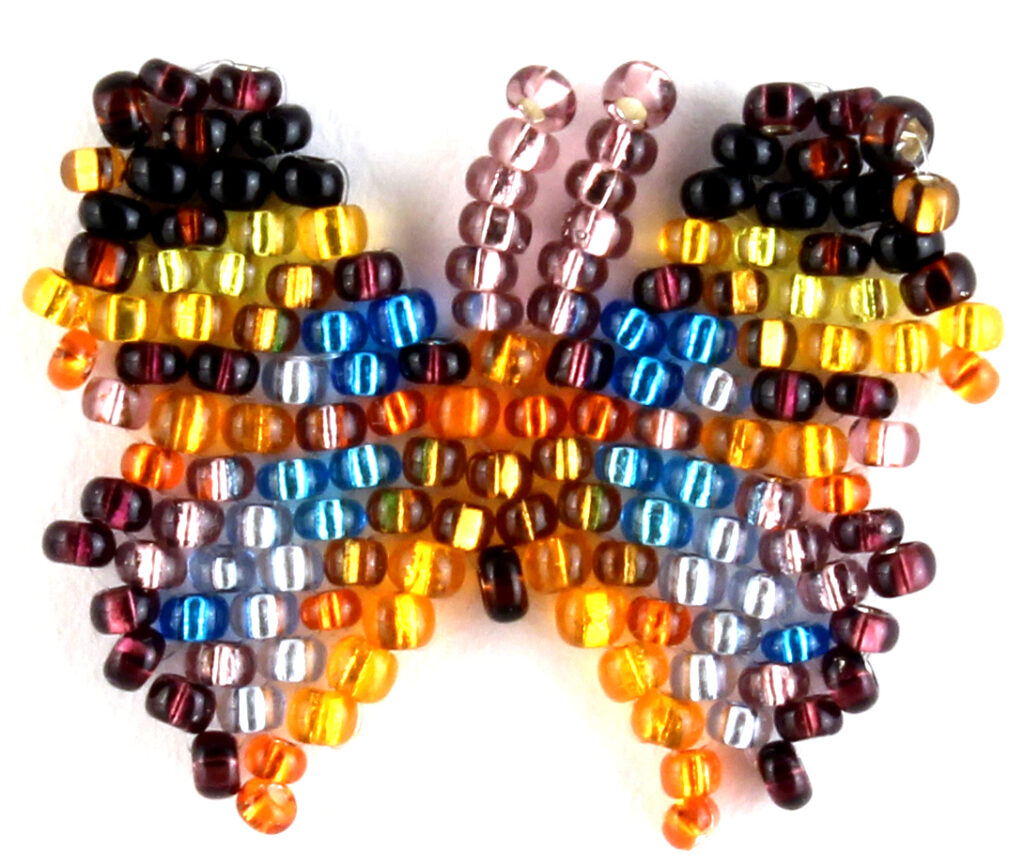
Kallima inachus (Doyère, 1840), or the Orange Oakleaf or Dead Leaf, is found in from India to Japan.
Its wingspan is 80-100 mm.
When the wings are closed, it looks like a dry leaf with its dark veins and spots.
The bead butterfly is woven of 12 colours.
The bead pattern is available at https://bead-patterns.com/beadpattern/dead-leaf-moth-kallima-inachus-mini
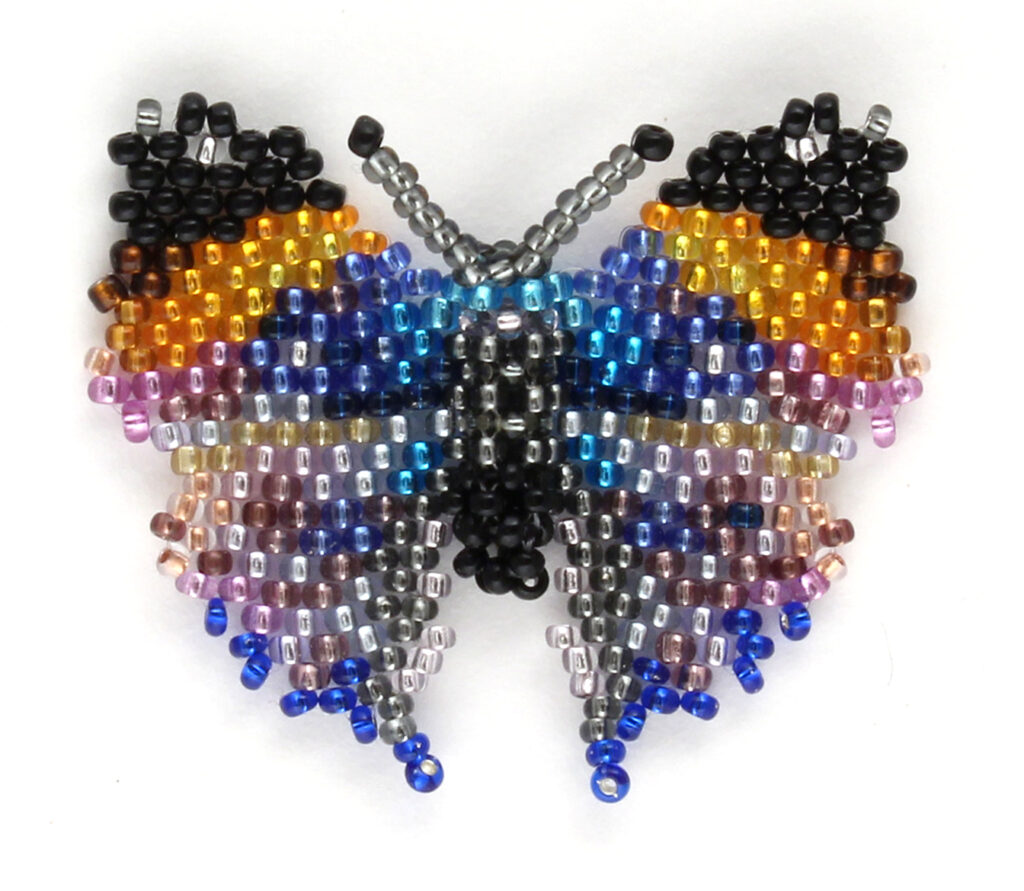
Kallima inachus (Doyère, 1840), or the Orange Oakleaf or Dead Leaf, is found in from India to Japan.Its wingspan is 80-100 mm.When the wings are closed, it looks like a dry leaf with its dark veins and spots.
The bead butterfly is woven of 24 colours. \
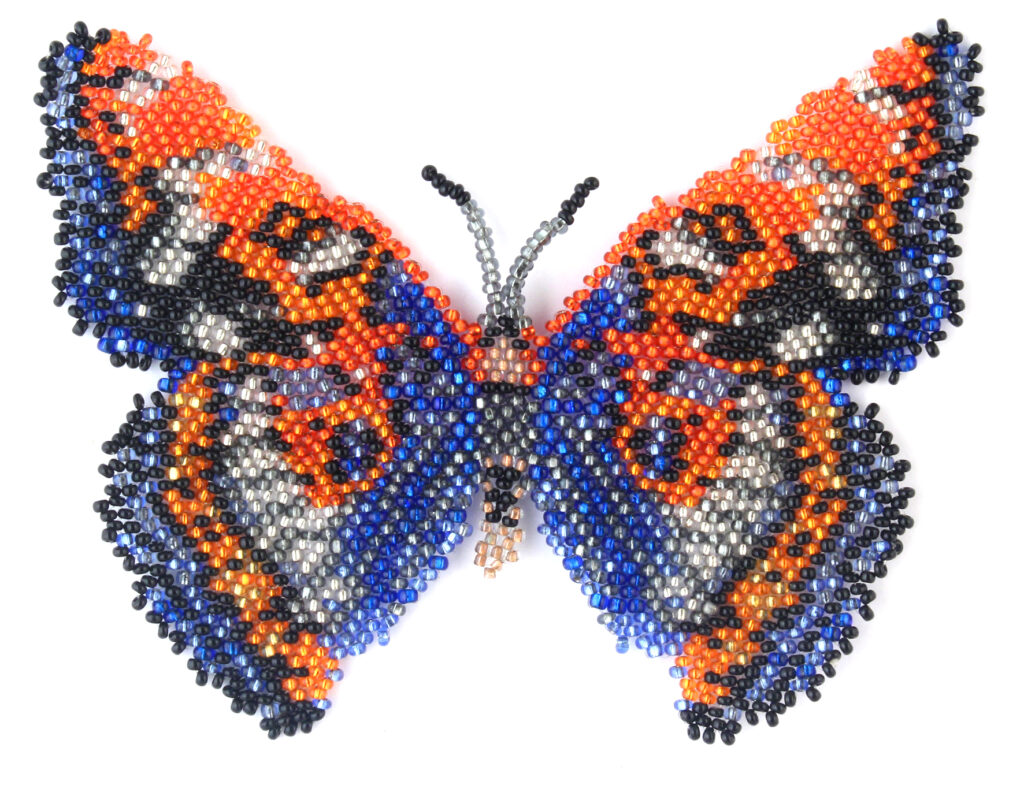
Limenitis populi (Linnaeus, 1758), or the poplar admiral is a European butterfly. Its wingspan is about 7 cm. These butterflies can be seen in June and July in damp forests.
The bead butterfly is woven of 11 colours.
The bead pattern is available at https://bead-patterns.com/beadpattern/butterfly-limentis-populi
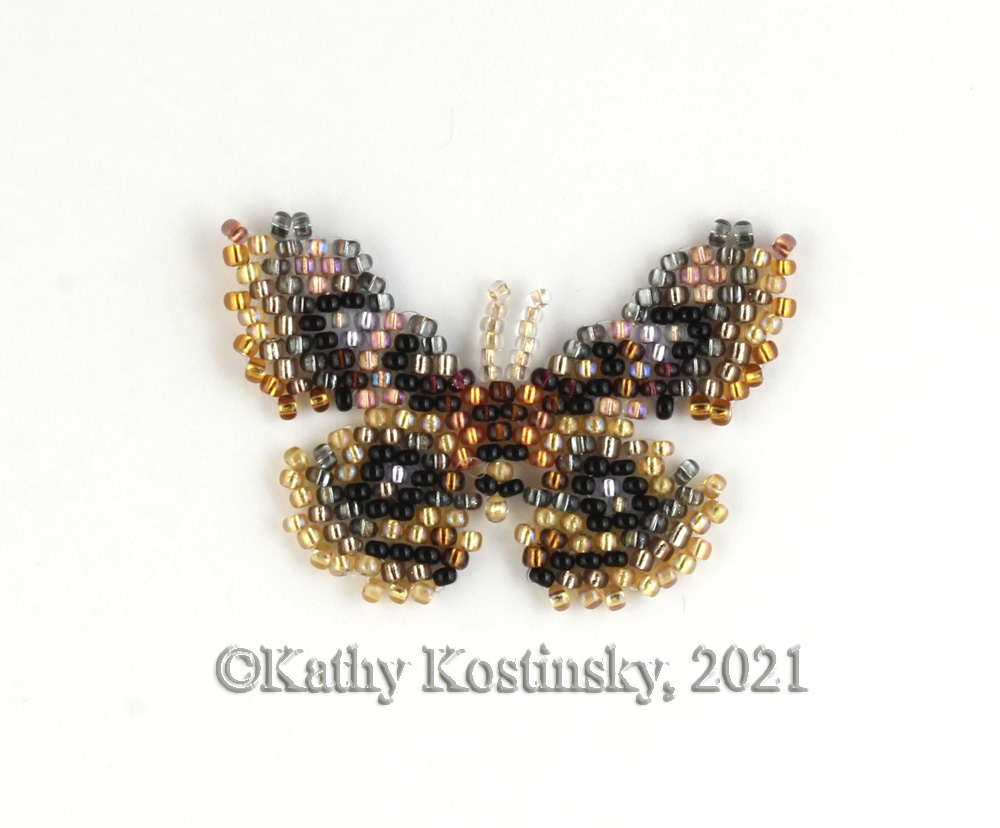
Neoris huttoni (Moore, 1862) moth was first described by British entomologist and illustrator Frederic Moore in 1862.
Neoris huttoni inhabits mountains of Central Asia, mostly at 1500-2000 meters over the sea level. Caterpillars prefer to feed on pistachios and wild almond. Imago (adults)
do not eat, so they live only 2-3 days.
Wingspan is 100-120 mm.
The bead butterfly is woven of 13 colours.
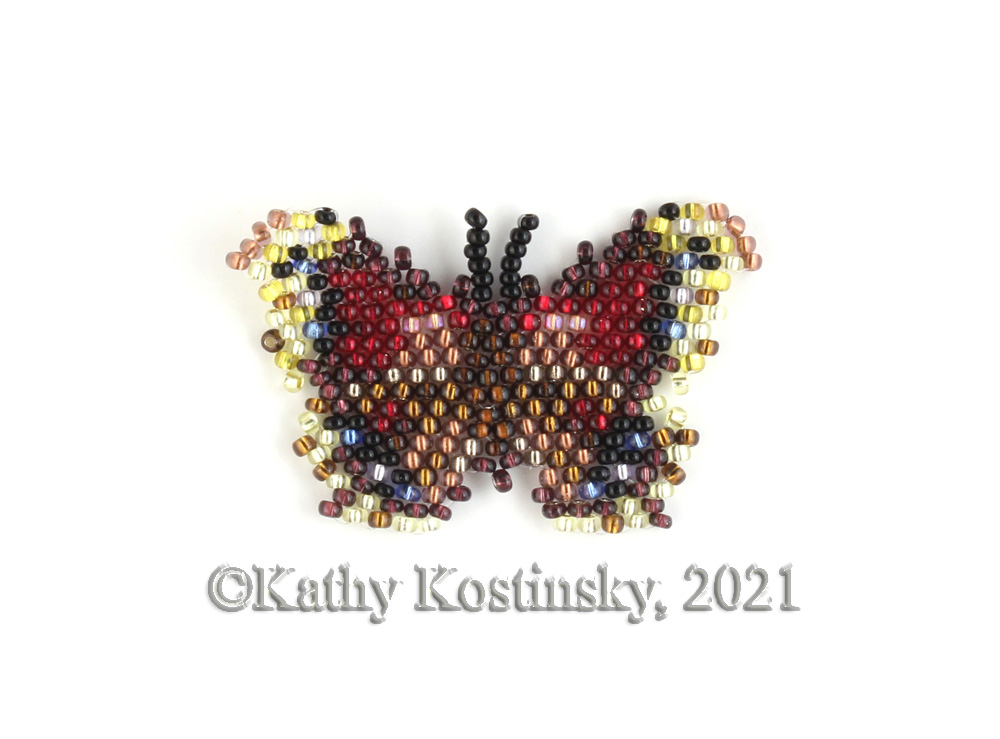
Nymphalis antiopa (Linnaeus, 1758), known as mourning cloak in North America and the Camberwell beauty in Britain, is a large butterfly inhabits Eurasia and North America. It is also the State Insect of Montana, adopted in 2001.
The butterfly’s wingspan is 7-9 cm.
The bead butterfly is woven of 12 colours.