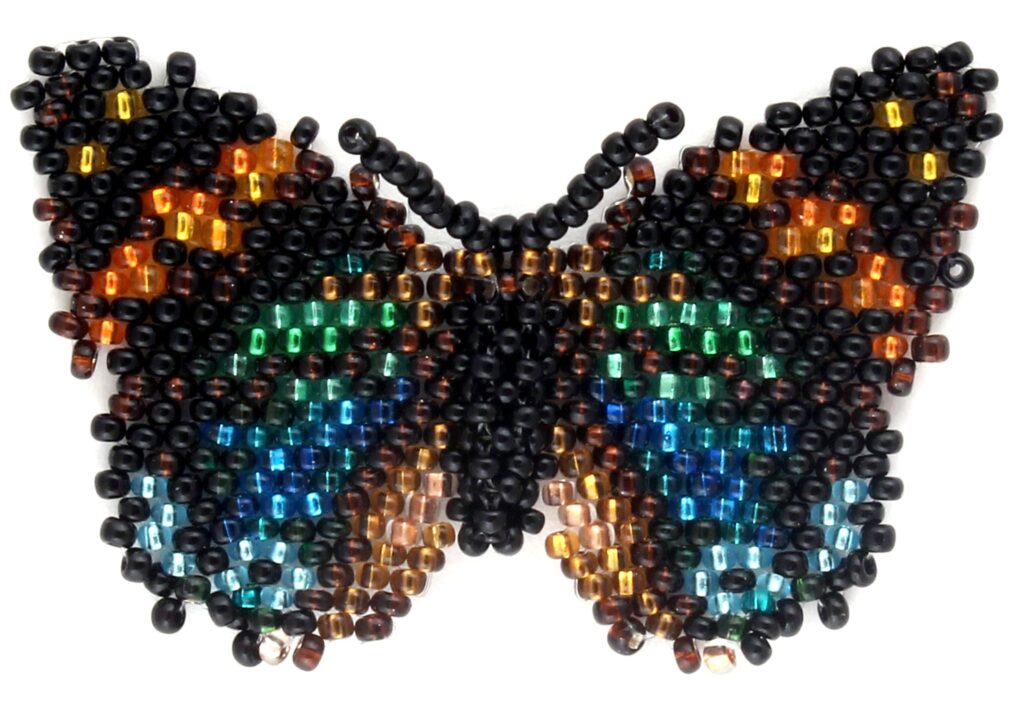
Apaturina erminea (Cramer, 1779), or Turquiose Emperor, inhabits tropical rainforests of Papua New Guinea, Indonesia, Solomon Islands and North Australia.
Its wingspan is 70 mm.
The bead butterfly is woven of 16 colours.
Apaturina erminea (Cramer, 1779), or Turquiose Emperor, inhabits tropical rainforests of Papua New Guinea, Indonesia, Solomon Islands and North Australia.
Its wingspan is 70 mm.
The bead butterfly is woven of 16 colours.
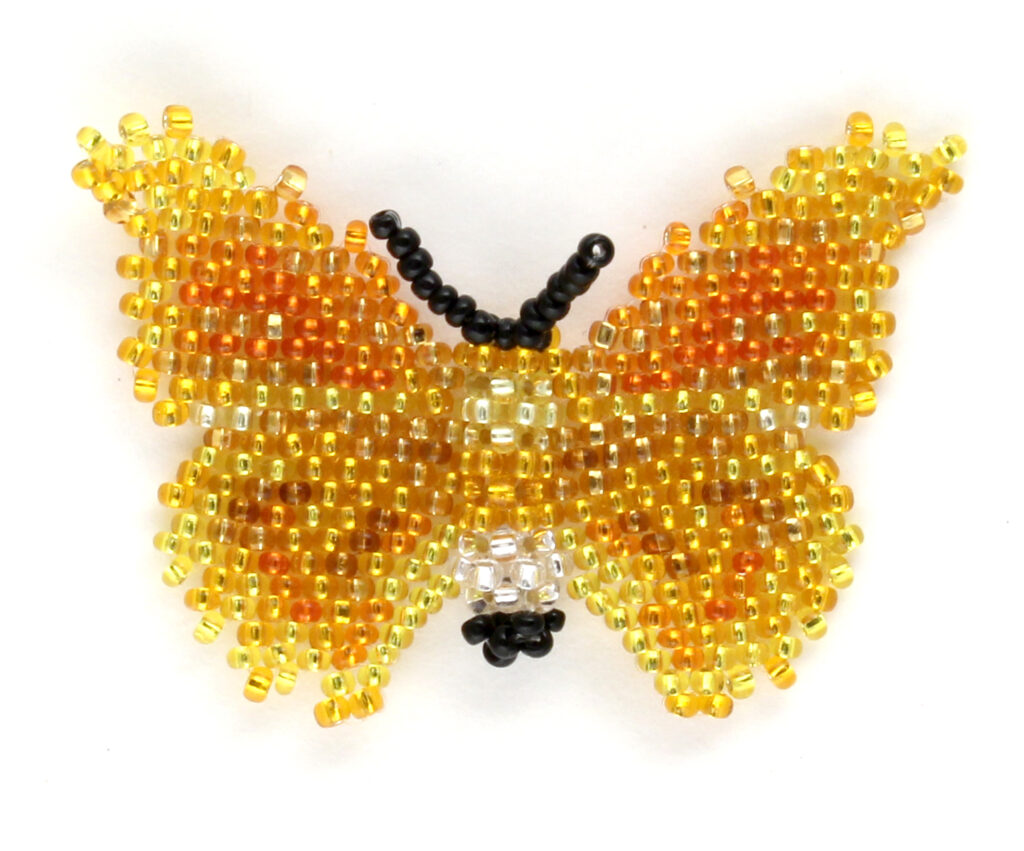
Appias nero (Wallace, 1867), or the Orange Albatross flies from northern India to the Sunda Islands, the Philippines, Sulawesi and eastwards.
Its wingspan is 70 mm.
The bead butterfly is woven of 9 colours.
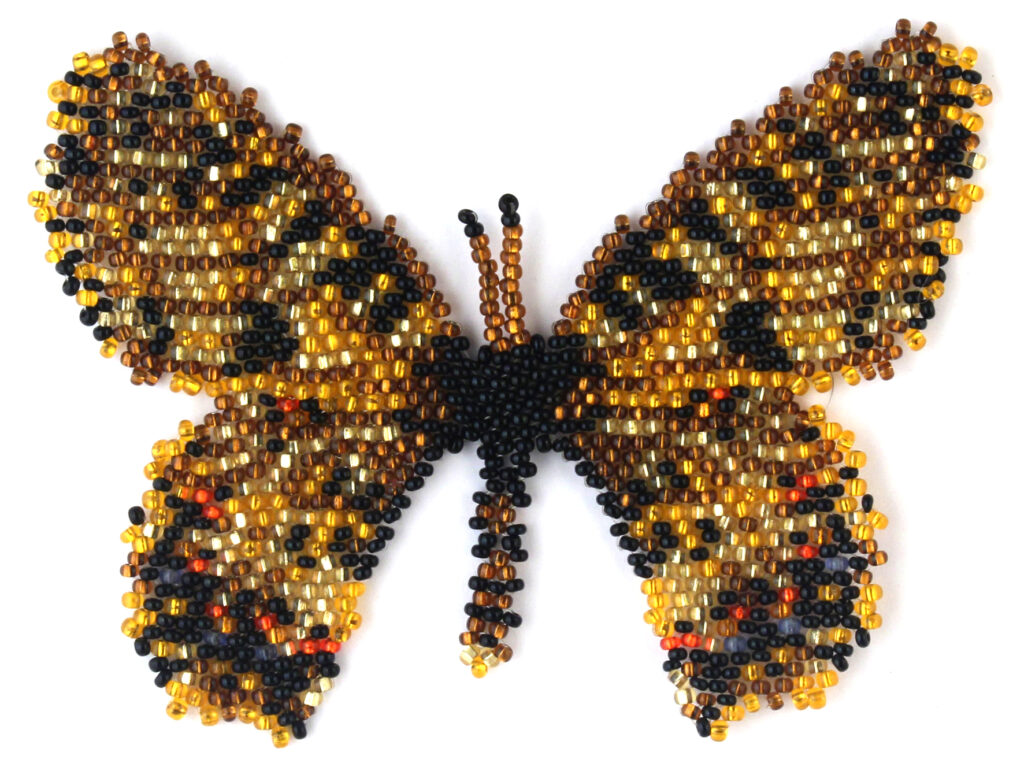
Archon apollinus (Herbst, 1789), or the False Appolo is a butterfly of Asia and Eastern Europe. The wingspan is about 5 cm.
This beaded butterfly is woven of 7 colours.
The bead pattern is available at https://bead-patterns.com/beadpattern/butterfly-archon-apollinus
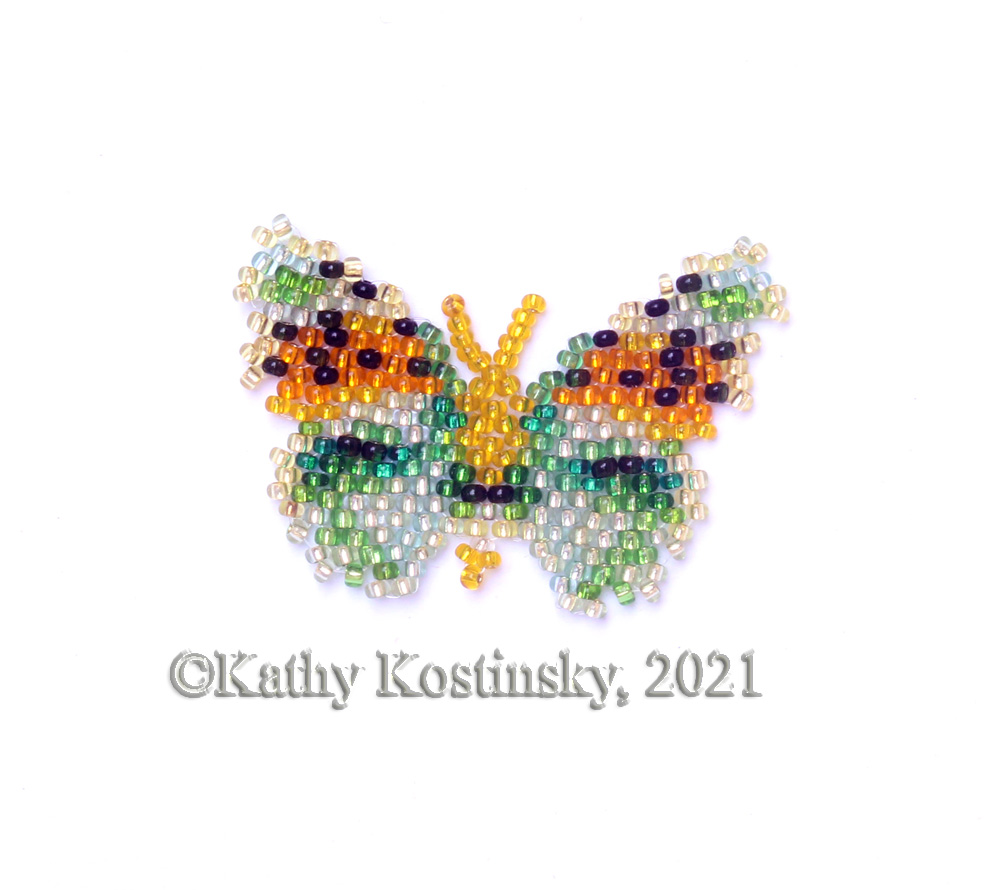
Argynnis pandora (Denis & Schiffermüller, 1775) , or the Cardinal was first decribed in 1775 by Johann Nepomuk Cosmas Michael Denis, (Austrian Catholic priest, best known a s a poet and lepidopterist) and Ignaz Schiffermüller, Austrian naturalist, mainly interested in Lepidoptera.
The butterfly inhabits southern Europe and northern Africa and the Middle East to northwestern India.
The wingspan is 64-80 mm.
The bead butterfly is woven of 15 colours.
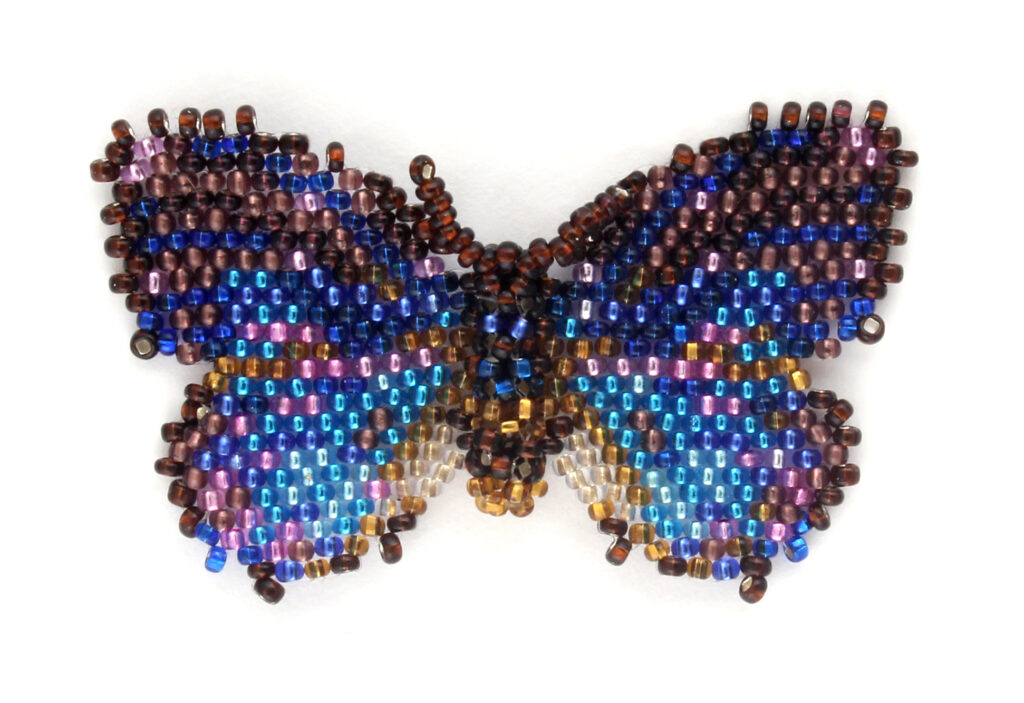
Arhopala micale (Blanchard, 1853), or the Shining Oakblue, inhabits Melanesia and New Guinea and the north coast of Australia.
The wingspan is about 40 mm.
The bead butterfly is woven of 13 colours.
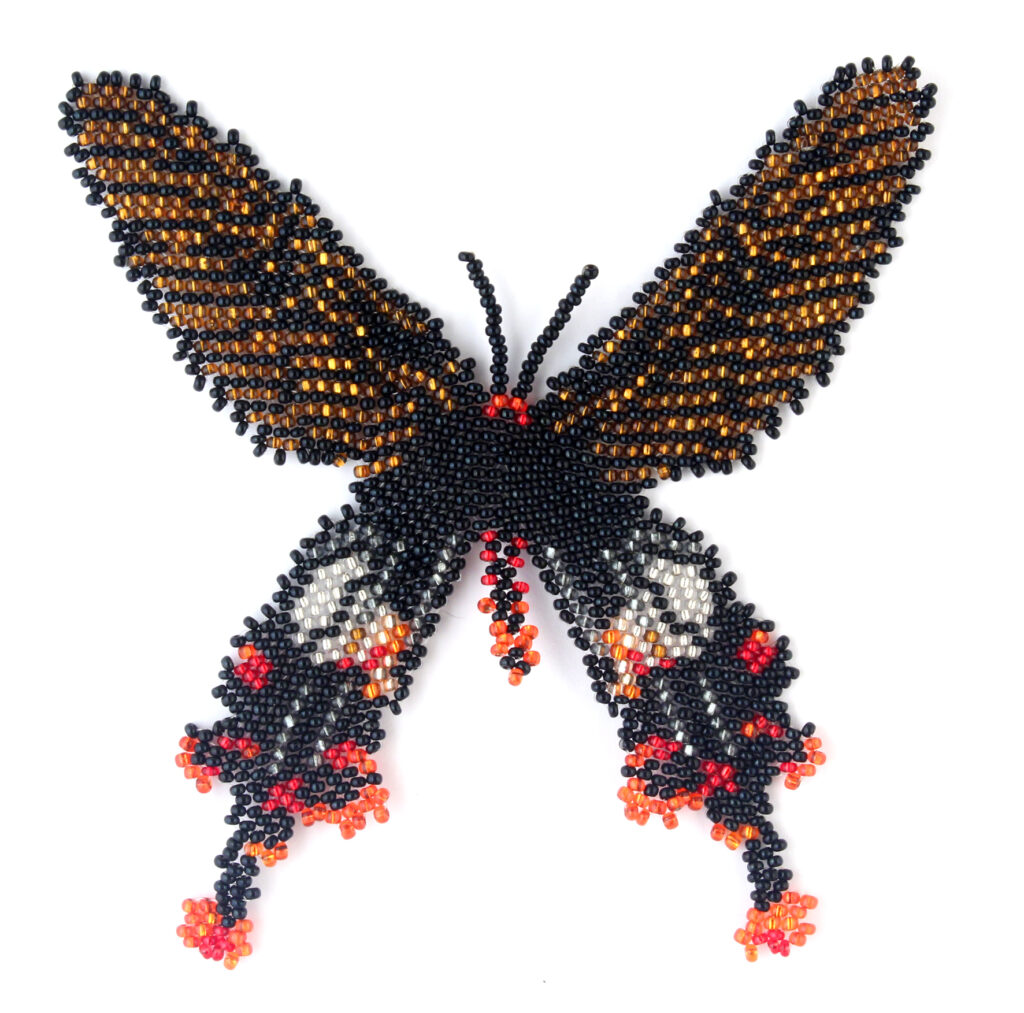
Byasa polla (De Nicéville, 1897), or De Nicéville’s windmill is an Indian butterfly. It is rare and protected by the law in India.
The span of the butterfly’s wings is about 11-13 cm.
This beaded butterfly is woven of 9 colours.
The bead pattern is available at https://bead-patterns.com/beadpattern/butterfly-atrophaneura-polla
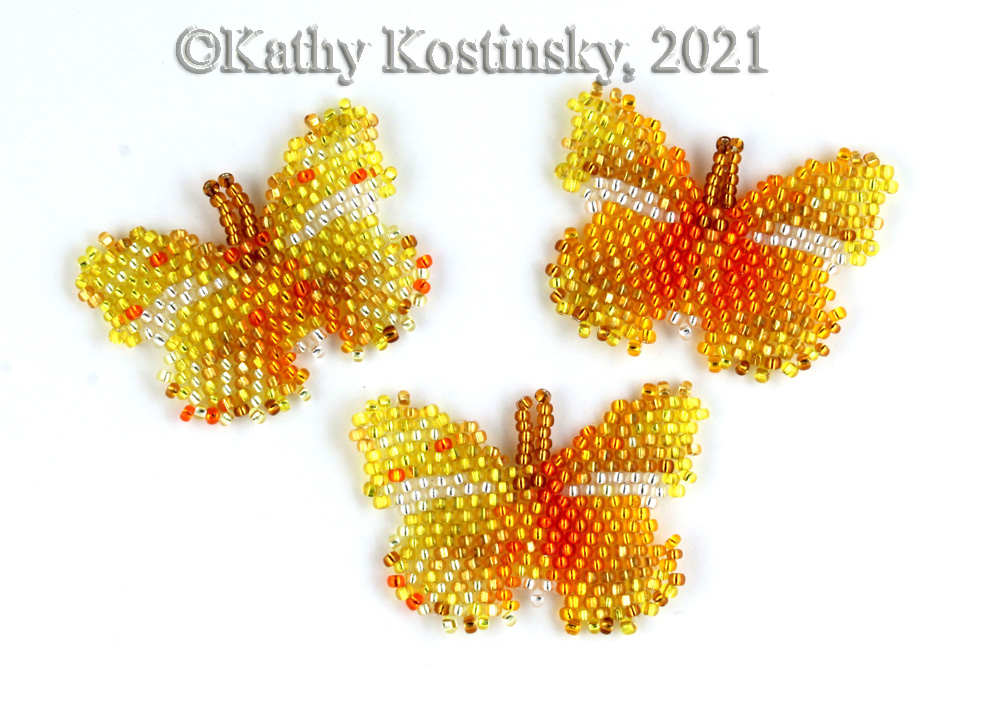
Catopsilia scylla (Linnaeus, 1763), or the Orange Migrant or Orange Emigrant, first described by the great Swedish naturalist Carl Linnaeus in 1763.
The butterfly inhabits South East Asia and Australia.
The wingspan is 60-65 mm.
The bead butterfly is woven of 9 colours.
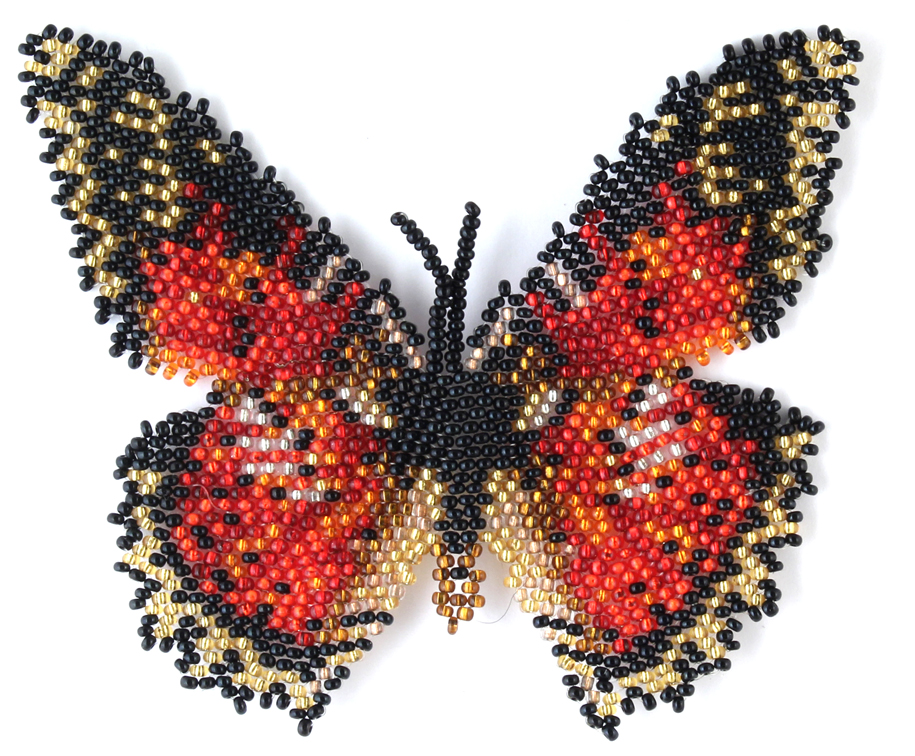
Cethosia biblis (Drury, 1773), the Lacewing biblis, or the Red (Malay) Lacewing inhabits South Asia.
The caterpillars of this butterfly live on passionflowers and get the poison of the plant, thus, the butterflies are also poisonous: red stipes on the wings warn birds and other animals that the butterfly is inedible. Black and white ornament on the wings looks so like letters that the species was named “biblis” which means “book”.
The span of its wings is 8 cm.
This beaded butterfly is woven of 9 colours.
The bead pattern is available at https://bead-patterns.com/beadpattern/butterfly-cethosia-biblis
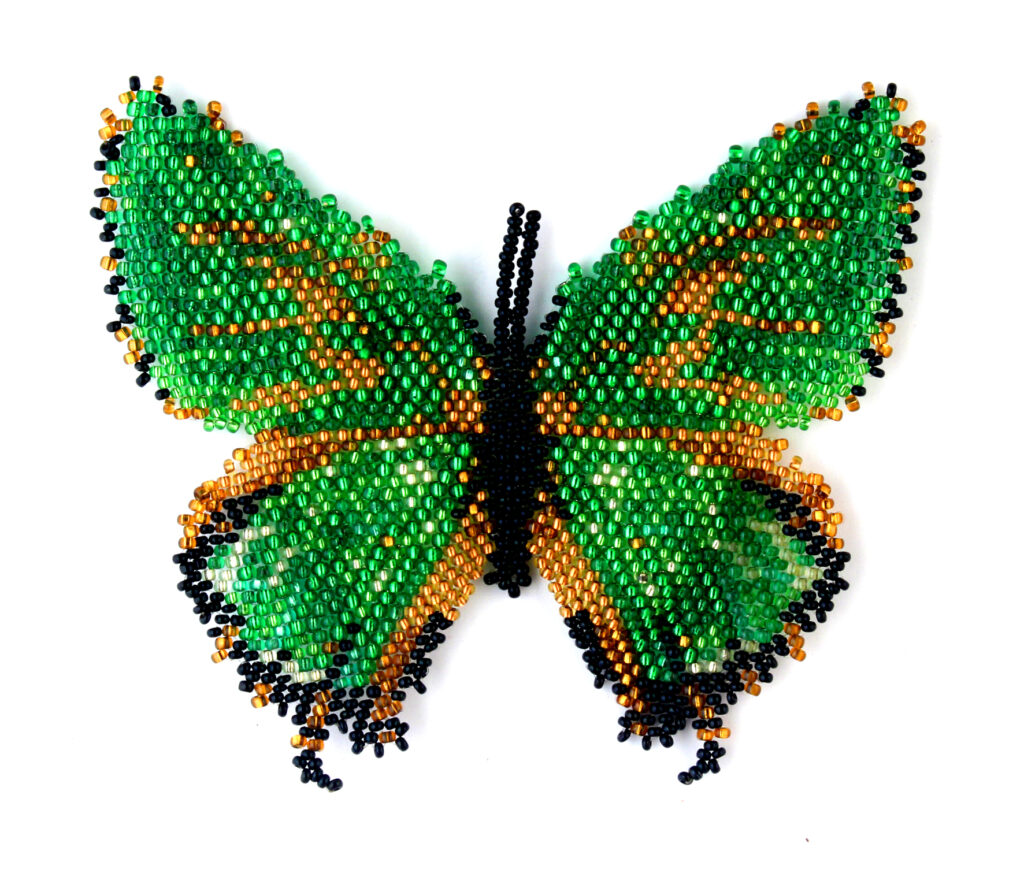
Chrysozephyrus brillantinus (Staudinger, 1887) is a small, of about 2 cm in width, butterfly that lives in the Far East of Russia. Its wings shine with various green shades, from dark forest green to very light turquoise.
This bead butterfly is woven of 8 colours.
The bead pattern is available at https://bead-patterns.com/beadpattern/butterfly-chrysozephyrus-brillantinus
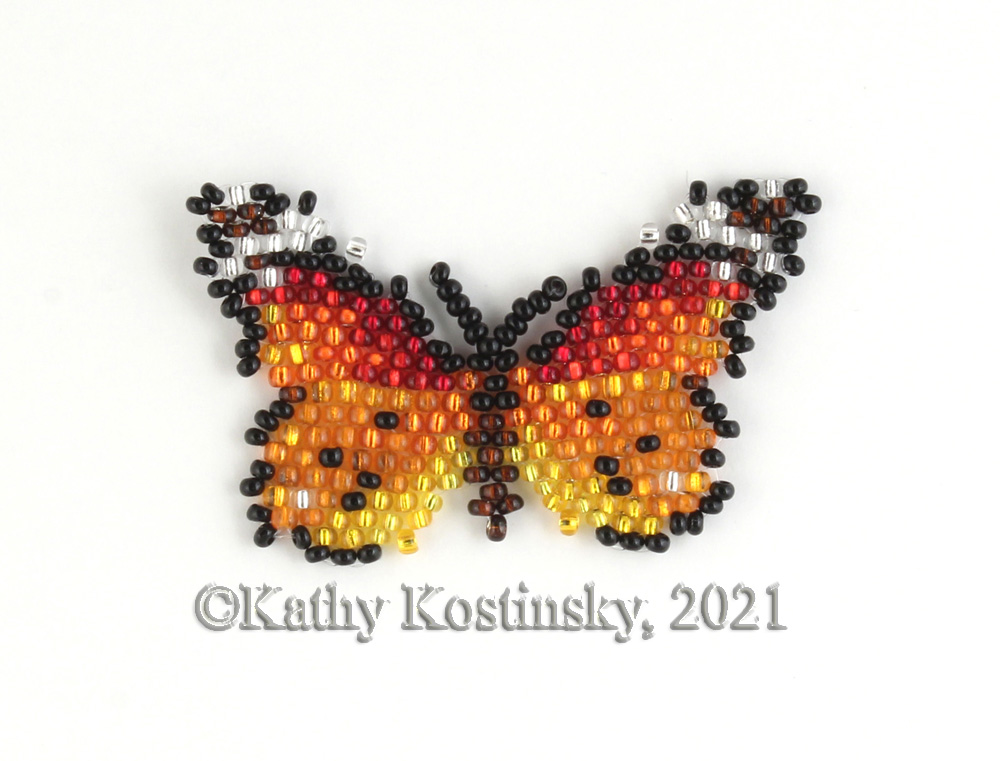
Danaus chrysippus (Linnaeus, 1758) is also known as the Plain tiger, African queen, or African Monarch, is widespread in Asia, Australia and Africa. They feed on toxic milkweed and so are inedible for most predators. Danaus chrisippus is mostly found in dry, wide-open areas. Its wingspan is 70-8- mm.
This butterfly is possibly one of the first lepidopteras depicted in art. You can see it in 3500-year-old Egyptian fresco in Luxor.
The bead butterfly is woven of 11 colours.
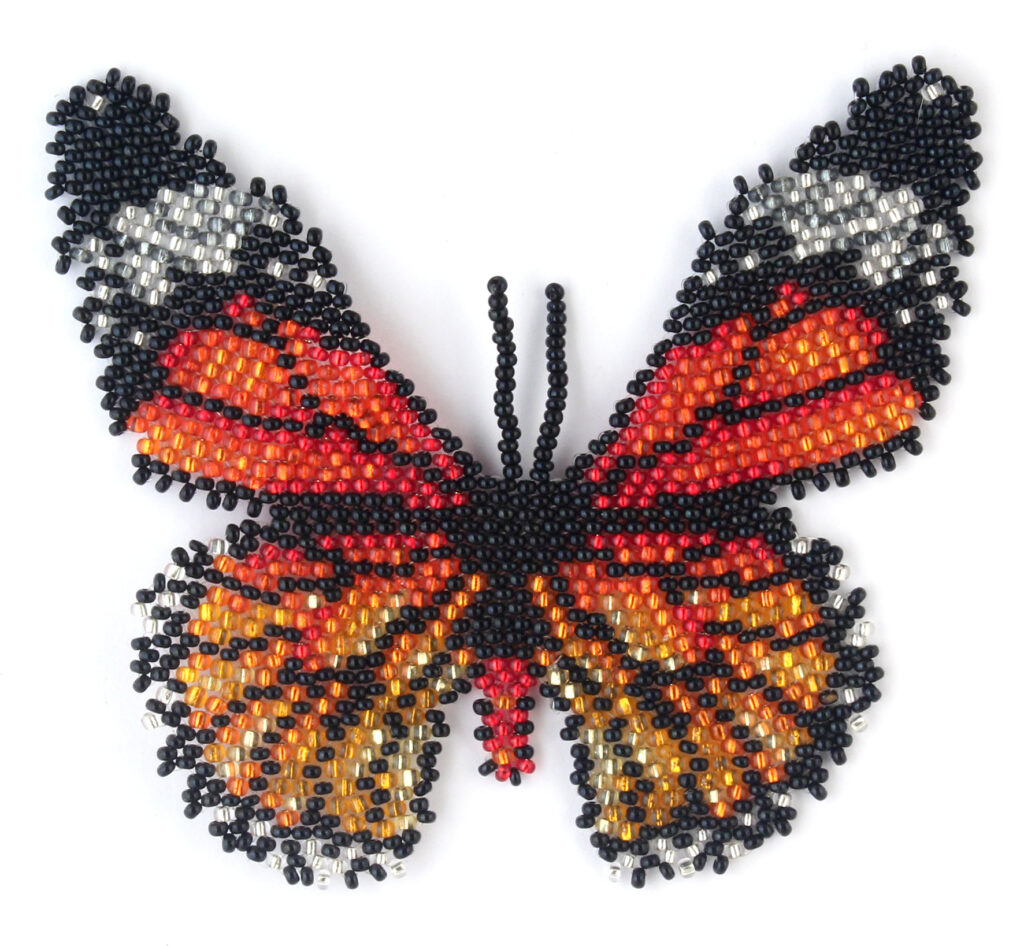
Danaus genutia (Cramer, 1779), or the Common (or Striped) Tiger is a butterfly of South East Asia and Australia. It inhabits shrub jungles, dry and moist deciduous forests, preferring areas of moderate to heavy rainfall.
The span of its wings is 7-9 cm.
This bead butterfly is woven of 8 colours.
the bead pattern is available at https://bead-patterns.com/beadpattern/butterfly-danaus-genutia
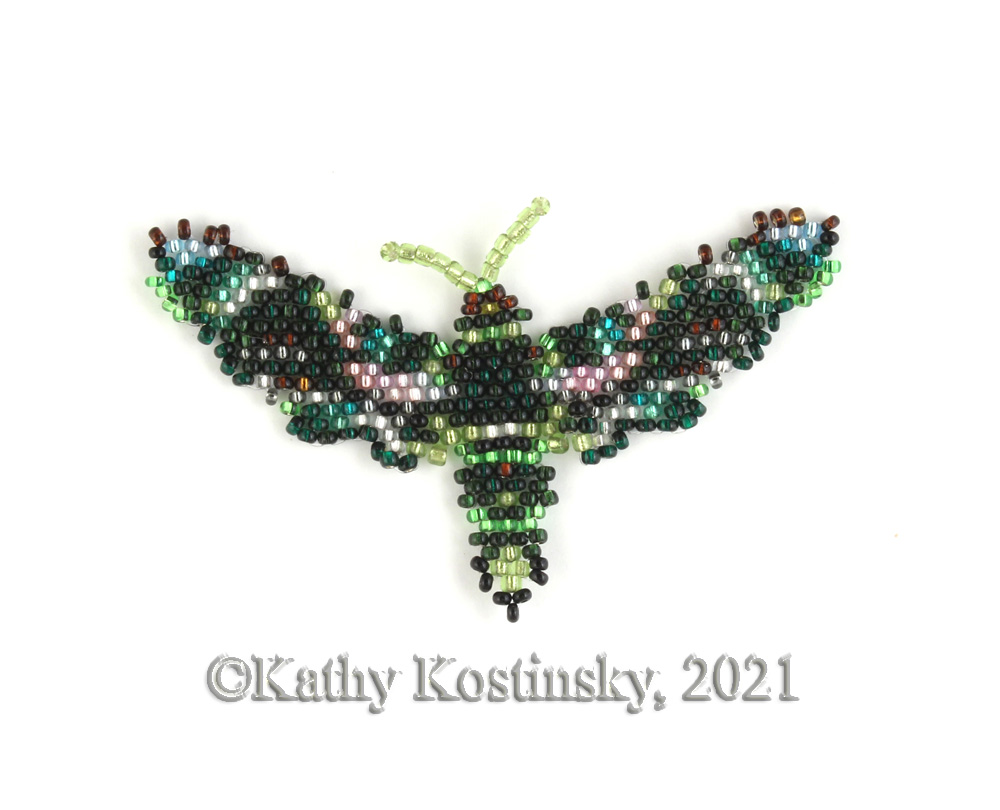
Daphnis nerii (Linnaeus, 1758), or the Oleander Hawk-moth or Army Green moth was described by Carl Linnaeus in 1758.
The moth inhabits wide areas of Africa, Asia and certain Hawaiian Islands. The species migrates to eastern and sothern Europe in summer.
The winspan is 90-100 mm.
The bead butterfly is woven of 16 colours.
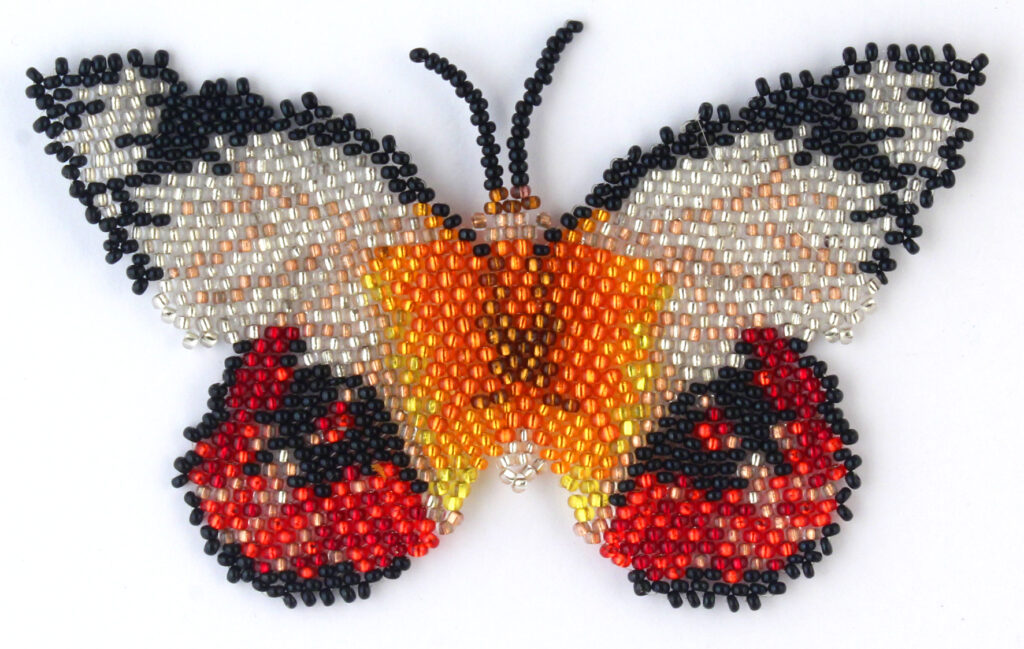
Delias argenthona (Fabricius, 1793), the scarlet Jezebel or the northern Jezebel is an Australian butterfly.
Its wingspan is about 50 mm.
This bead butterfly is woven of 10 colours.
The bead pattern is available at https://bead-patterns.com/beadpattern/butterfly-delias-argenthona
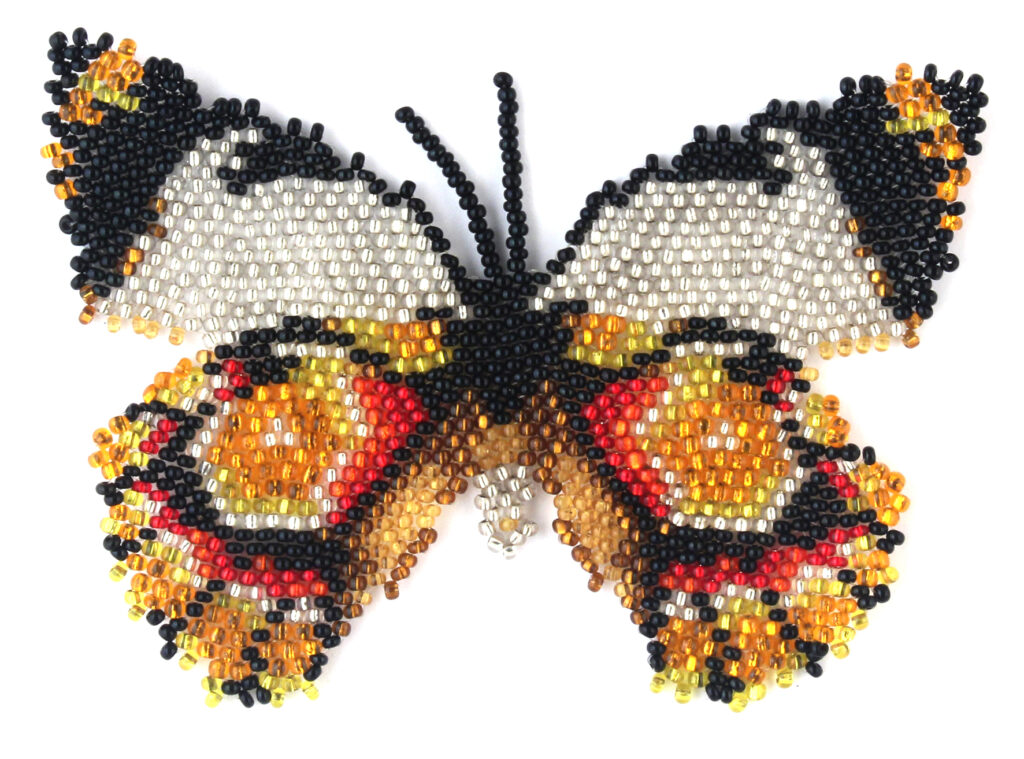
Delias callista (Jordan, 1912) is a butterfly of Papua New Guinea.
Its wingspan is about 5 cm.
This bead butterfly is woven of 11 colours.
The bead pattern is available at https://bead-patterns.com/beadpattern/butterfly-delias-callista
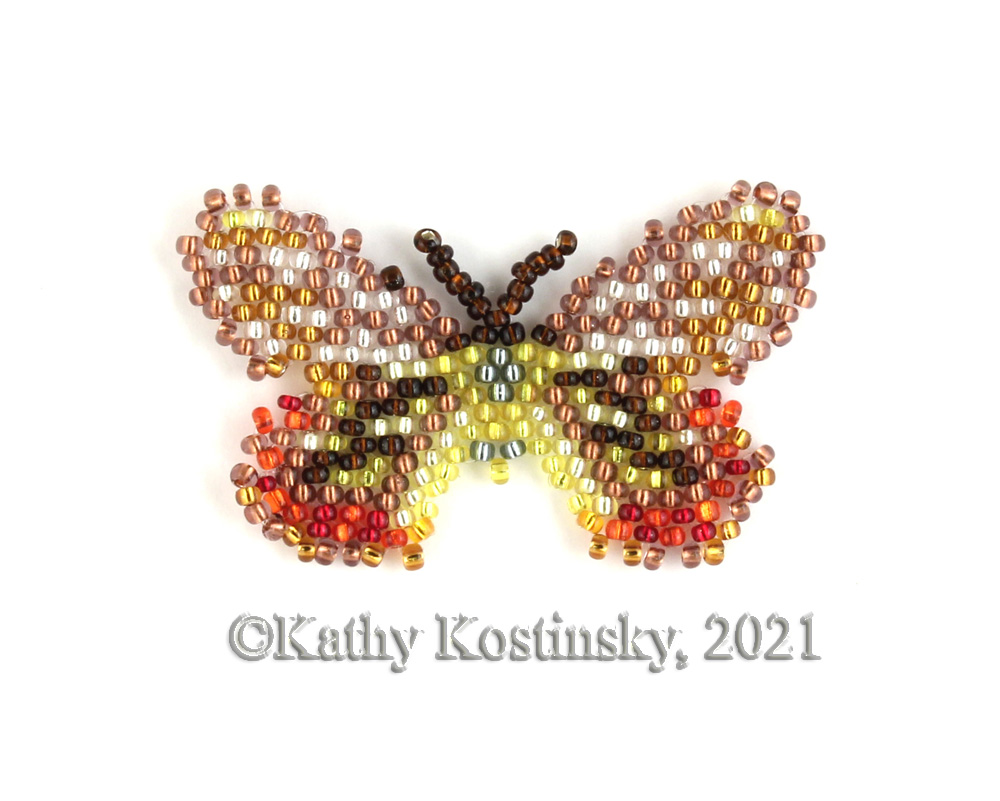
Delias eucharis (Drury, 1773), or the common Jezebel, is found in many areas of south and southeast Asia, especially in the non-arid regions of India, Sri Lanka, Indonesia, Myanmar and Thailand.
This pierid butterfly was first described by British entomologist Dru Drury in 1773.
Bright wings colouration shows te butterfly is unpalatable due to toxins got by the caterpillar from the host plants, mistletoes.
The wingspan is 65-85 mm.
The bead butterfly is woven of 12 colours.