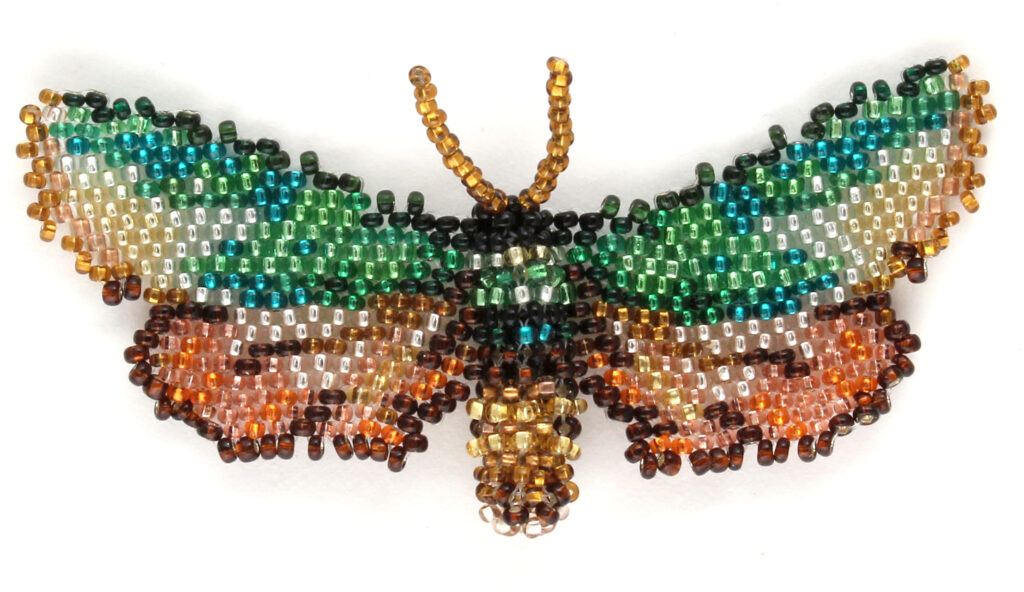
Adscita statices (Linnaeus, 1758), or the Green Forester, is a European day-flying moth
Its wingspan is 25–28 mm.
The bead moth is woven of 19 colours.
Butterflires/moths 25 beads in height with 3d body
Adscita statices (Linnaeus, 1758), or the Green Forester, is a European day-flying moth
Its wingspan is 25–28 mm.
The bead moth is woven of 19 colours.
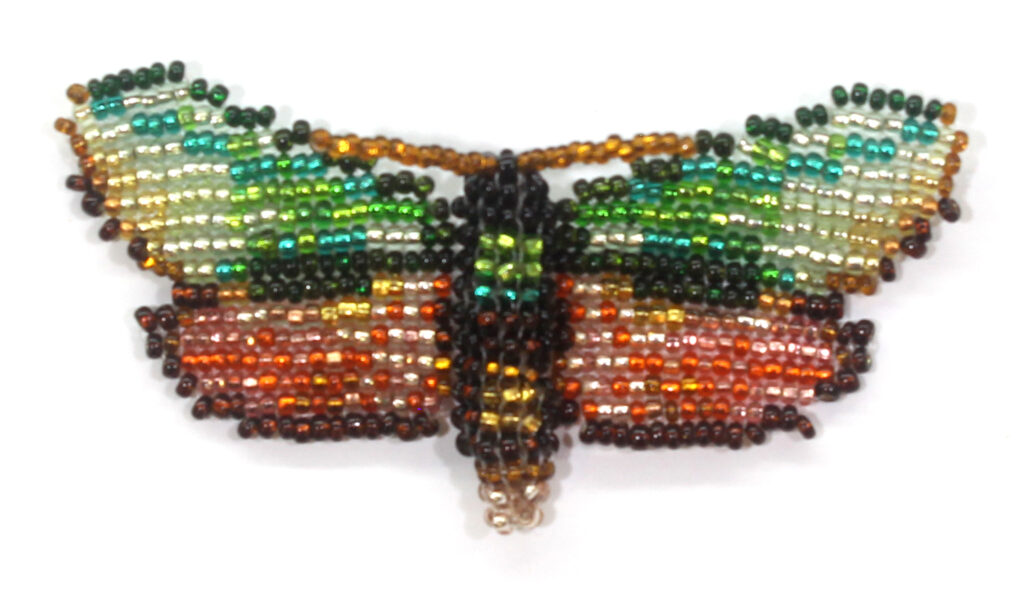
Adscita statices (Linnaeus, 1758), or the Green Forester, is a European day-flying mothIts wingspan is 25–28 mm.
The bead moth is woven of 19 colours.
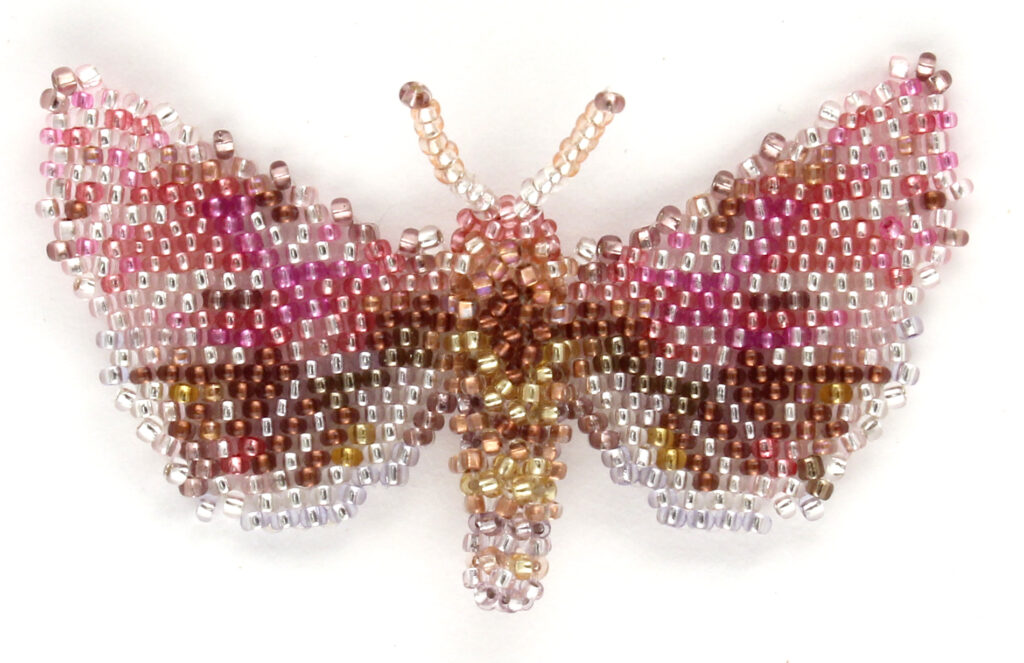
Aedophron rhodites (Eversmann, 1851) inhabits Eastern Mediterranean and through Ukrainian steppes to central Asia.
The wingspan of the real moth is 25 mm.
This beaded moth is woven of 17 colours.
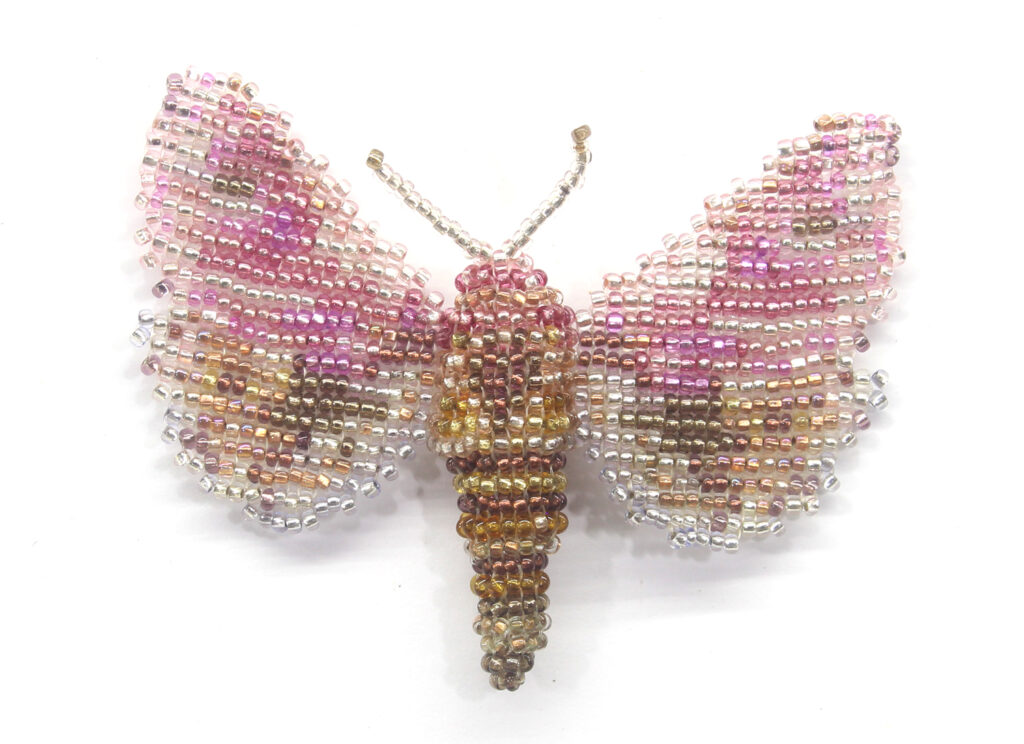
Aedophron rhodites (Eversmann, 1851) inhabits Eastern Mediterranean and through Ukrainian steppes to central Asia.
The wingspan of the real moth is 25 mm.
This beaded moth is loomed of 17 colours.
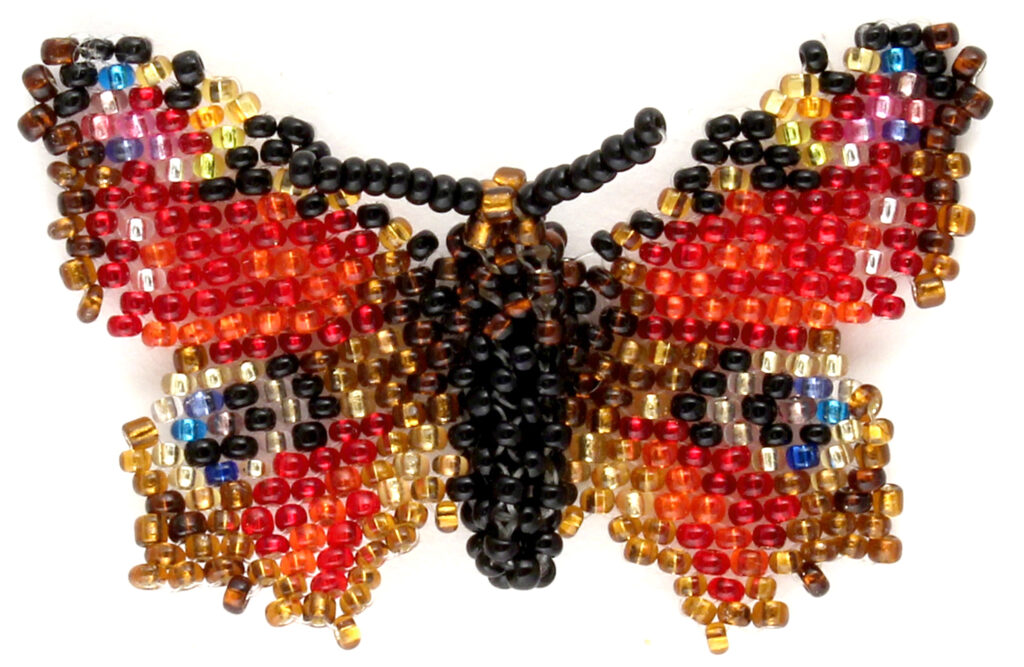
Aglais (Inachis) io (Linnaeus, 1758), or the European Peacock, more commonly known simply as the Peacock butterfly, is found in Europe, temperate Asia as far east as Japan.It is named in honour of nymph Io, the daughter of Ancient Greek river god Inachus.
The span of its wings is 5-7 cm.
This bead butterfly is woven of 22 colours.
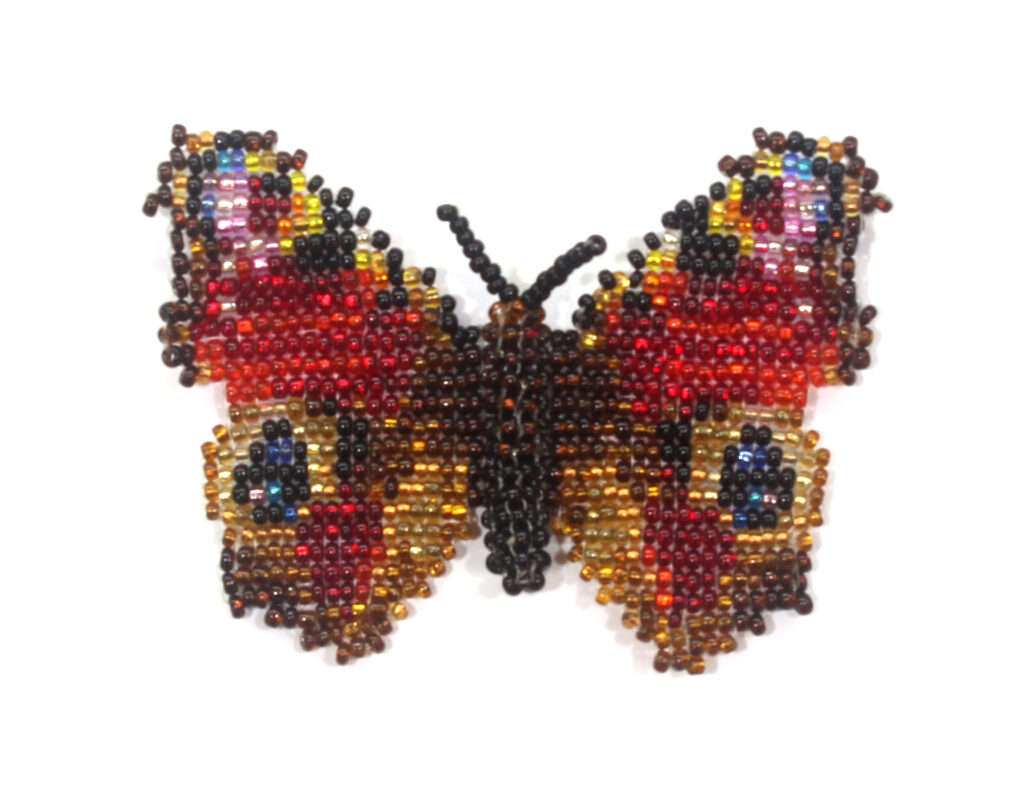
Aglais (Inachis) io (Linnaeus, 1758), or the European Peacock, more commonly known simply as the Peacock butterfly, is found in Europe, temperate Asia as far east as Japan.It is named in honour of nymph Io, the daughter of Ancient Greek river god Inachus.
The span of its wings is 5-7 cm.
This bead butterfly is loomed of 22 colours.
The bead pattern will be available later.
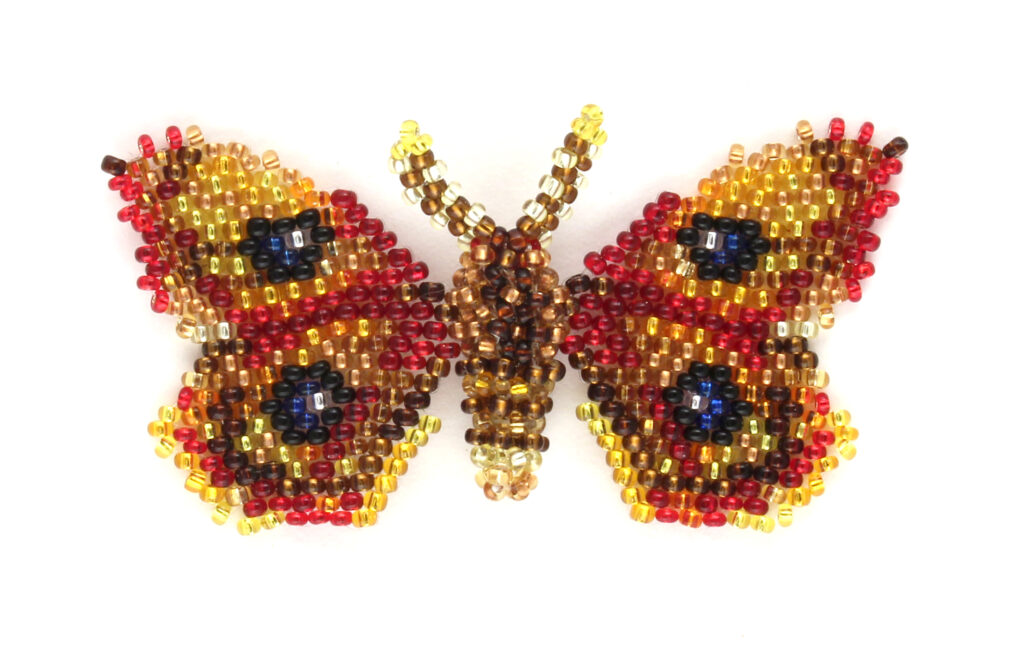
Aglia tau (Linnaeus, 1758) , or the Tau Emperor, is a European moth.
Its wingspan is 64-80 mm.
Though these moths fly mostly at night, males look for females at daytime, too.
Adult aglia tau moths do not eat at all.
The bead moth is woven of 15 colours.
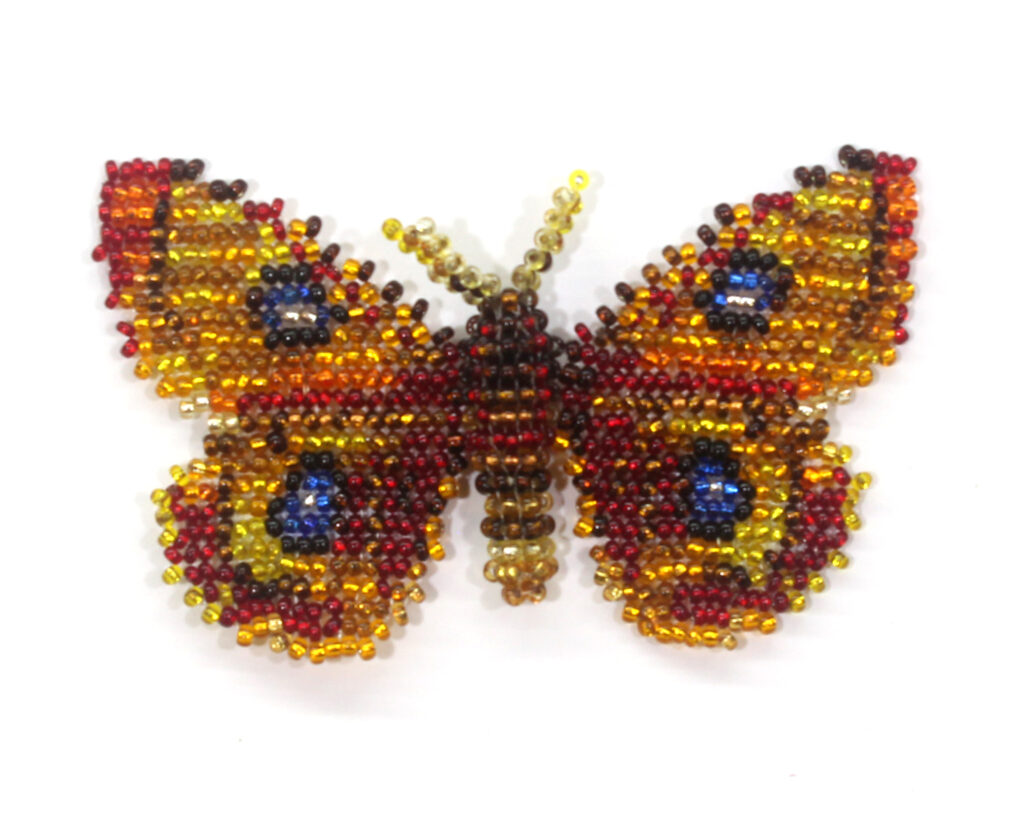
Aglia tau (Linnaeus, 1758) , or the Tau Emperor, is a European moth.
Its wingspan is 64-80 mm.
Though these moths fly mostly at night, males look for females at daytime, too.
Adult aglia tau moths do not eat at all.
The bead moth is loomed of 15 colours.
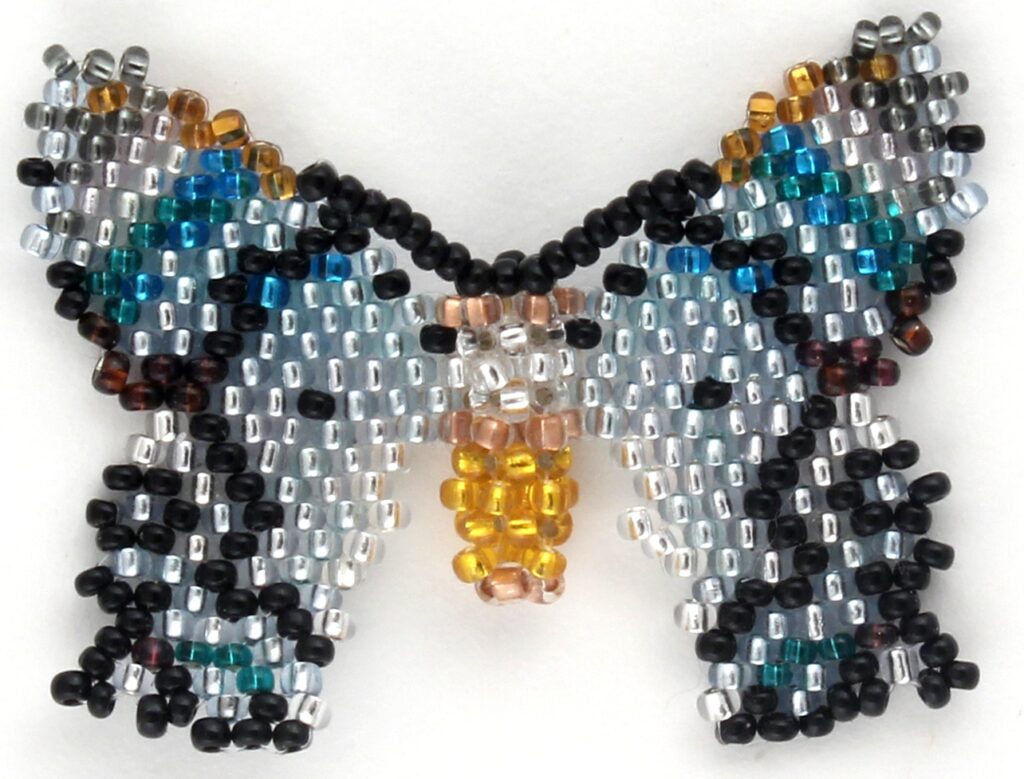
Alcides agathyrsus (Kirsch, 1877), or Zodiac Moth, inhabits Papua New Guinea.
The wingspan is about 85 mm.
This beaded butterfly is woven of 16 colours.
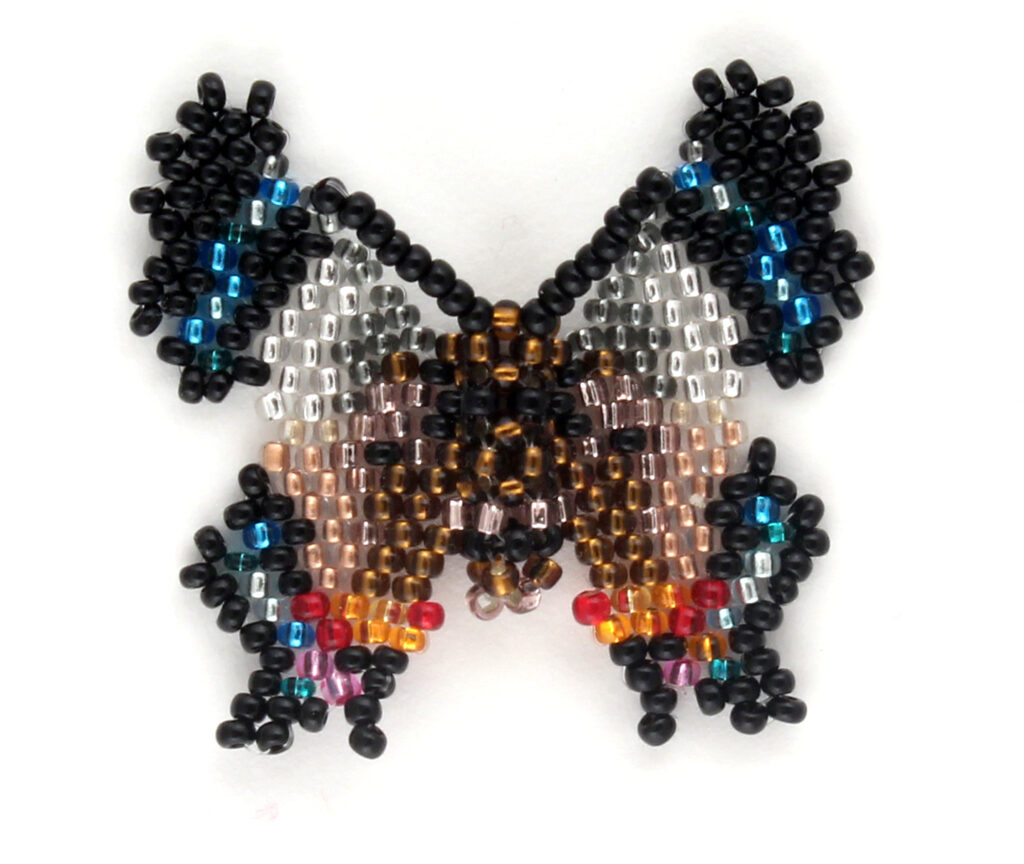
Ancyluris formosissima (Hewitson, 1870) was first described in 1870 by William Chapman Hewitson, a famous British naturalist. The butterfly inhabits rainforests of South America, especially Ecuador, Bolivia and Peru. Its wingspan is about 38-45 mm.
This bead butterfly is woven of 15 colours.
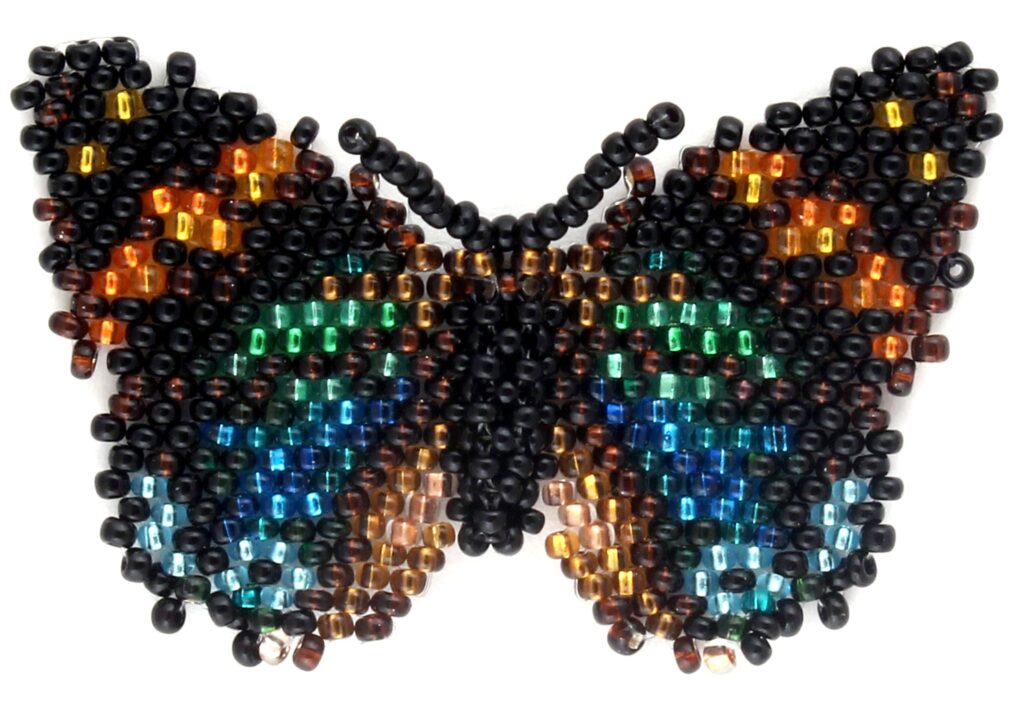
Apaturina erminea (Cramer, 1779), or Turquiose Emperor, inhabits tropical rainforests of Papua New Guinea, Indonesia, Solomon Islands and North Australia.
Its wingspan is 70 mm.
The bead butterfly is woven of 16 colours.
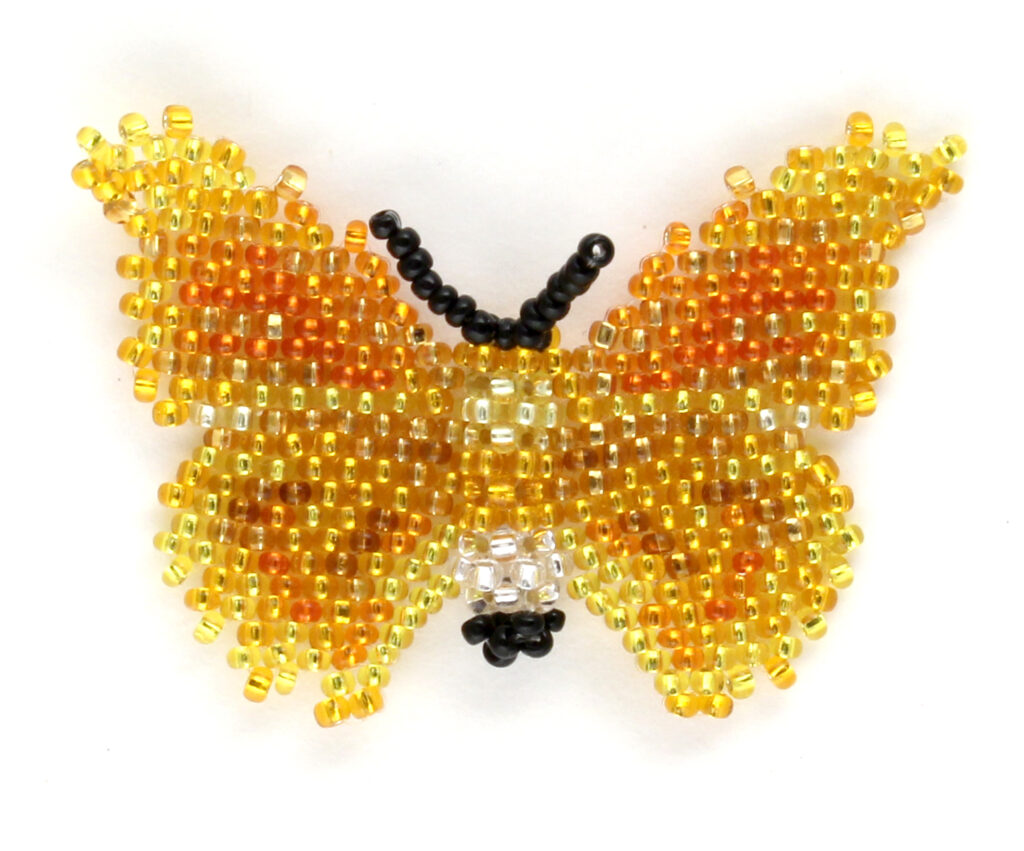
Appias nero (Wallace, 1867), or the Orange Albatross flies from northern India to the Sunda Islands, the Philippines, Sulawesi and eastwards.
Its wingspan is 70 mm.
The bead butterfly is woven of 9 colours.
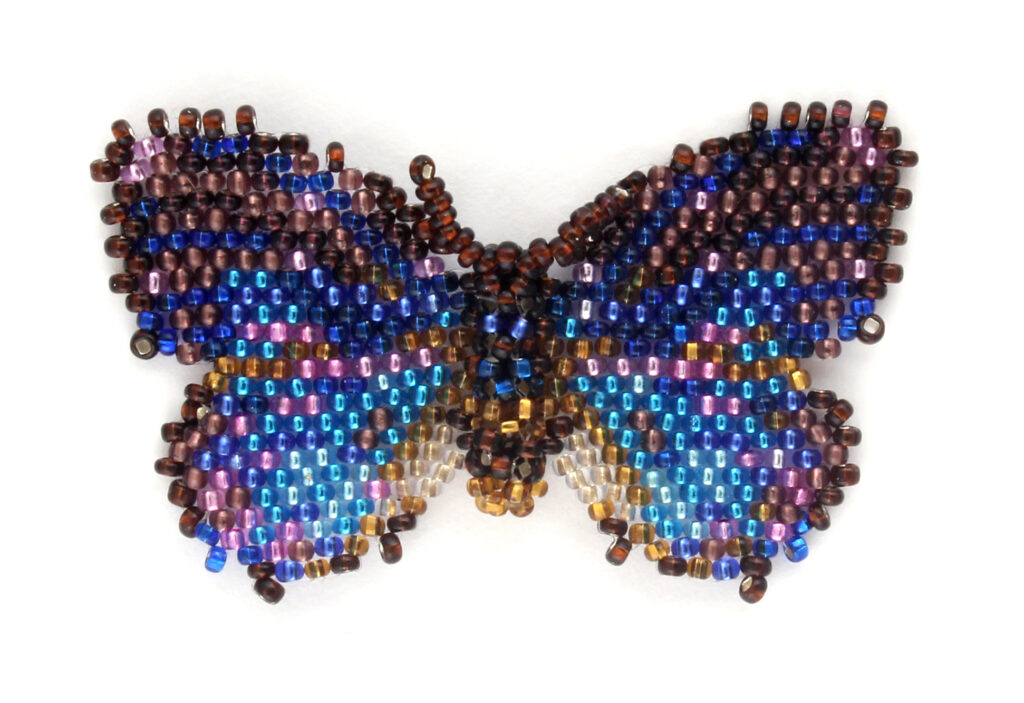
Arhopala micale (Blanchard, 1853), or the Shining Oakblue, inhabits Melanesia and New Guinea and the north coast of Australia.
The wingspan is about 40 mm.
The bead butterfly is woven of 13 colours.
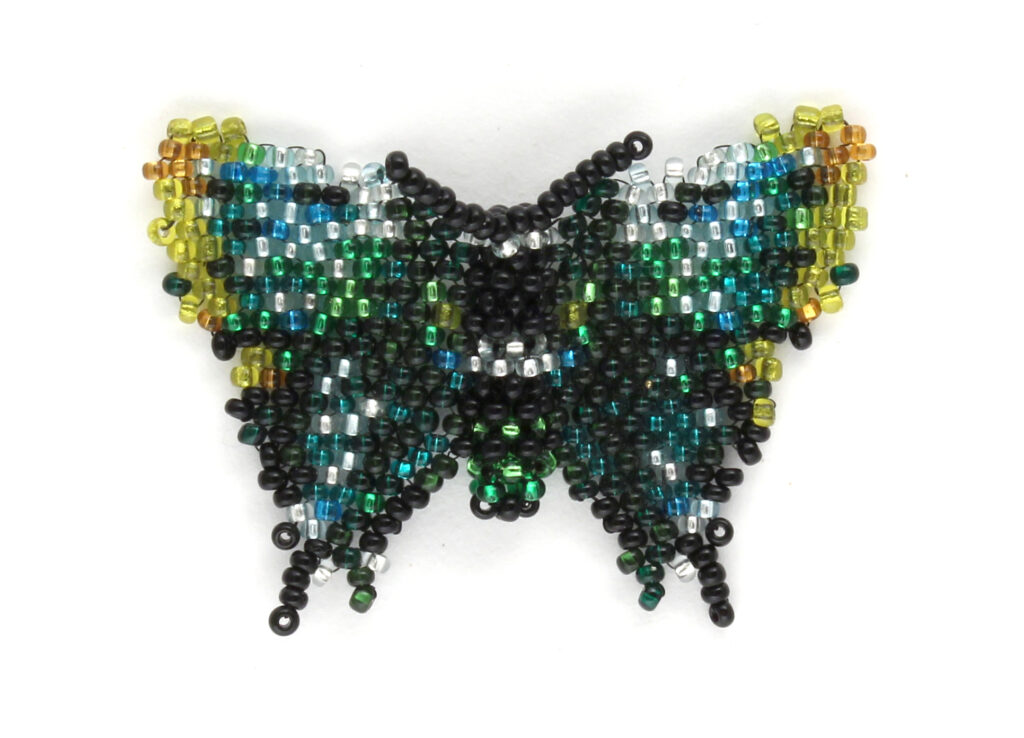
Atlides halesus (Cramer, 1777), or the Great purple hairstreak is a forest butterfly of North and Central America.
Its wingspan is 30-50 mm.
The wings sparkle with different shades of blue, green and purple, so in this bead butterfly the wings are coloured a bit differently to show the sparkling.
The bead butterfly is woven of 11 colours.
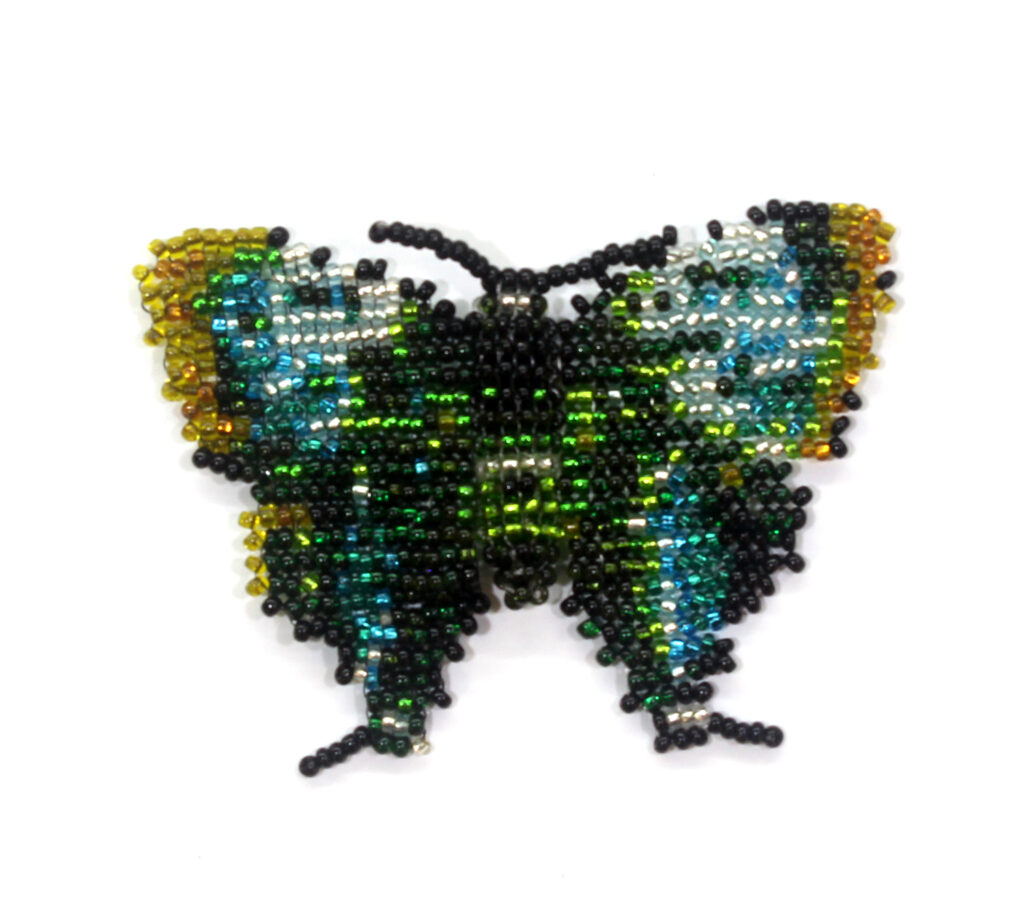
Atlides halesus (Cramer, 1777), or the Great purple hairstreak is a forest butterfly of North and Central America.
Its wingspan is 30-50 mm.
The wings sparkle with different shades of blue, green and purple, so in this bead butterfly the wings are coloured a bit differently to show the sparkling.
The bead butterfly is loomed of 11 colours.