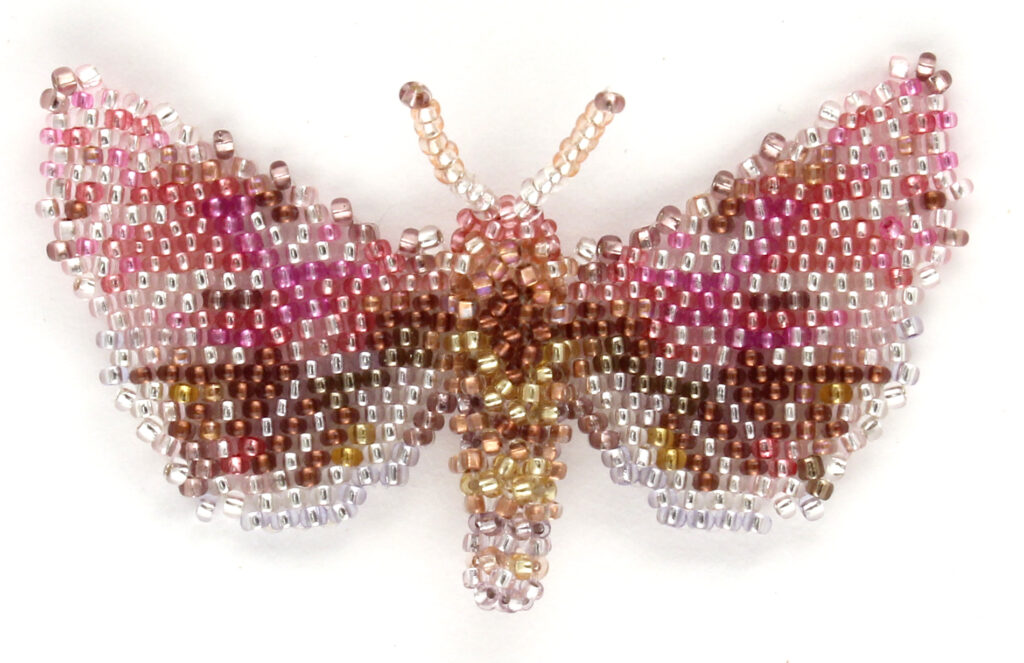
Aedophron rhodites (Eversmann, 1851) inhabits Eastern Mediterranean and through Ukrainian steppes to central Asia.
The wingspan of the real moth is 25 mm.
This beaded moth is woven of 17 colours.

Aedophron rhodites (Eversmann, 1851) inhabits Eastern Mediterranean and through Ukrainian steppes to central Asia.
The wingspan of the real moth is 25 mm.
This beaded moth is woven of 17 colours.
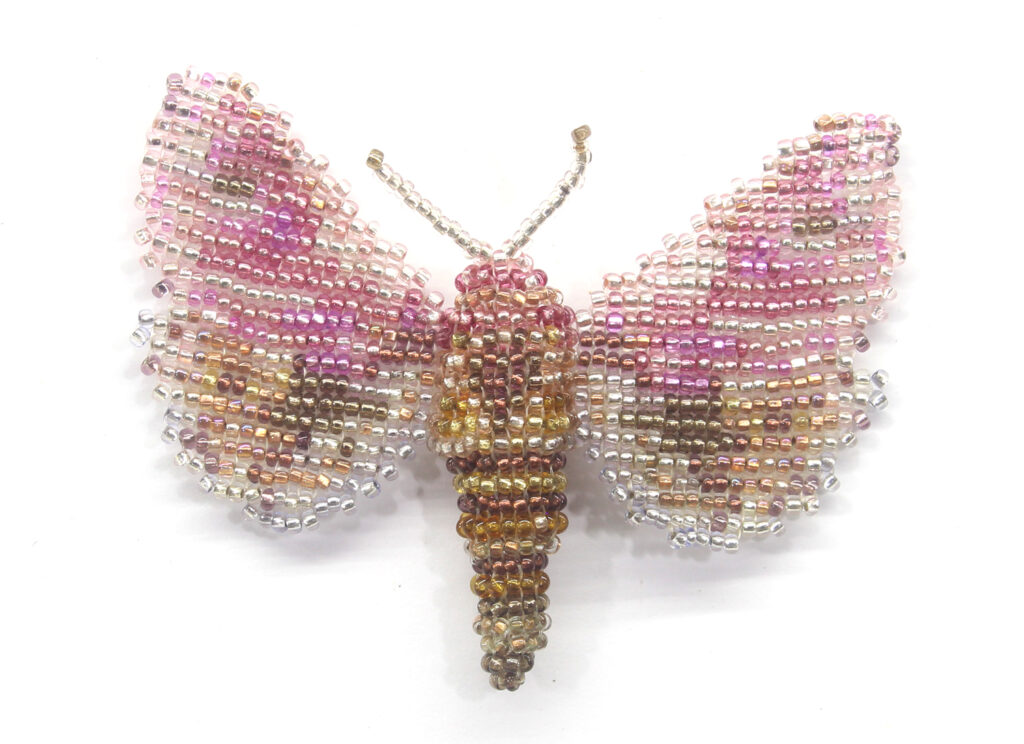
Aedophron rhodites (Eversmann, 1851) inhabits Eastern Mediterranean and through Ukrainian steppes to central Asia.
The wingspan of the real moth is 25 mm.
This beaded moth is loomed of 17 colours.
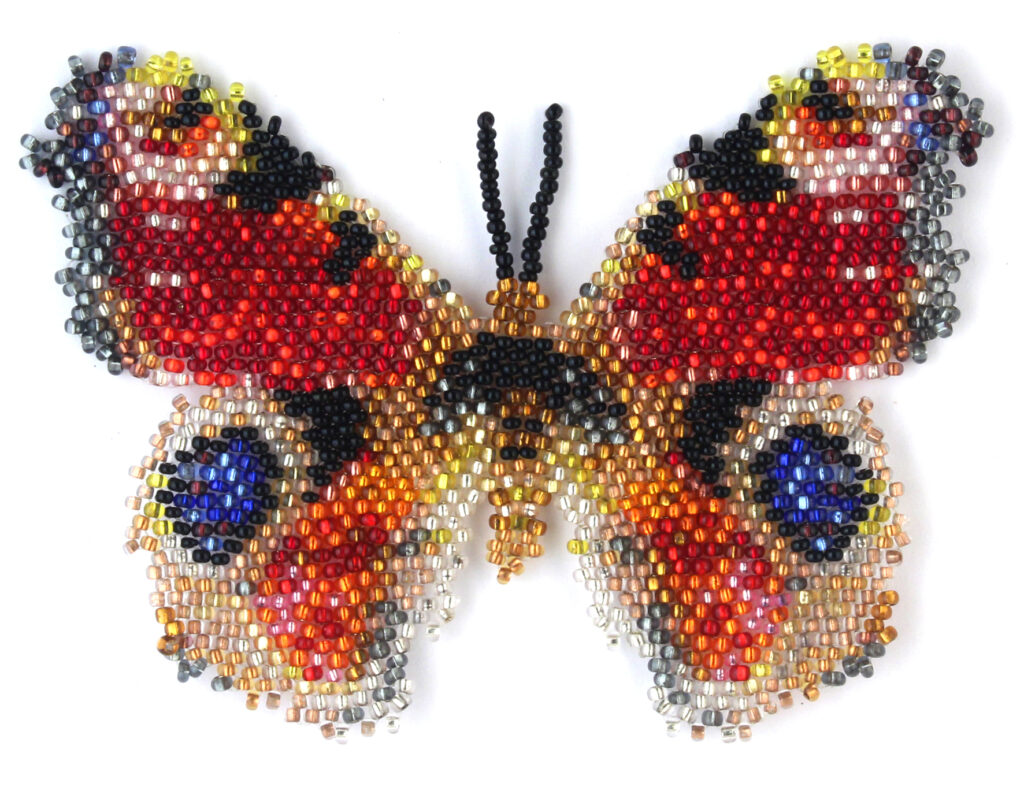
Aglais (Inachis) io (Linnaeus, 1758), or the European Peacock, more commonly known simply as the Peacock butterfly, is found in Europe, temperate Asia as far east as Japan.It is named in honour of nymph Io, the daughter of Ancient Greek river god Inachus.
The span of its wings is 5-7 cm.
This bead butterfly is woven of 29 colours.
The bead pattern is available at https://bead-patterns.com/beadpattern/butterfly-inachis-io-linnaeus
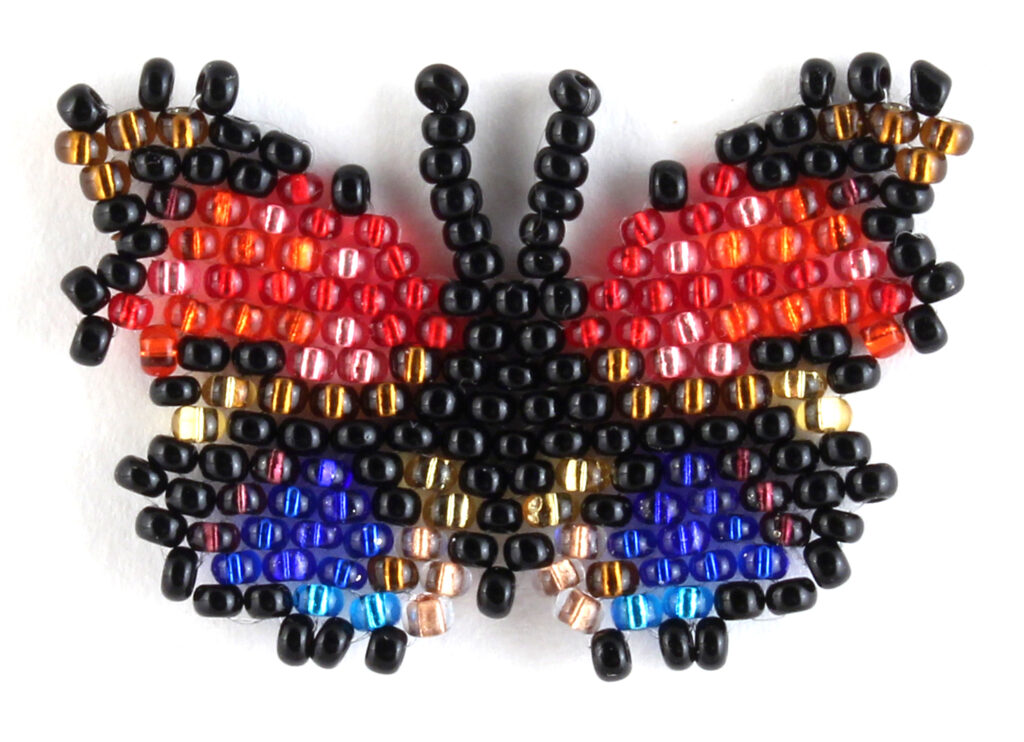
Agrias claudina sardanapalus (Bates, 1860) is found in Ecuador, Peru, Venezuela, Colombia and Bolivia.
Its wingspan is 70-120 mm.
The bead butterfly is woven of 11 colours.
The bead pattern is available at https://bead-patterns.com/beadpattern/butterfly-agrias-claudina-sardanapalus-mini
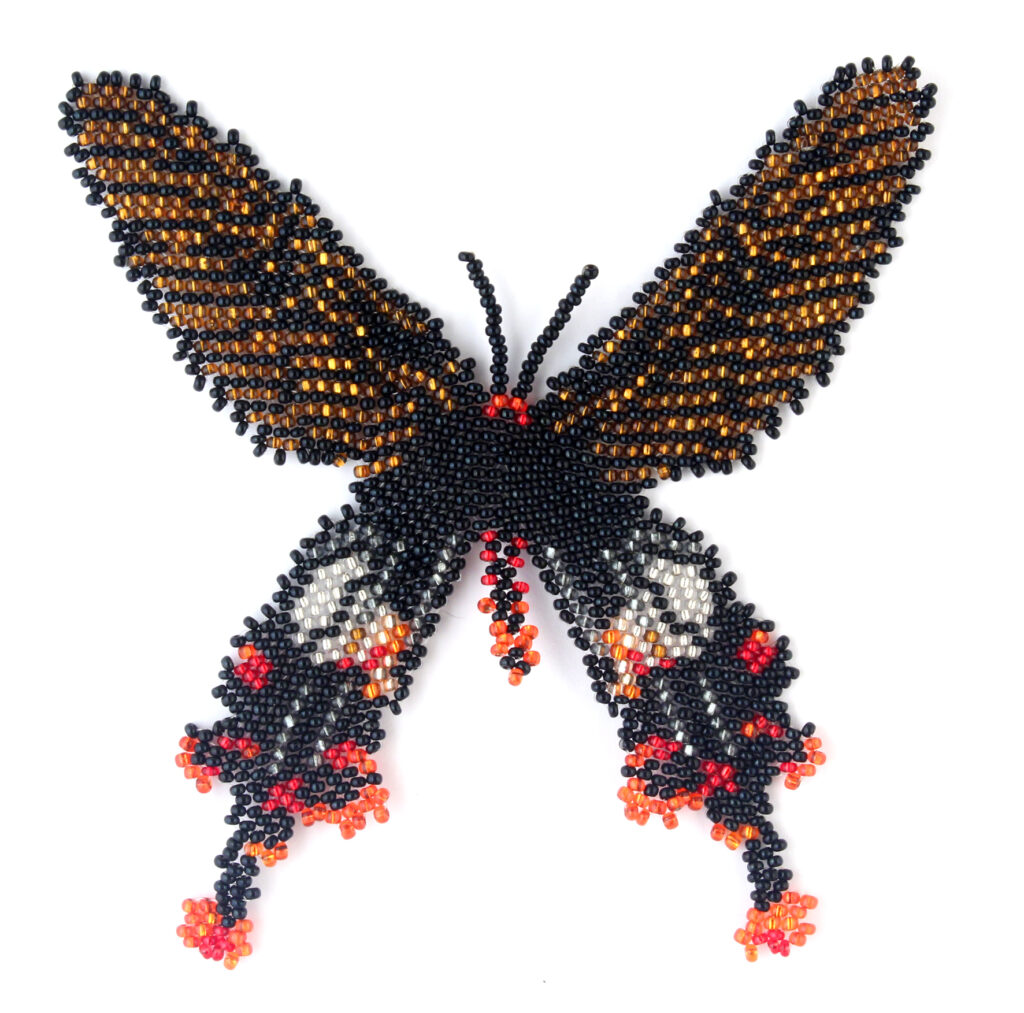
Byasa polla (De Nicéville, 1897), or De Nicéville’s windmill is an Indian butterfly. It is rare and protected by the law in India.
The span of the butterfly’s wings is about 11-13 cm.
This beaded butterfly is woven of 9 colours.
The bead pattern is available at https://bead-patterns.com/beadpattern/butterfly-atrophaneura-polla
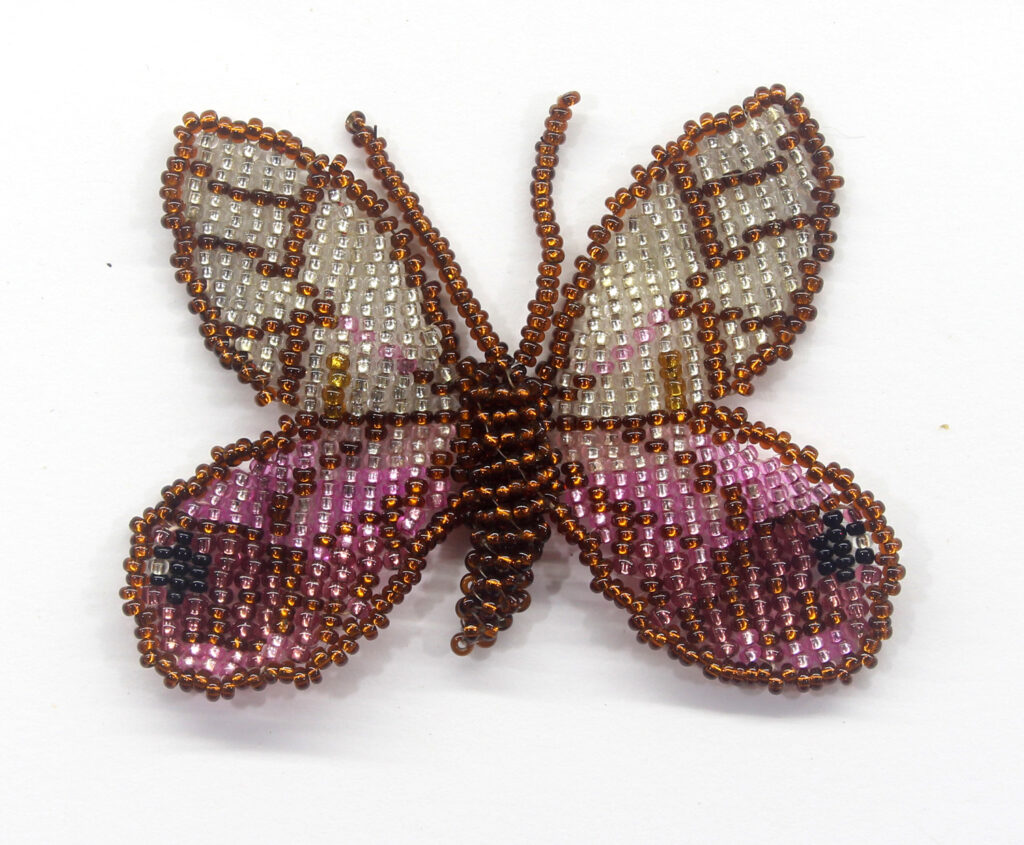
Cithaerias pireta aurorina (Weymer, 1910), or the Pink Glasswing or the Blushing Phantom inhabits Northern Amazonia: Columbia, Equador, Bolivia. The butterfly wings are tranparent, just two pink spots on the hindwings which helps the butterfly to escape predators. The wingspan of Cithaerias is about 50 mm.
This bead butterfly is loomed and woven of 10 colours.
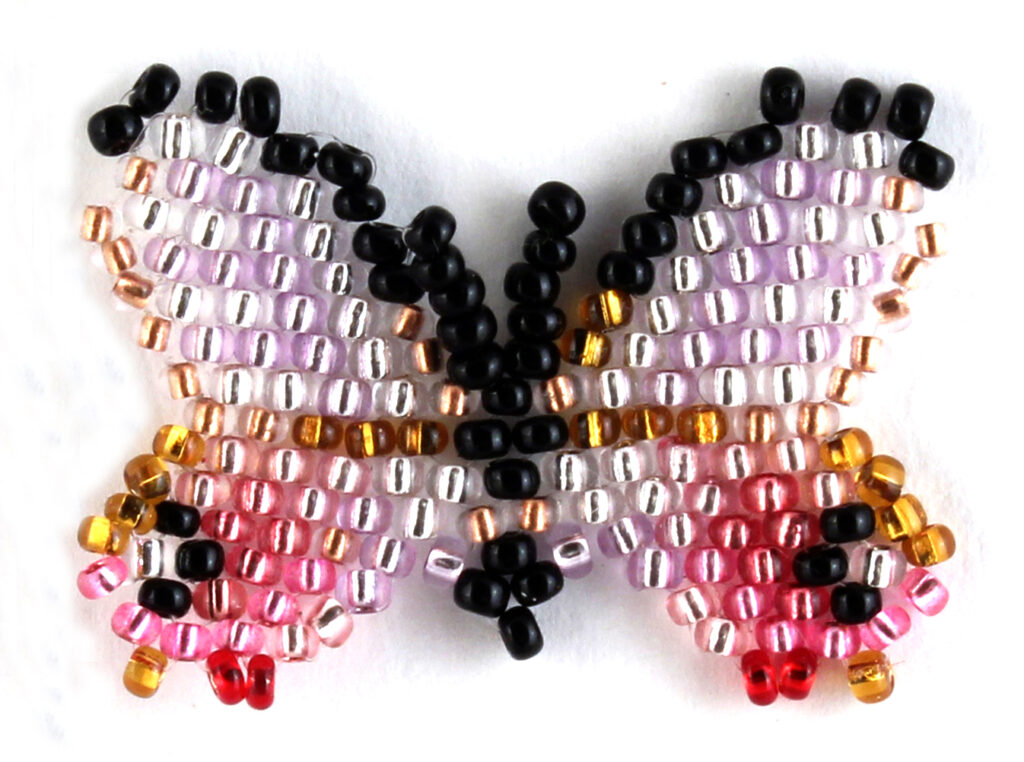
Cithaerias pireta aurorina (Weymer, 1910), or the Pink Glasswing or the Blushing Phantom inhabits Northern Amazonia: Columbia, Equador, Bolivia. The butterfly wings are tranparent, just two pink spots on the hindwings which helps the butterfly to escape predators. The wingspan of Cithaerias is about 50 mm.
The bead butterfly is woven of 10 colours.
The bead pattern is available at https://bead-patterns.com/beadpattern/blushing-phantom-butterfly-%D1%81ithaerias-pireta-aurorina-mini
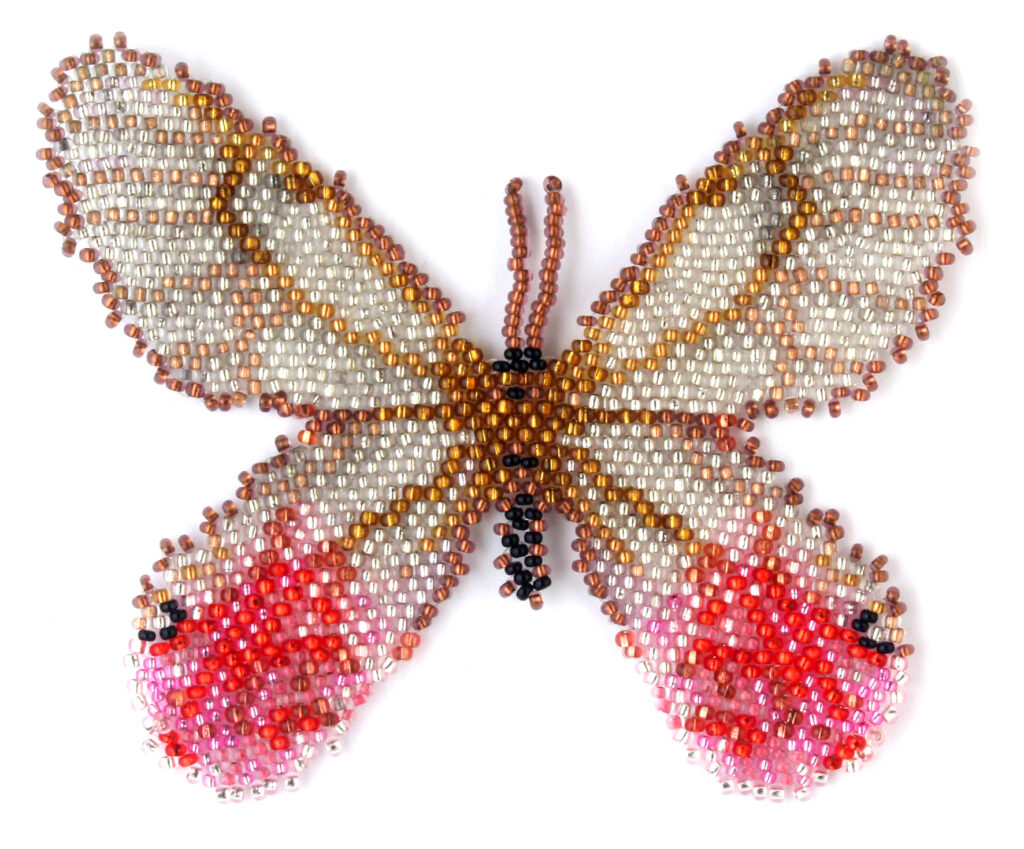
Cithaerias pireta aurorina (Weymer, 1910), or the Pink Glasswing or the Blushing Phantom inhabits Northern Amazonia: Columbia, Equador, Bolivia. The butterfly wings are tranparent, just two pink spots on the hindwings which helps the butterfly to escape predators. The wingspan of Cithaerias is about 50 mm.
The bead pattern is available at https://bead-patterns.com/beadpattern/butterfly-cithaerias-aurorina
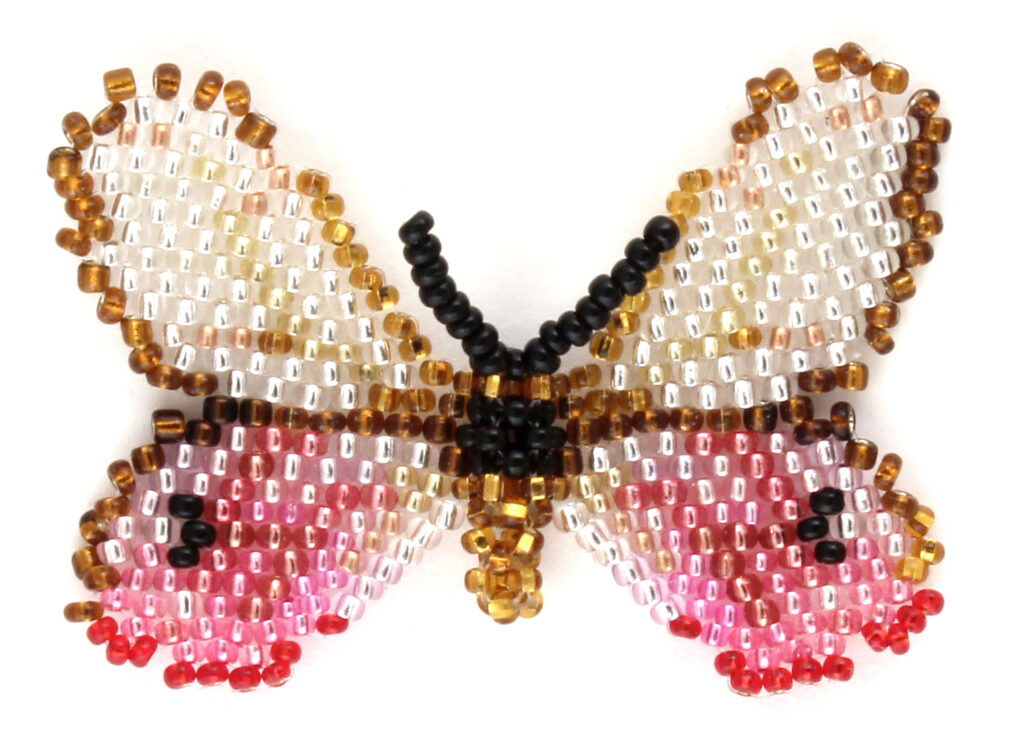
Cithaerias pireta aurorina (Weymer, 1910), or the Pink Glasswing or the Blushing Phantom inhabits Northern Amazonia: Columbia, Equador, Bolivia. The butterfly wings are tranparent, just two pink spots on the hindwings which helps the butterfly to escape predators. The wingspan of Cithaerias is about 50 mm.
The bead butterfly is woven of 15 colours.
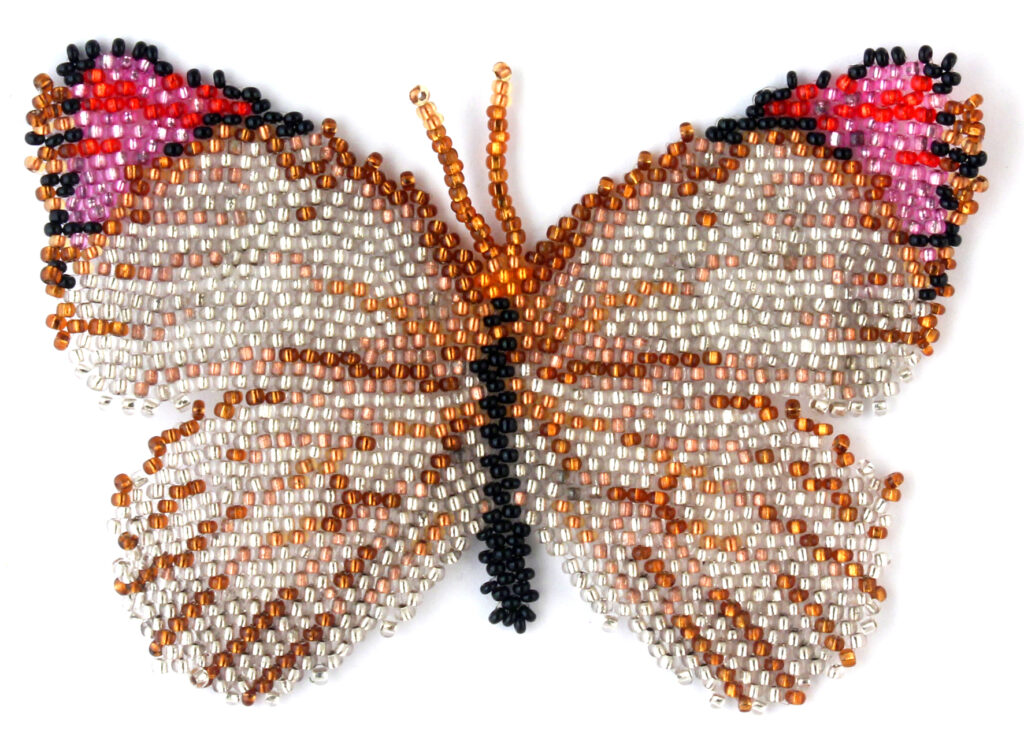
Colotis ione (Godart, 1819) or the Purple Tip or Violet Tip inhabits dry parts of Africa. The wingspan is 45-55 mm.
This beaded butterfly is woven of 10 colours.
The bead pattern is available at https://bead-patterns.com/beadpattern/butterfly-colotis-ione
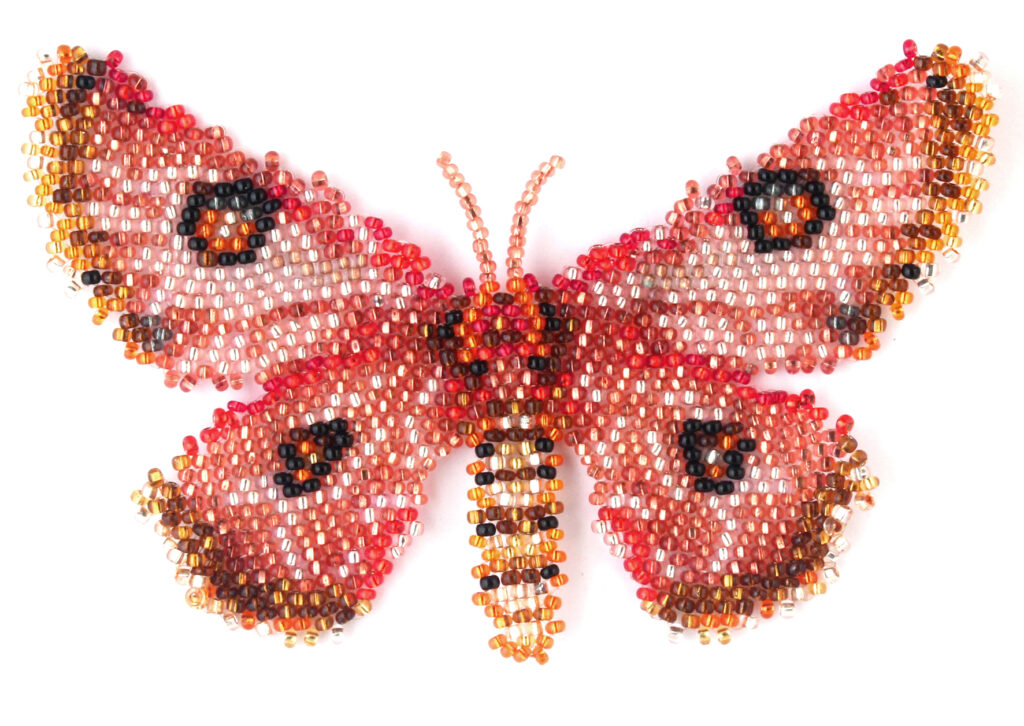
Eochroa trimenii (Felder, 1874) is a moth of South Africa. The wingspan is about 7 cm.
This bead moth is woven of 19 colours.
The bead pattern is available at https://bead-patterns.com/beadpattern/eochroa-trimeni-moth
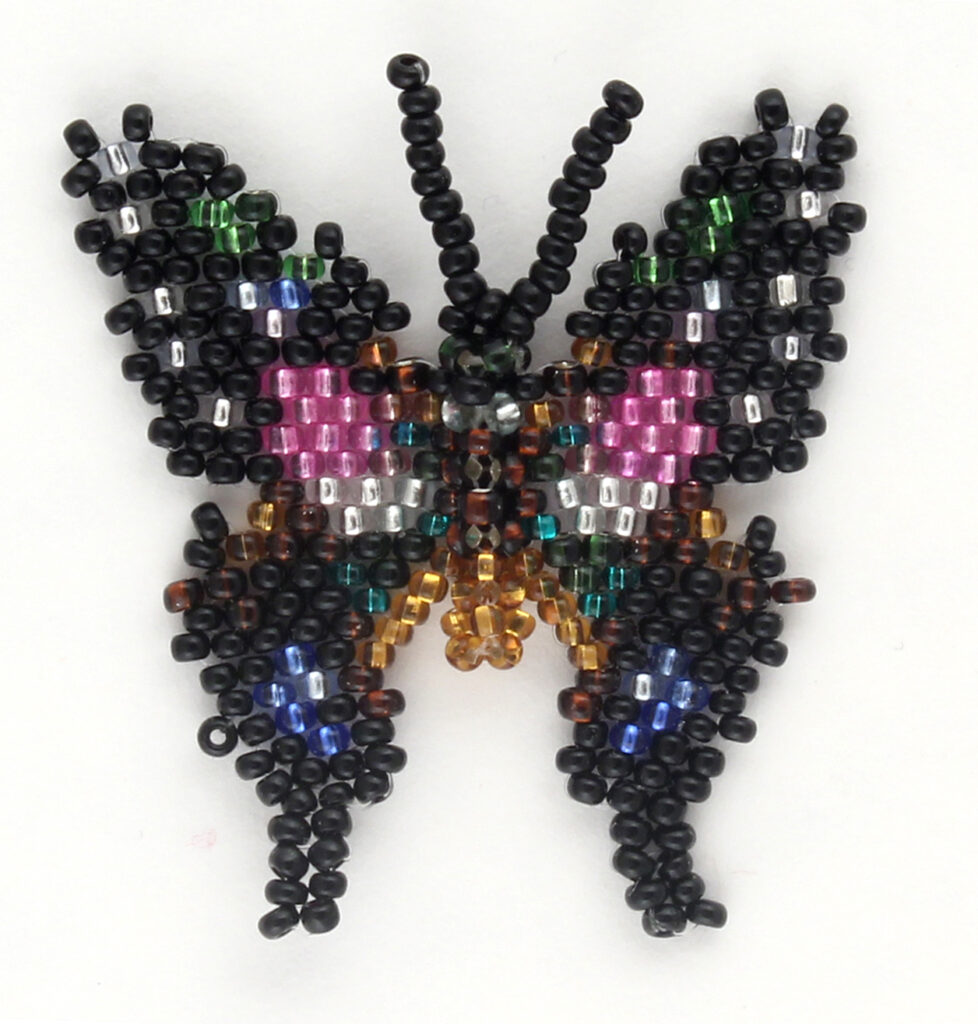
Graphium weiskei (Ribbe, 1900) or Purple Spotted Swallowtail inhabits only mountain regions of Papua New Guinea. It lives at the height 1200-3000 meters above sea level and spends most of its time high in the forest canopy. The wingspan is 50-60 mm.
This bead butterfly is woven of 16 colours.
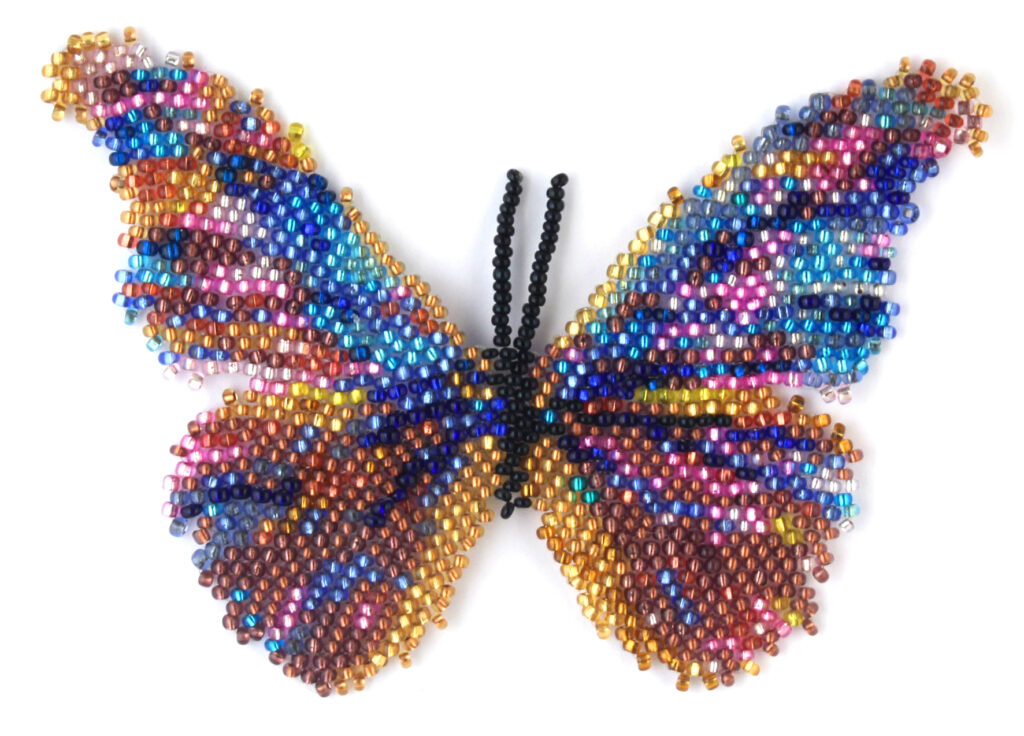
Morpho rhetenor (Cramer, 1775)
Morpho butterflies have metallic shimmering shades of blue and green on dorsal side of their wings. Such colouration is a result not of pigmentation but of iridescence. So, the colours we see vary with viewing angle, they may change from ligth cyan to deep green from pale pink to dark violet in the same place.
Thus two wings of one Morpho butterfly almost always look different.
Morpho Rhetenor inhabits South America. It is found in Surinam, French Guiana, Brazil, Peru, Ecuador, Colombia and Venezuela.
The wingpsan of this butterfly is about 14 cm.
This bead butterfly is woven of 22 colours.
The bead pattern is available at https://bead-patterns.com/beadpattern/butterfly-morpho-rhetenor
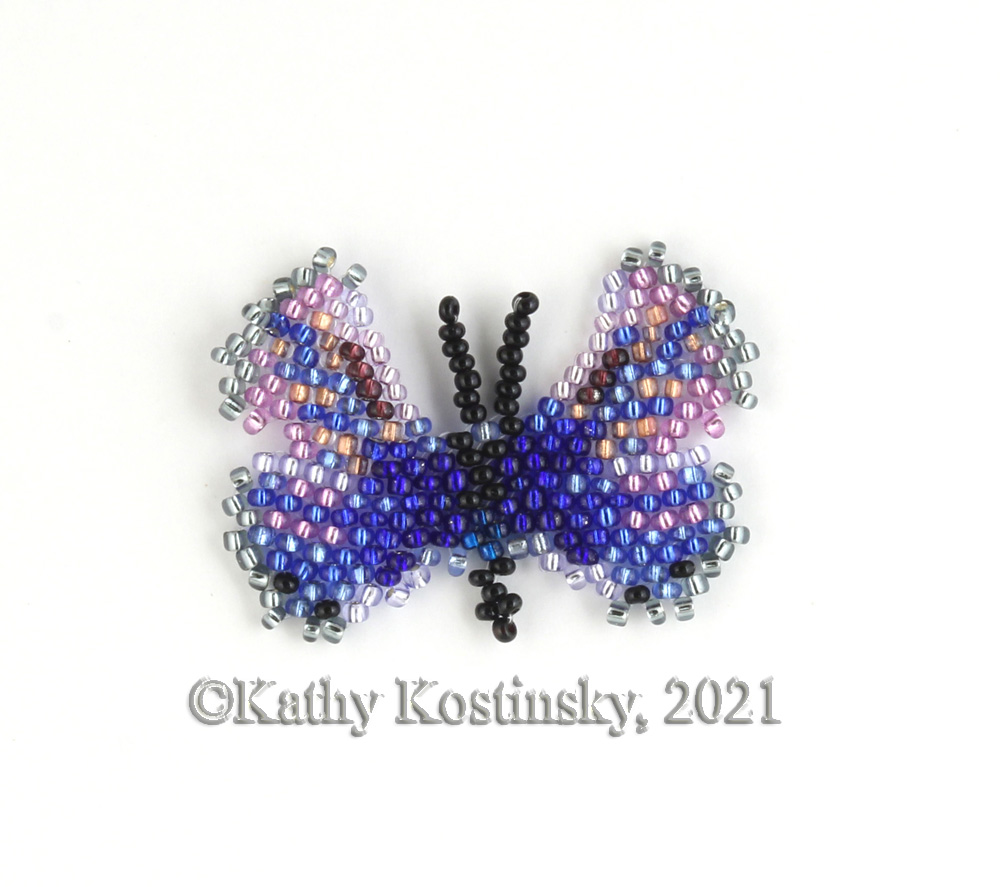
Nacaduba biocellata (C. & R. Felder, 1865), or the Two -Spotted Line Blue,(first described by Cajetan and Rudolf Felder, father and son,Austrian entomologists in 1865) is a 20 mm wingspan Indo-Australian butterfly also inhabiting Singapore. Its pale-yellow caterpillar feeds on acacia and turns to red (or sometimes green) colour before becoming a pupa. It takes the butterfly of about a fortnight from a new-born egg to an imago (an adult butterfly).
The bead butterfly is woven of 13 colours.
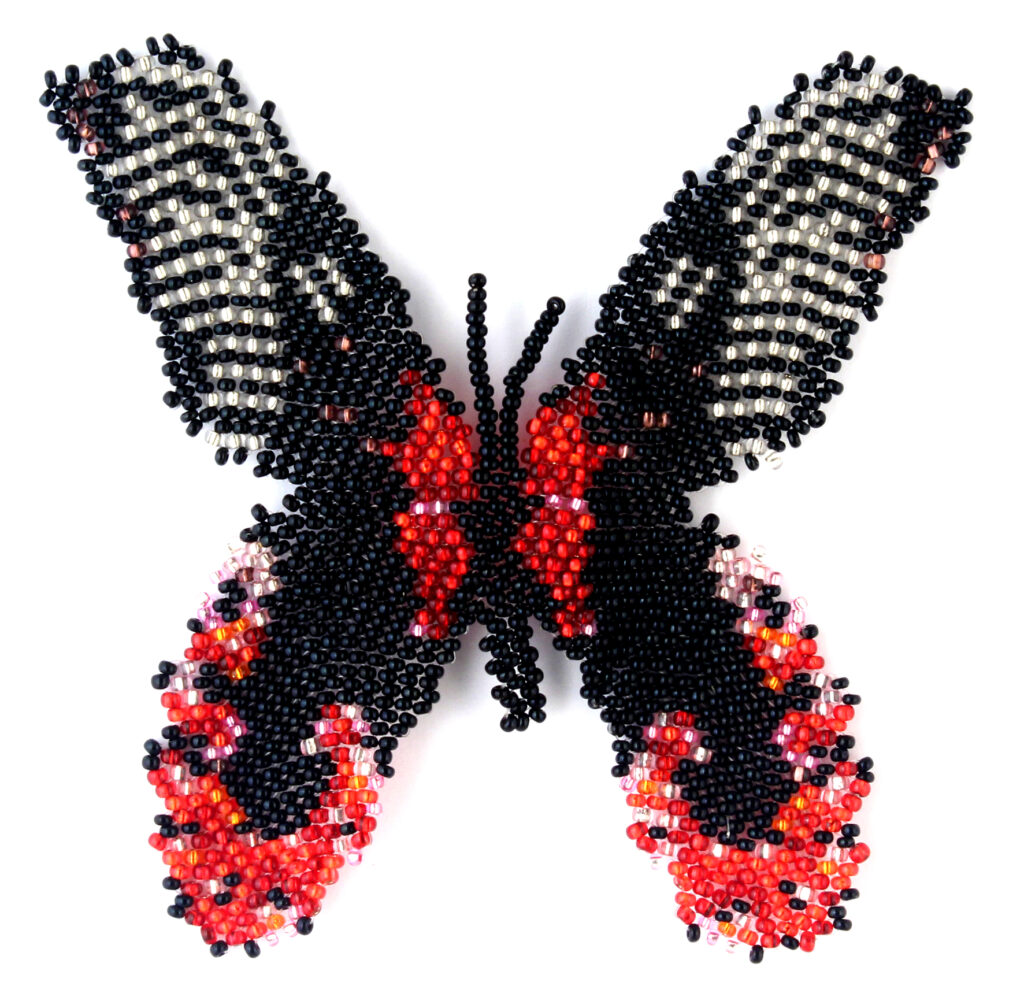
Papilio rumanzovia (Eschscholtz, 1821), or the scarlet Mormon or red Mormon is named in honor of Nikolay Rumyantsev, Russian wise diplomat and generous philanthropist. In 1815 Nikolay Rumyantsev sponsored a a round-the-world sea expedition on the ship “Rurik” under the command of Otto Kotzebue for the discovery and development of the Northwest Passage: a sea route from the Bering Sea to the Atlantic Ocean along the coast of North America. The expedition lasted three years and was also ethnographic and natural-scientific in nature.
It was during this expedition in the Philippines that the Russian entomologist Johann Eschscholtz first discovered and then described a large (up to 14 cm in wingspan) black-pink-red butterfly, which he named after the organizer of the expedition, the Rumyantsev’s swallowtail (Papilio rumanzovia).
It is remarcable that inspite the bright, frightening coloring of the undersides of the wings, Papilio rumanzovia is non-venomous. However, by pretending to be dangerous, it avoids being attacked by birds.
Papilio rumanzovia inhabits Philippines and Taiwan.
This bead butterfly is woven of 9 colours.
The bead pattern is available at https://bead-patterns.com/beadpattern/butterfly-papilio-rumanzovia