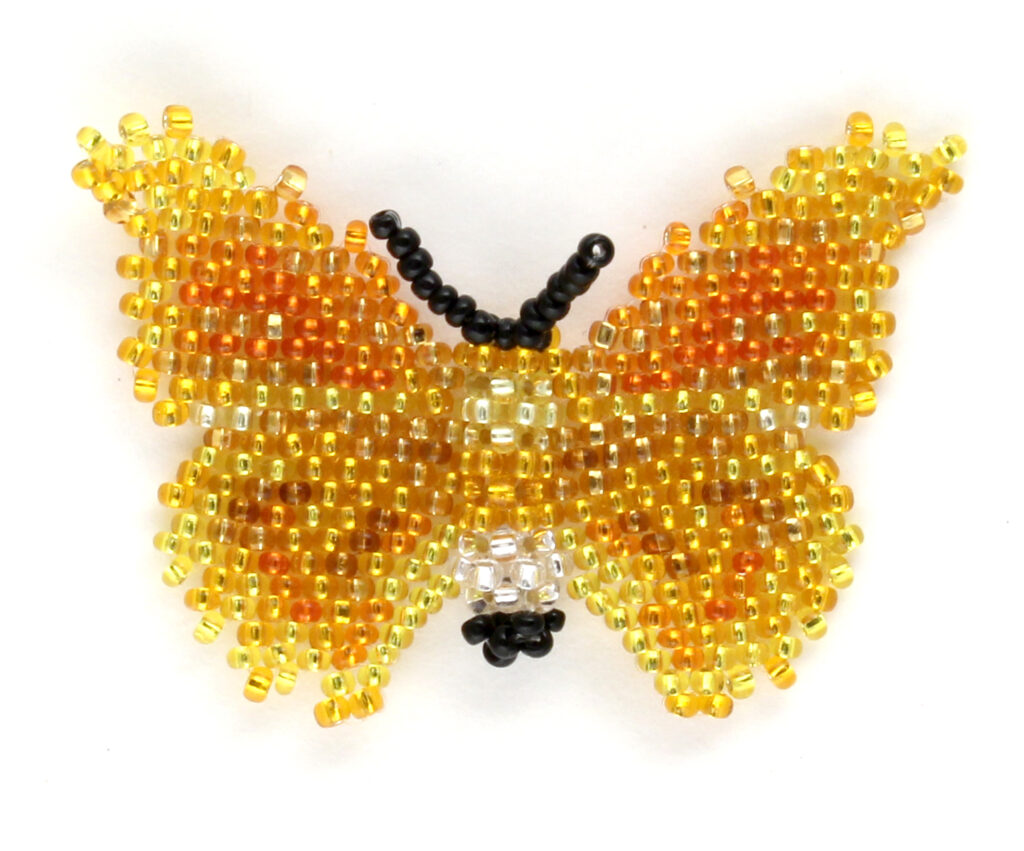
Appias nero (Wallace, 1867), or the Orange Albatross flies from northern India to the Sunda Islands, the Philippines, Sulawesi and eastwards.
Its wingspan is 70 mm.
The bead butterfly is woven of 9 colours.
Appias nero (Wallace, 1867), or the Orange Albatross flies from northern India to the Sunda Islands, the Philippines, Sulawesi and eastwards.
Its wingspan is 70 mm.
The bead butterfly is woven of 9 colours.
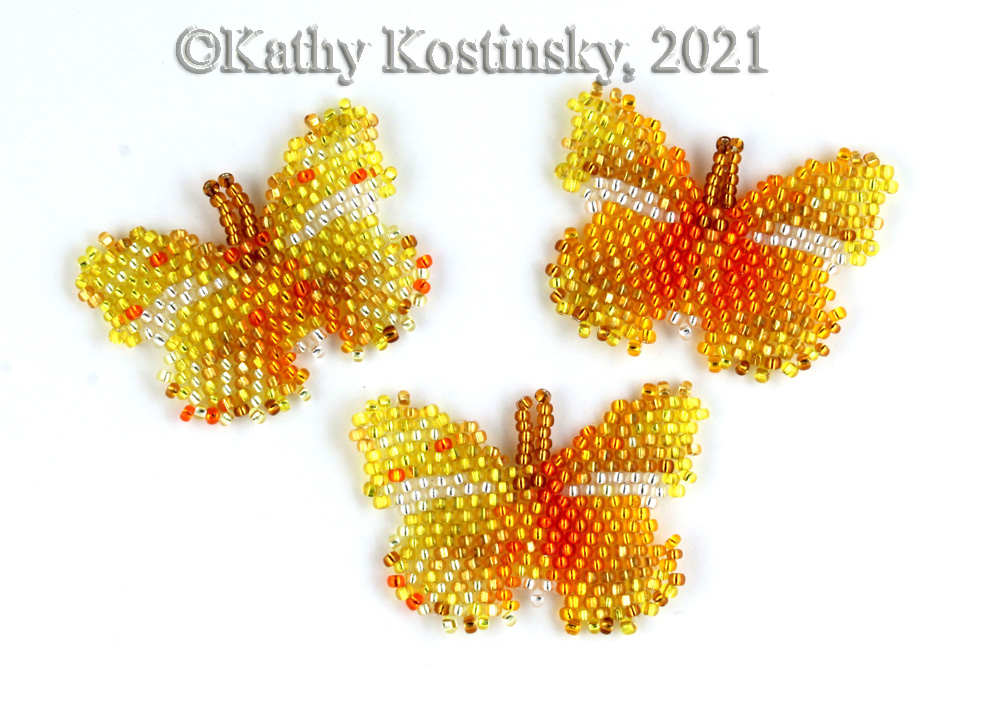
Catopsilia scylla (Linnaeus, 1763), or the Orange Migrant or Orange Emigrant, first described by the great Swedish naturalist Carl Linnaeus in 1763.
The butterfly inhabits South East Asia and Australia.
The wingspan is 60-65 mm.
The bead butterfly is woven of 9 colours.
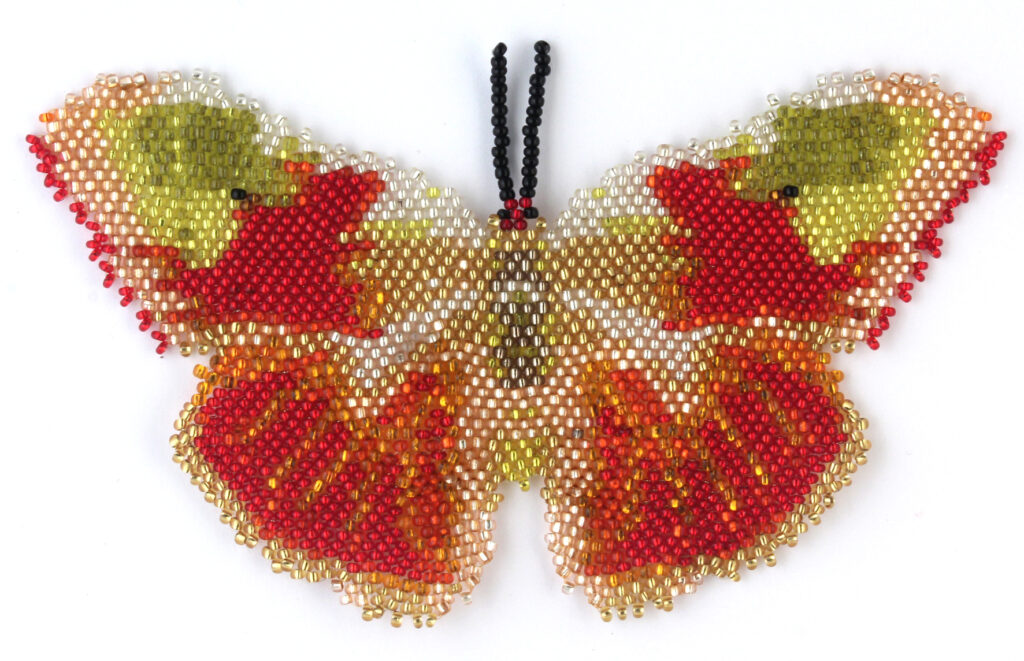
Catopsilia Solstitia ( Butler, 1869) inhabits Cuba. The wingspan is 80-90 mm.
The butterfly is a subspecies of Phoebis avellaneda.
This bead butterfly is woven of 14 colours.
The bead pattern is available at https://bead-patterns.com/beadpattern/butterfly-catopsilla-solstitia
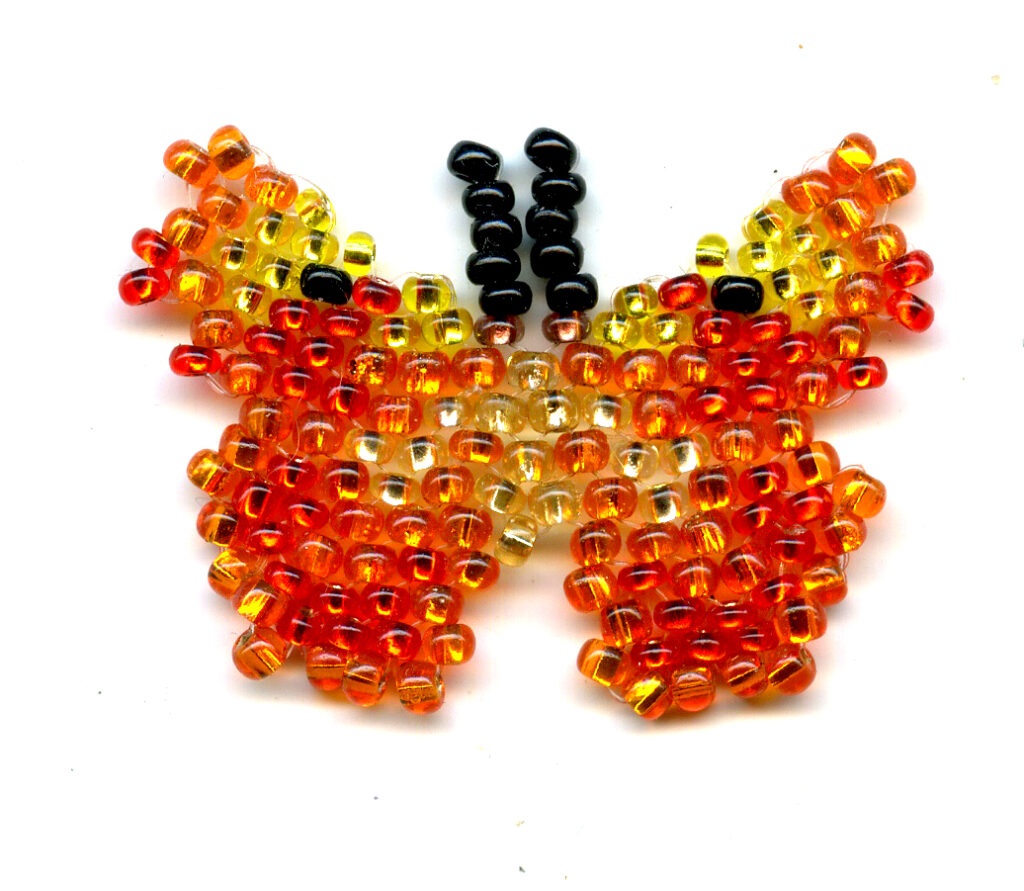
Catopsilia Solstitia ( Butler, 1869) inhabits Cuba. The wingspan is 80-90 mm.
The butterfly is a subspecies of Phoebis avellaneda.
This bead butterfly is woven of 7 colours.
The bead pattern is available at https://bead-patterns.com/beadpattern/butterfly-catopsilla-solstitia-micro
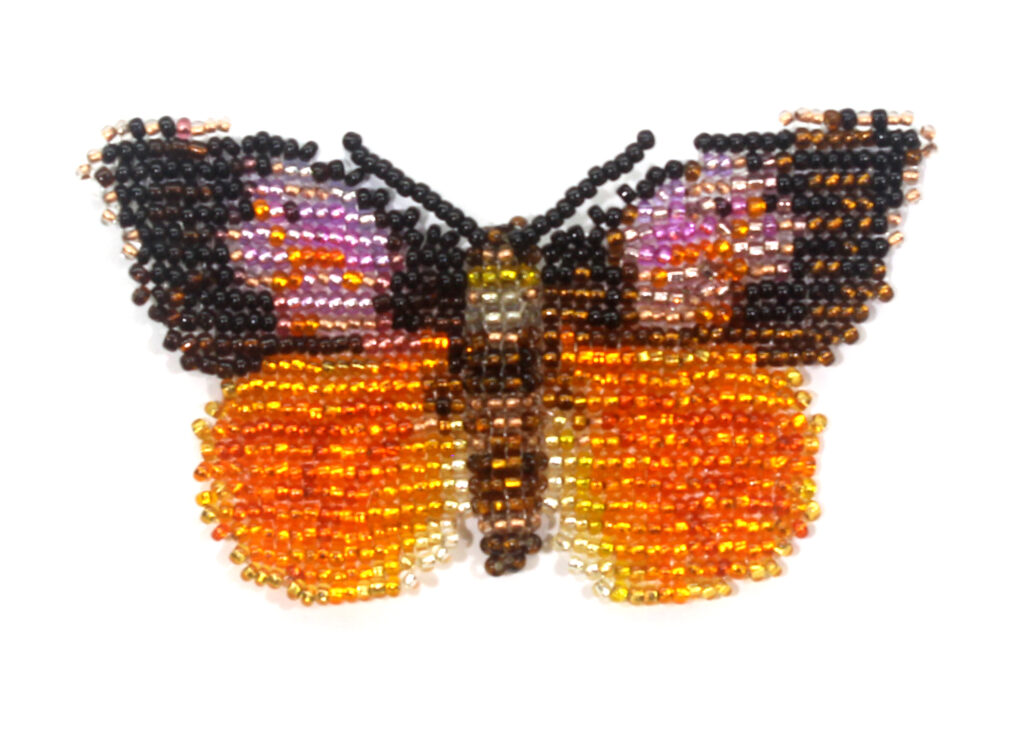
Colias eurydice (Boisduval, 1855), or the California dogface butterfly, is endemic to California, and is California’s state insect symbol.Its wingspan is 20-30 mm.
The bead butterfly is loomed of 18 colours.
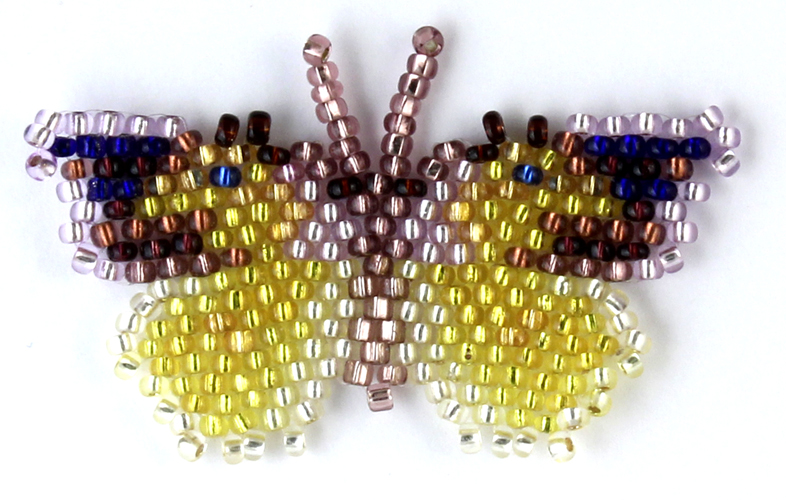
Colias eurydice (Boisduval, 1855), or the California dogface butterfly, is endemic to California, and is California’s state insect symbol.
Its wingspan is 20-30 mm.
The bead butterfly is woven of 13 colours.
The bead patttern will appear later.
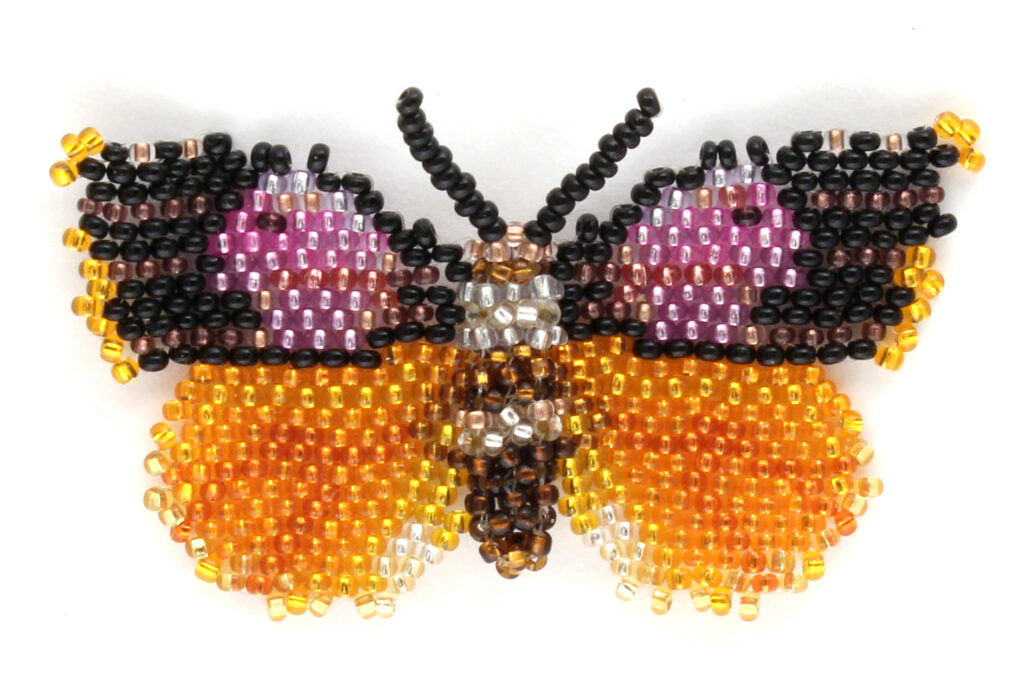
Colias eurydice (Boisduval, 1855), or the California dogface butterfly, is endemic to California, and is California’s state insect symbol.
Its wingspan is 20-30 mm.
The bead butterfly is woven of 18 colours.
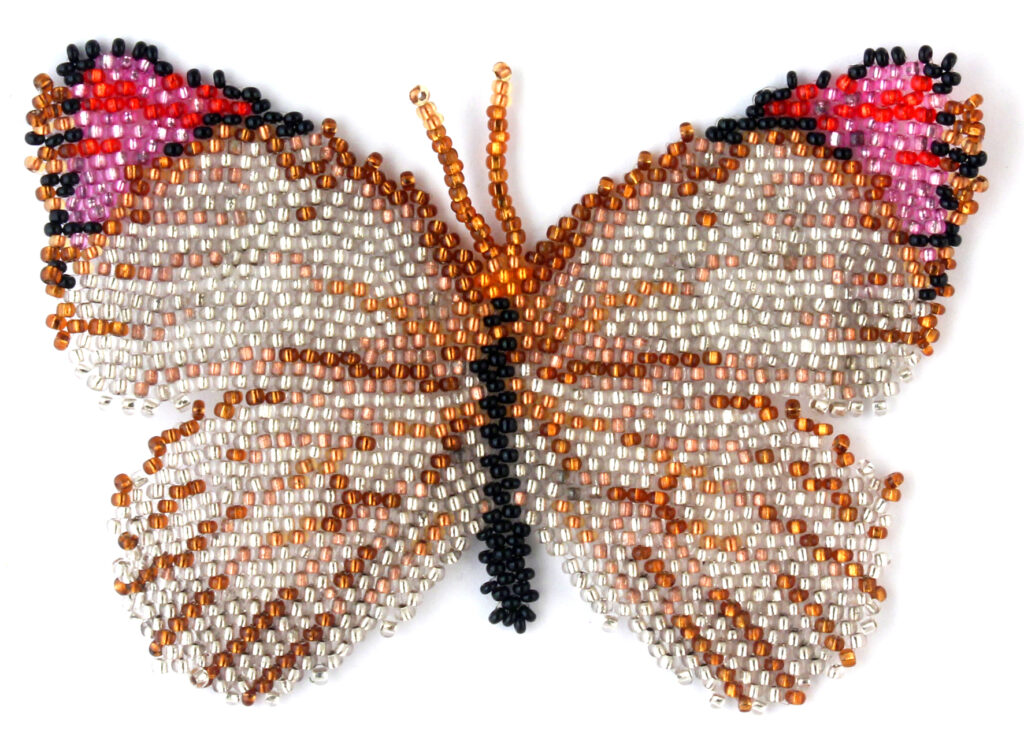
Colotis ione (Godart, 1819) or the Purple Tip or Violet Tip inhabits dry parts of Africa. The wingspan is 45-55 mm.
This beaded butterfly is woven of 10 colours.
The bead pattern is available at https://bead-patterns.com/beadpattern/butterfly-colotis-ione
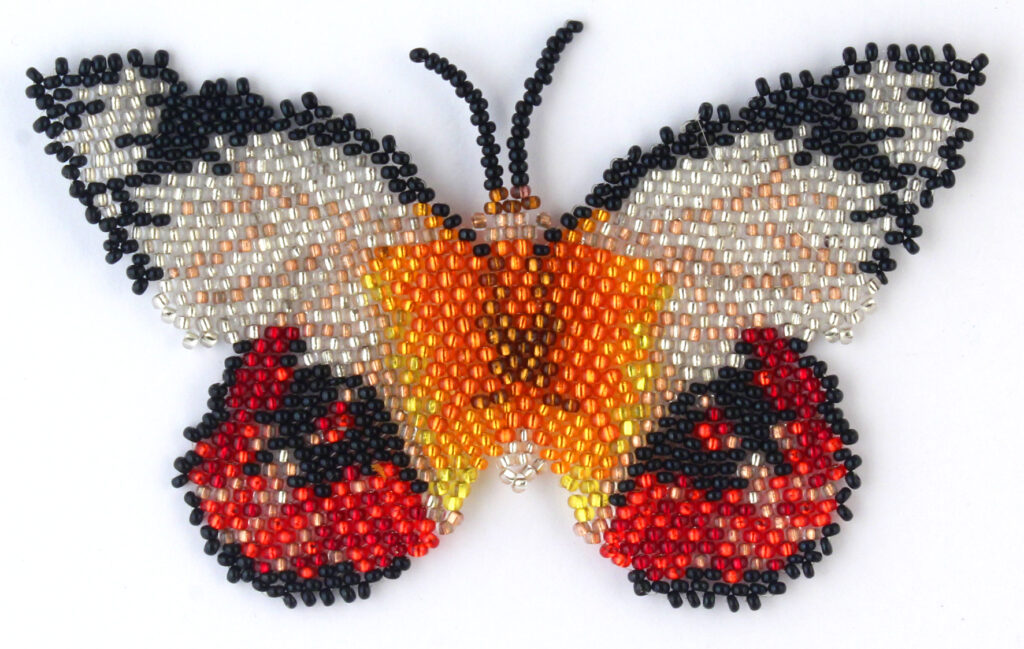
Delias argenthona (Fabricius, 1793), the scarlet Jezebel or the northern Jezebel is an Australian butterfly.
Its wingspan is about 50 mm.
This bead butterfly is woven of 10 colours.
The bead pattern is available at https://bead-patterns.com/beadpattern/butterfly-delias-argenthona
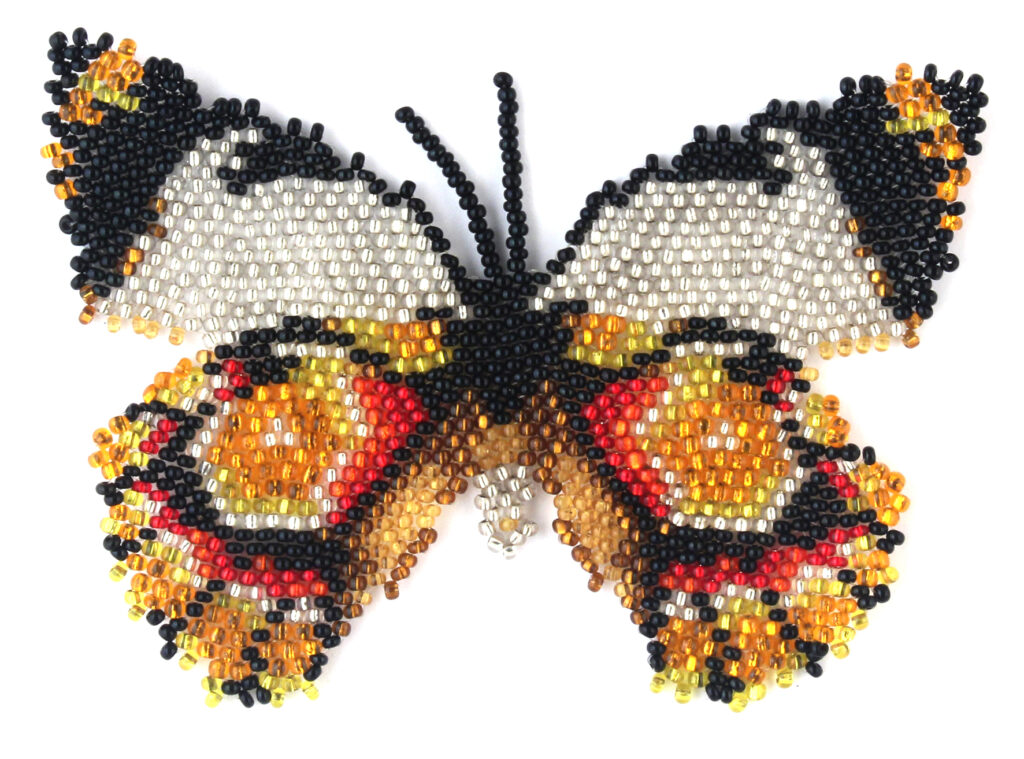
Delias callista (Jordan, 1912) is a butterfly of Papua New Guinea.
Its wingspan is about 5 cm.
This bead butterfly is woven of 11 colours.
The bead pattern is available at https://bead-patterns.com/beadpattern/butterfly-delias-callista
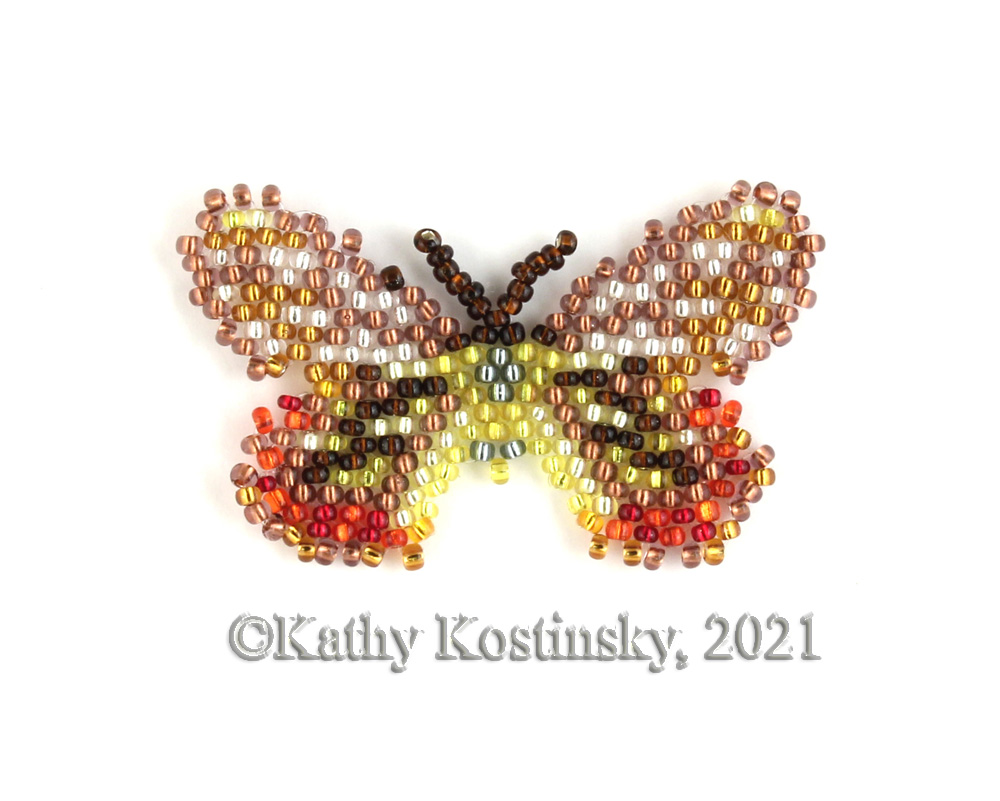
Delias eucharis (Drury, 1773), or the common Jezebel, is found in many areas of south and southeast Asia, especially in the non-arid regions of India, Sri Lanka, Indonesia, Myanmar and Thailand.
This pierid butterfly was first described by British entomologist Dru Drury in 1773.
Bright wings colouration shows te butterfly is unpalatable due to toxins got by the caterpillar from the host plants, mistletoes.
The wingspan is 65-85 mm.
The bead butterfly is woven of 12 colours.
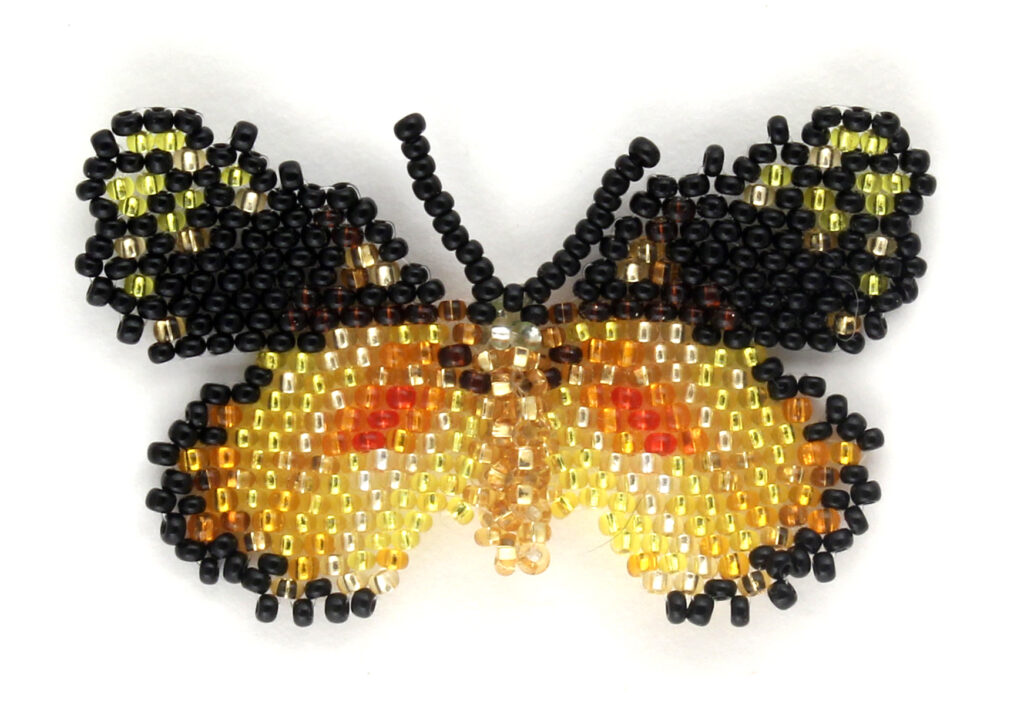
Delias lemoulti (Talbot, 1931) inhabits Timor, South-East Asia.
Its wingspan is 4 cm.
The bead butterfly is woven of 12 colours.
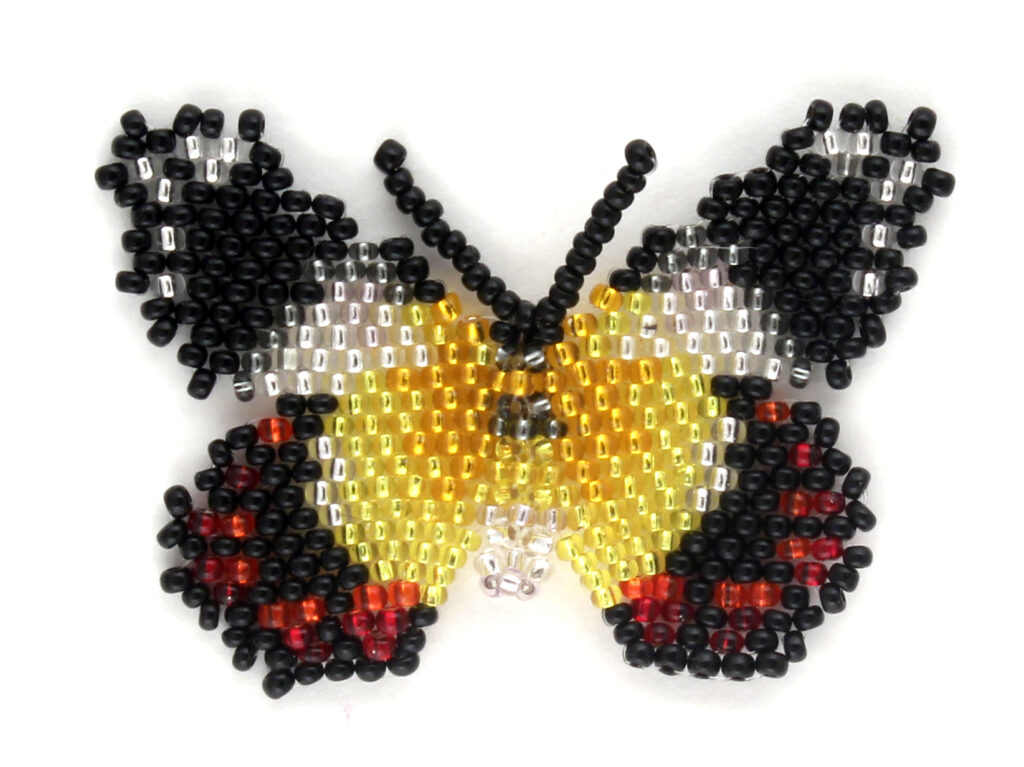
Delias timorensis (Boisduval, 1836) inhabits Australia and Asia.
The wingspan is about 60–70 mm for males and 64–71 mm for females.
The bead butterfly is woven of 10 colours.
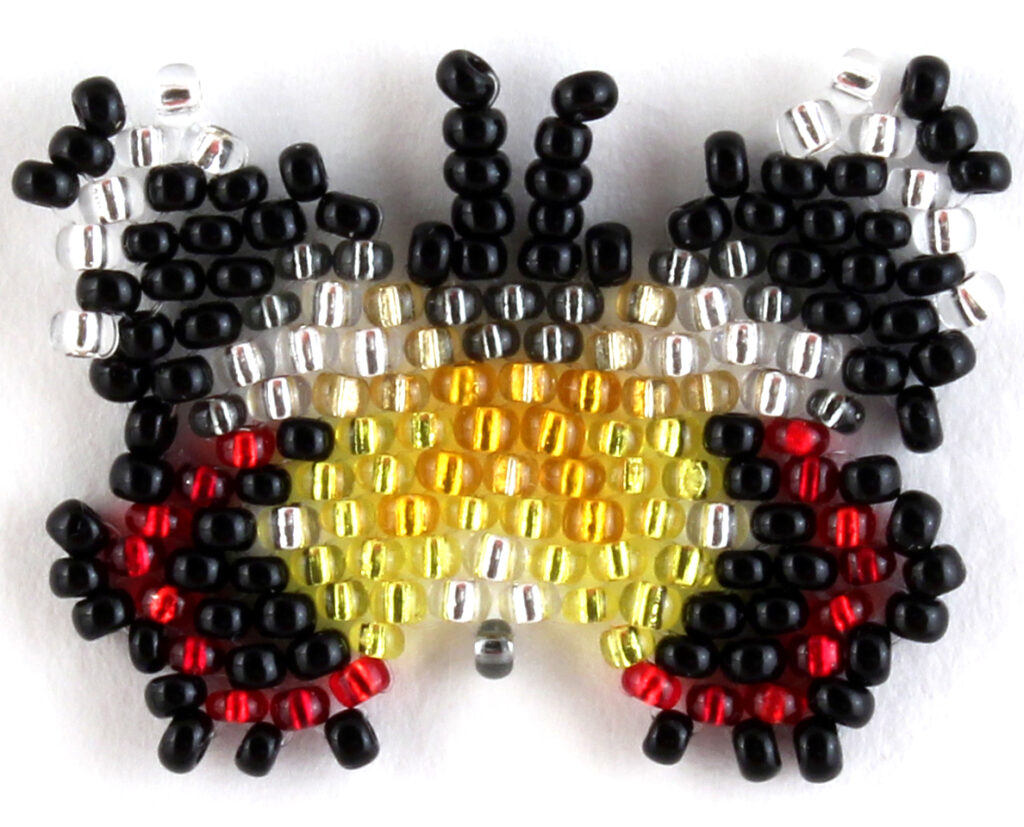
Delias timorensis. babberica (Talbot, 1939) (Babar) is an Australian butterfly.
Its wingspan is about 60-71 mm.
The bead butterfly is woven of 8 colours.
The bead pattern is available at https://bead-patterns.com/beadpattern/butterfly-delias-timorensis-babberica-mini
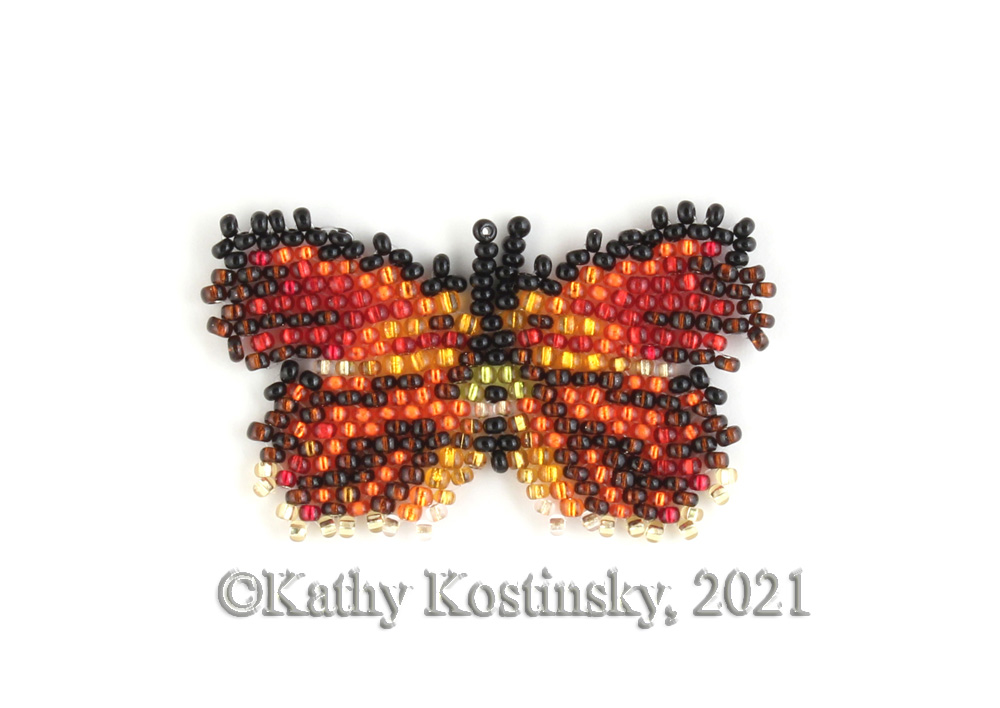
Eurema proterpia (Fabricius, 1775), or the tailed orange, was first described
by Danish zoologist Johan Christian Fabricius in 1775.
This Pieridae butterfly inhabits woodlands, deserts and
subtropics of North and South America.
The wingspan is about 50 mm.
The bead butterfly is woven of 11 colours.