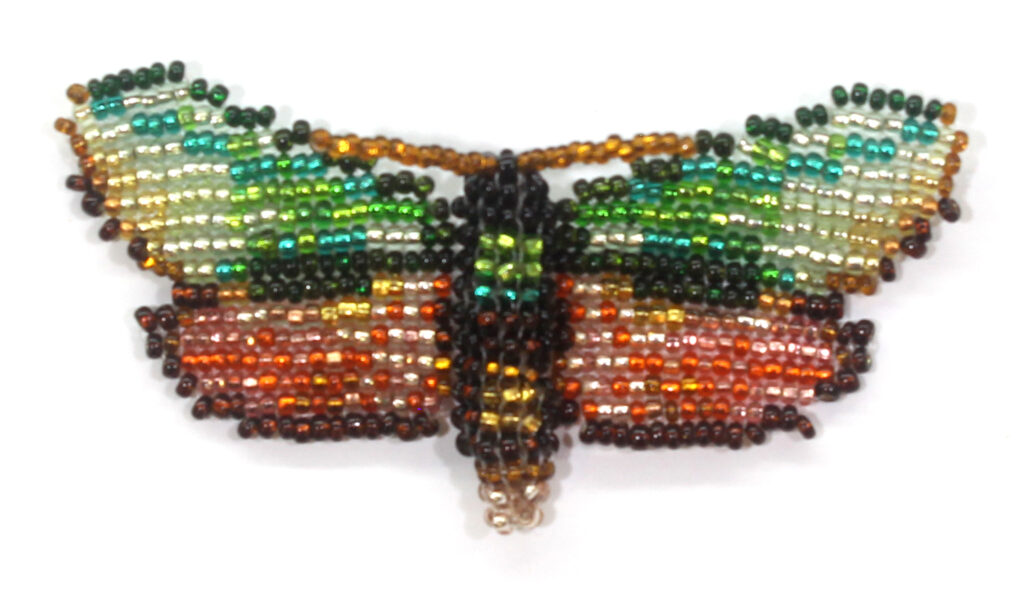
Adscita statices (Linnaeus, 1758), or the Green Forester, is a European day-flying mothIts wingspan is 25–28 mm.
The bead moth is woven of 19 colours.

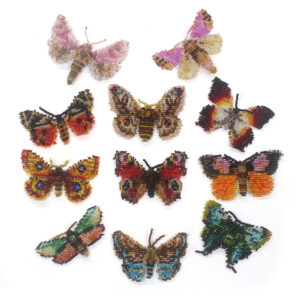
12 butterflies same as in SMALL collection, but made ig a different technique: not peyote stitch, but loom.
Adscita statices (Linnaeus, 1758), or the Green Forester, is a European day-flying mothIts wingspan is 25–28 mm.
The bead moth is woven of 19 colours.
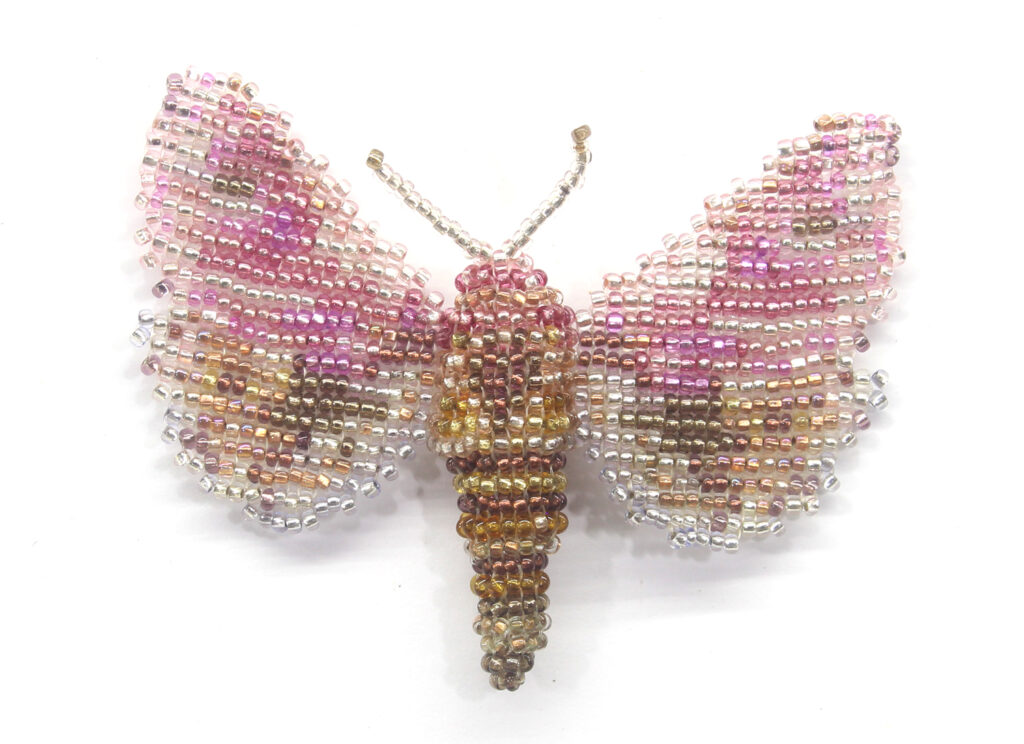
Aedophron rhodites (Eversmann, 1851) inhabits Eastern Mediterranean and through Ukrainian steppes to central Asia.
The wingspan of the real moth is 25 mm.
This beaded moth is loomed of 17 colours.
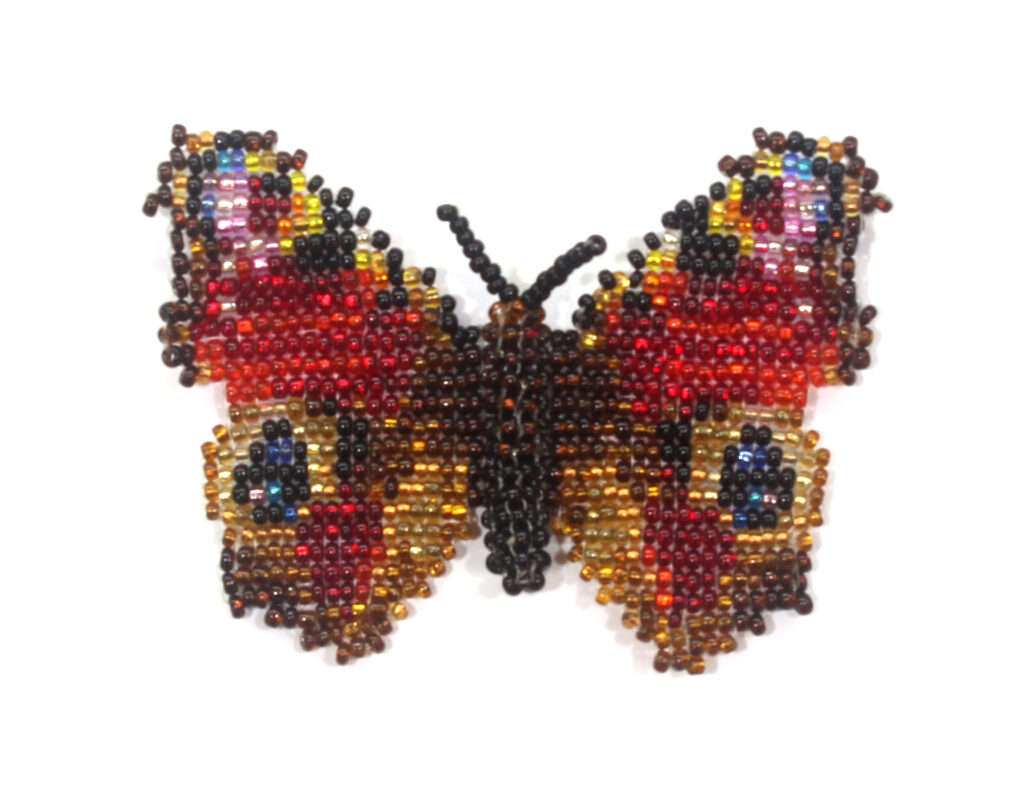
Aglais (Inachis) io (Linnaeus, 1758), or the European Peacock, more commonly known simply as the Peacock butterfly, is found in Europe, temperate Asia as far east as Japan.It is named in honour of nymph Io, the daughter of Ancient Greek river god Inachus.
The span of its wings is 5-7 cm.
This bead butterfly is loomed of 22 colours.
The bead pattern will be available later.
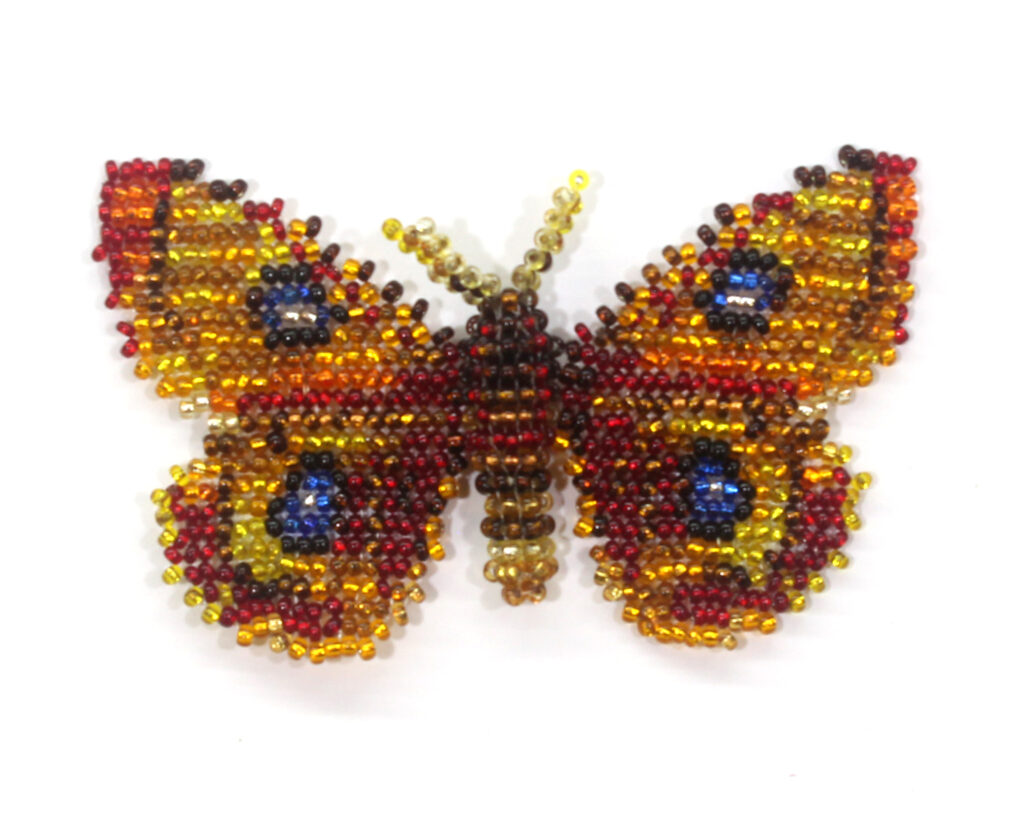
Aglia tau (Linnaeus, 1758) , or the Tau Emperor, is a European moth.
Its wingspan is 64-80 mm.
Though these moths fly mostly at night, males look for females at daytime, too.
Adult aglia tau moths do not eat at all.
The bead moth is loomed of 15 colours.
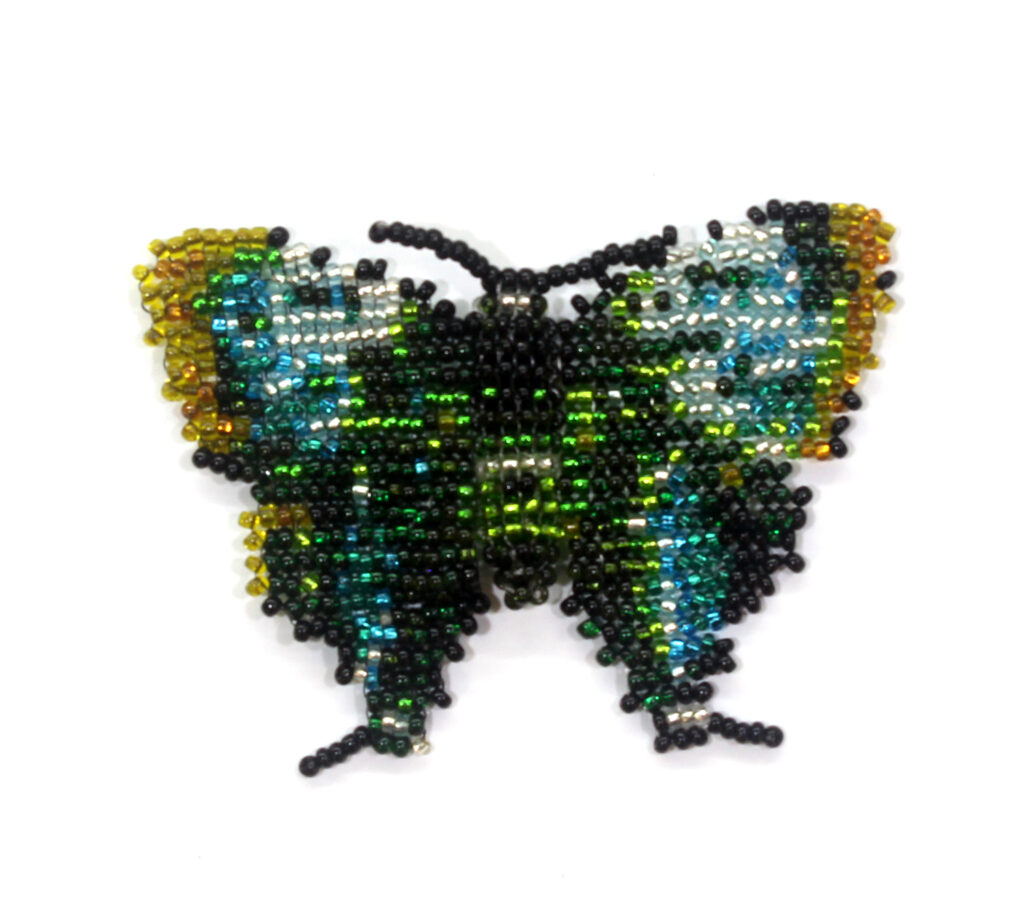
Atlides halesus (Cramer, 1777), or the Great purple hairstreak is a forest butterfly of North and Central America.
Its wingspan is 30-50 mm.
The wings sparkle with different shades of blue, green and purple, so in this bead butterfly the wings are coloured a bit differently to show the sparkling.
The bead butterfly is loomed of 11 colours.
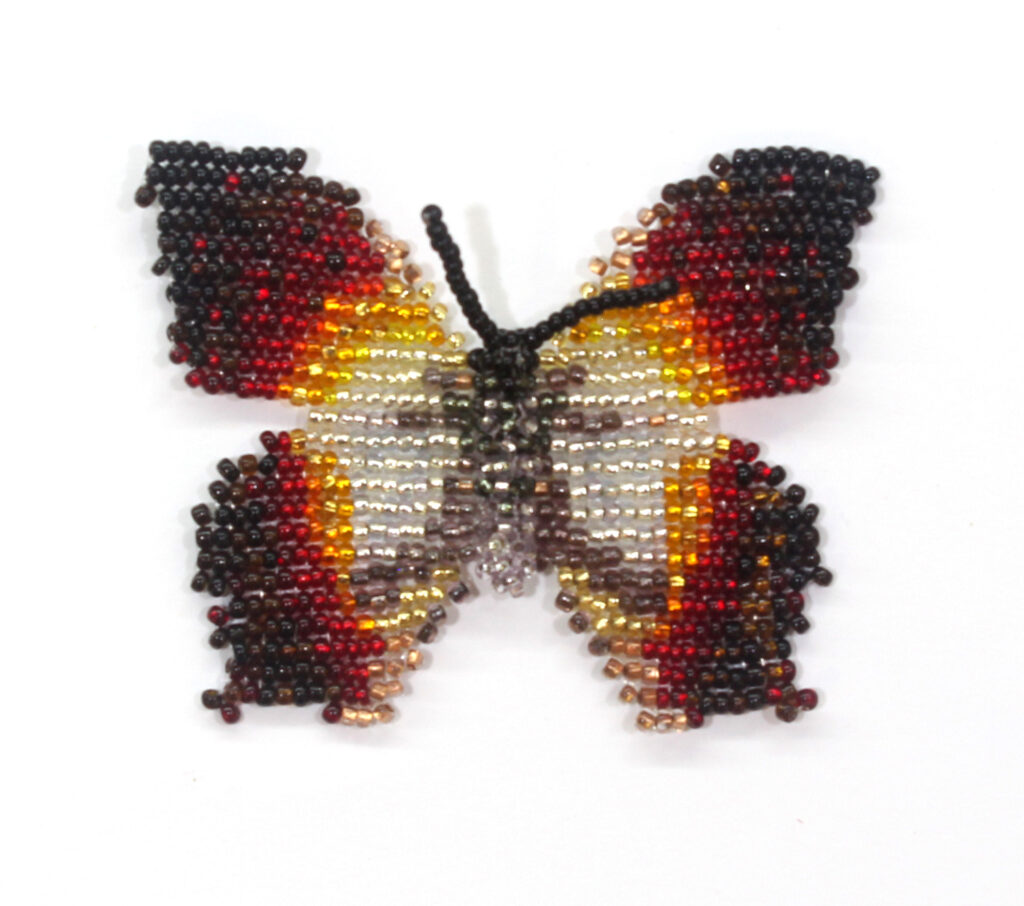
Charaxes fulvescens (Aurivillius, 1891), or the Forest Pearl charaxes is a butterfly of Central Africa.
It inhabits dense evergreen forests at low to moderate altitudes and occasionally savannas.
Its wingspan is 80-90 mm.
The bead butterfly is woven of 18 colours.
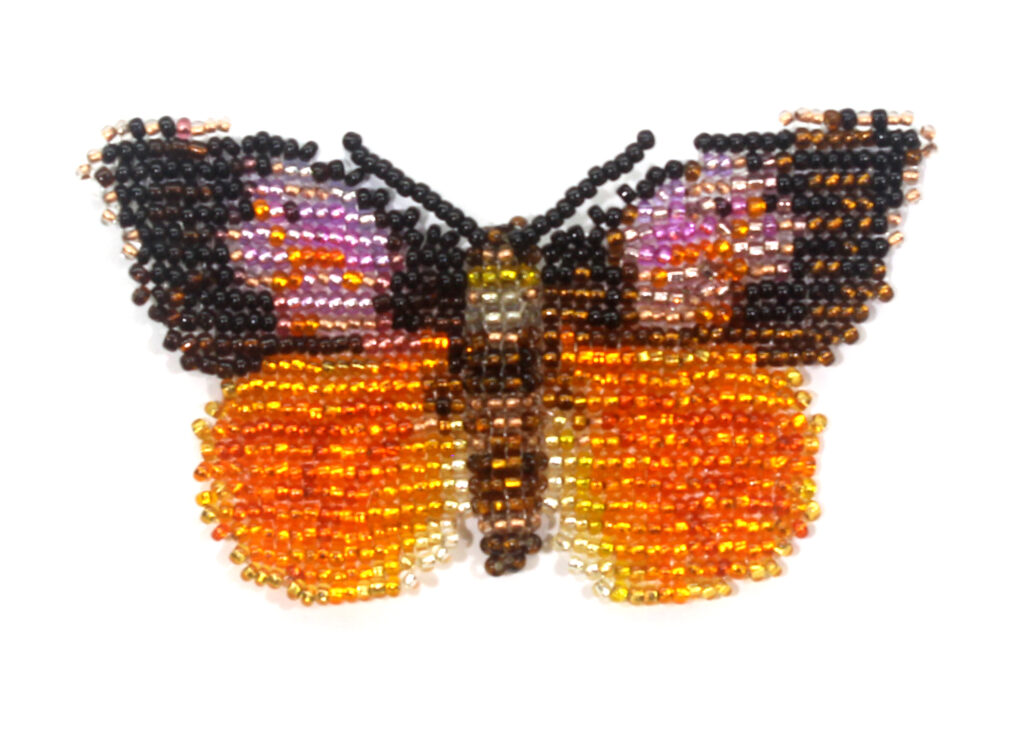
Colias eurydice (Boisduval, 1855), or the California dogface butterfly, is endemic to California, and is California’s state insect symbol.Its wingspan is 20-30 mm.
The bead butterfly is loomed of 18 colours.
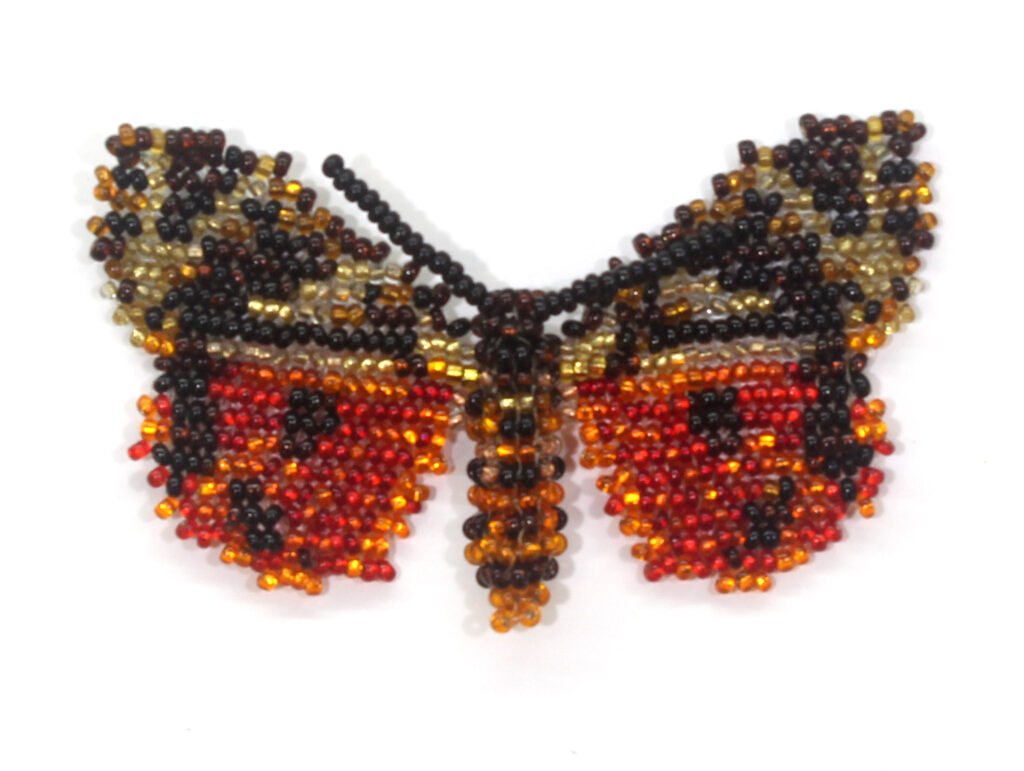
Euplagia quadripunctaria (Poda, 1761), or the Jersey tiger, is a day-flying moth. Its wingspan is 52–65 mm. This moth flies in Europe from Estonia and Latvia in the north to the Mediterranean coast and islands in the south. It is also found in West Russia, South Urals, Asia Minor, Rhodes and nearby islands, the Near East, Caucasus, South Turkmenistan, and Iran. It is also frequent seen in the Channel Islands and was rarely met in the British Isles in Victorian times.
The bead moth is loomed of 12 colours.
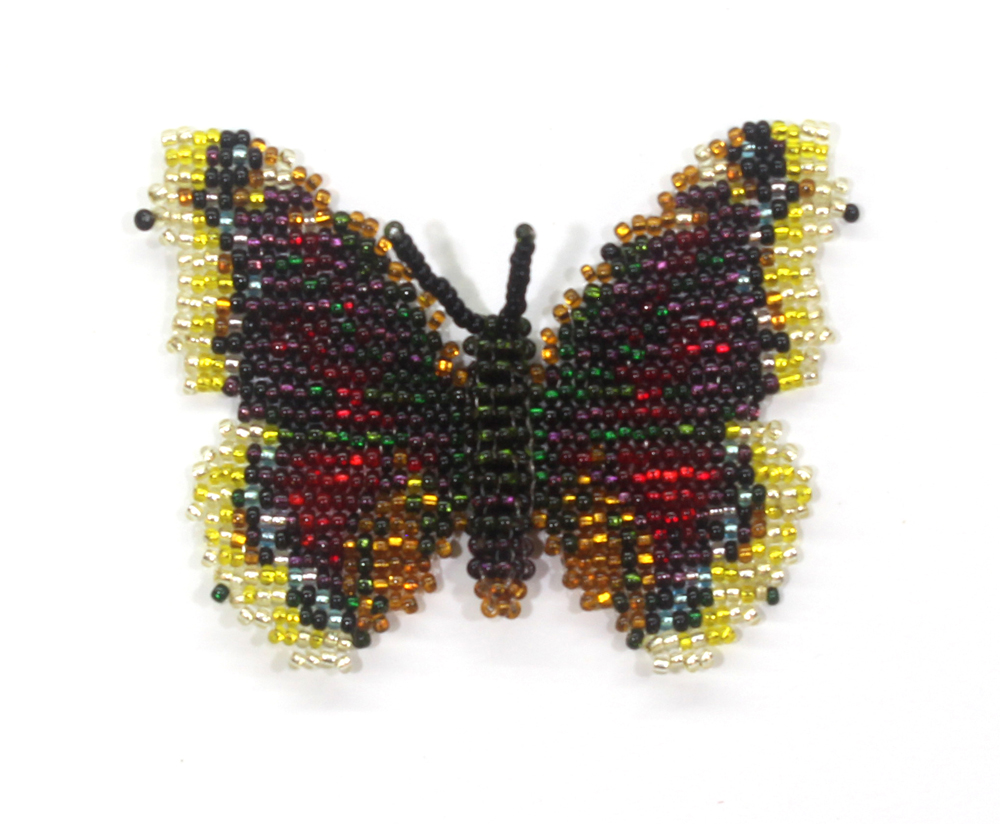
Nymphalis antiopa (Linnaeus, 1758), known as mourning cloak in North America and the Camberwell beauty in Britain, is a large butterfly inhabits Eurasia and North America. It is also the State Insect of Montana, adopted in 2001.
The butterfly’s wingspan is 7-9 cm.
The bead butterfly is loomed of 24 colours.
The bead pattern will be available later.
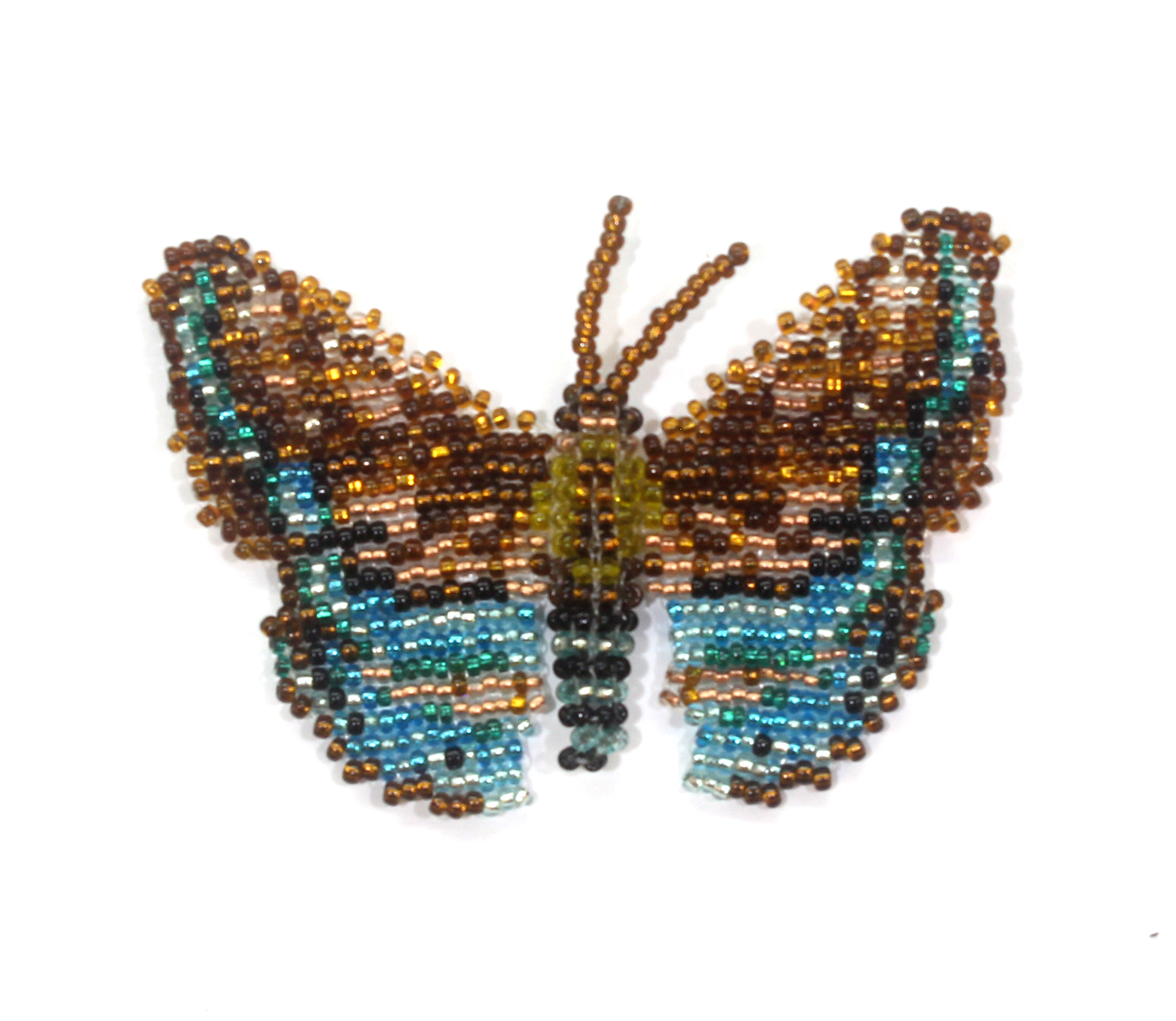
Quadrus contubernalis anicius (Godman & Salvin 1894) inhabits Guatemala. Its wingspan is about 3 cm.
This bead butterfly is woven of 10 colours.
The bead pattern will be available later.
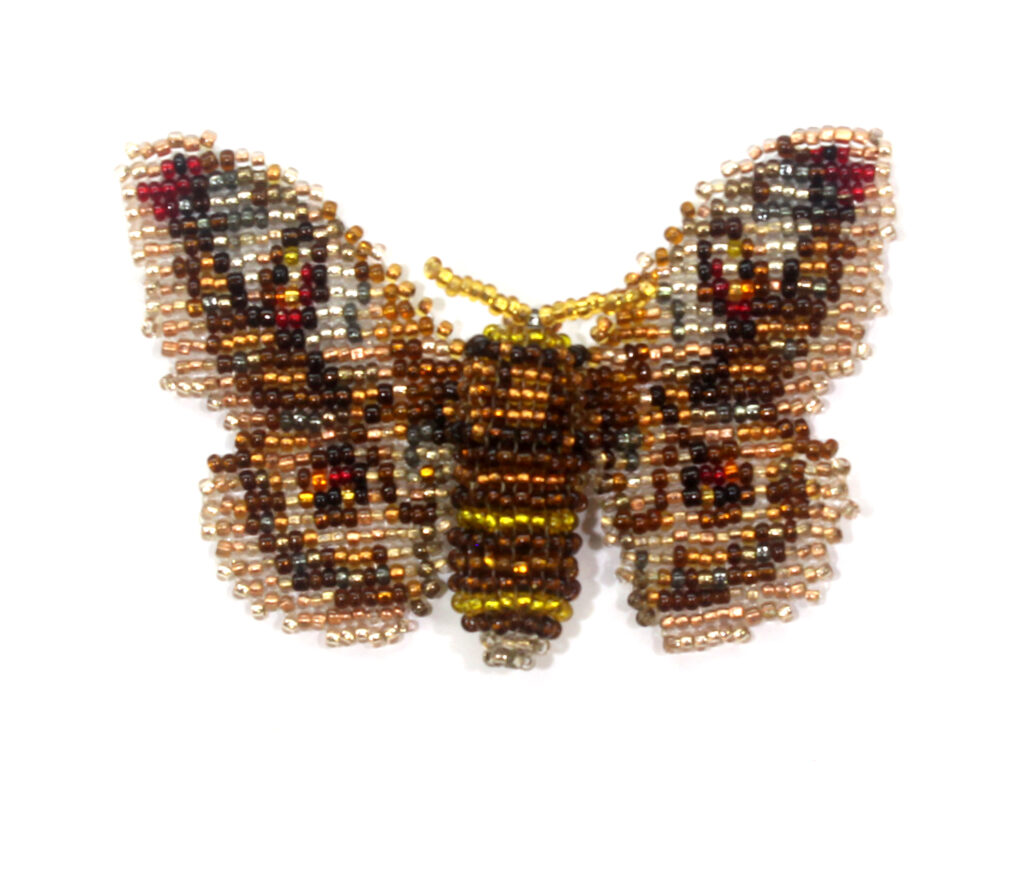
Saturnia pavonia (Linnaeus, 1758), or the Small Emperor Moth flies throughout the Palearctic region.
Its wingspan is about 6 cm.
The bead moth is woven of 19 colours.
The bead pattern will be available later.
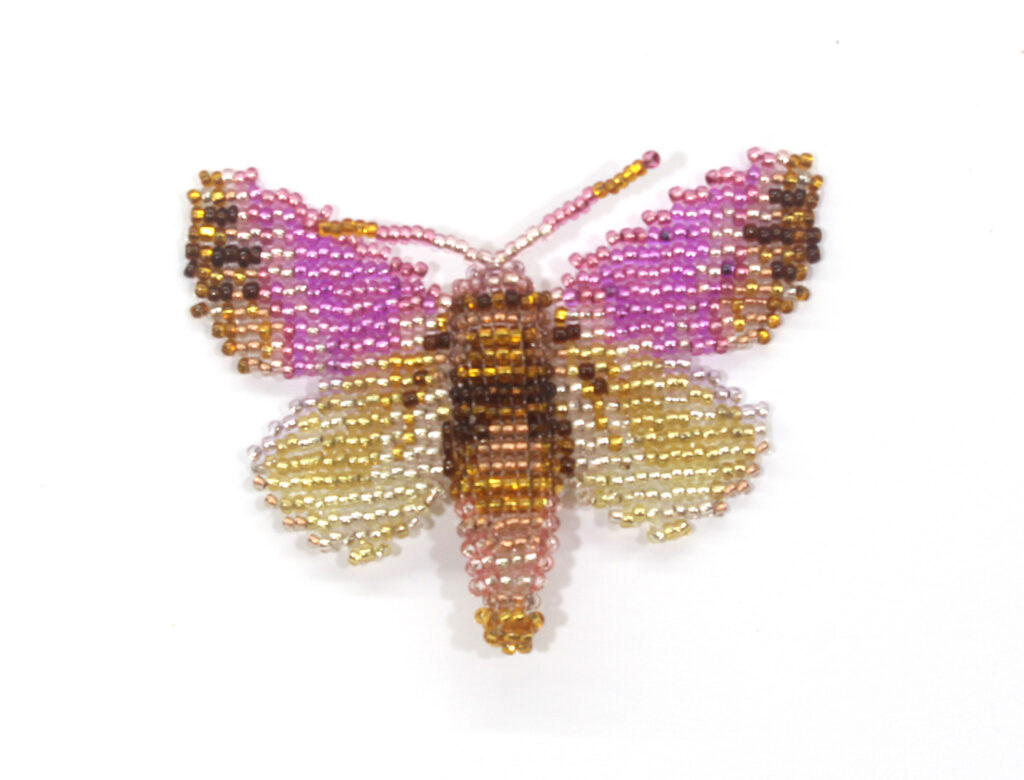
Schinia florida (Guenée, 1852), or the Primrose Moth inhabits North America from Alberta to Nova Scotia south in east to northern Florida and Texas.
Its wingspan is 2 cm.
The bead moth is woven of 15 colours.
The bead pattern will be available later.