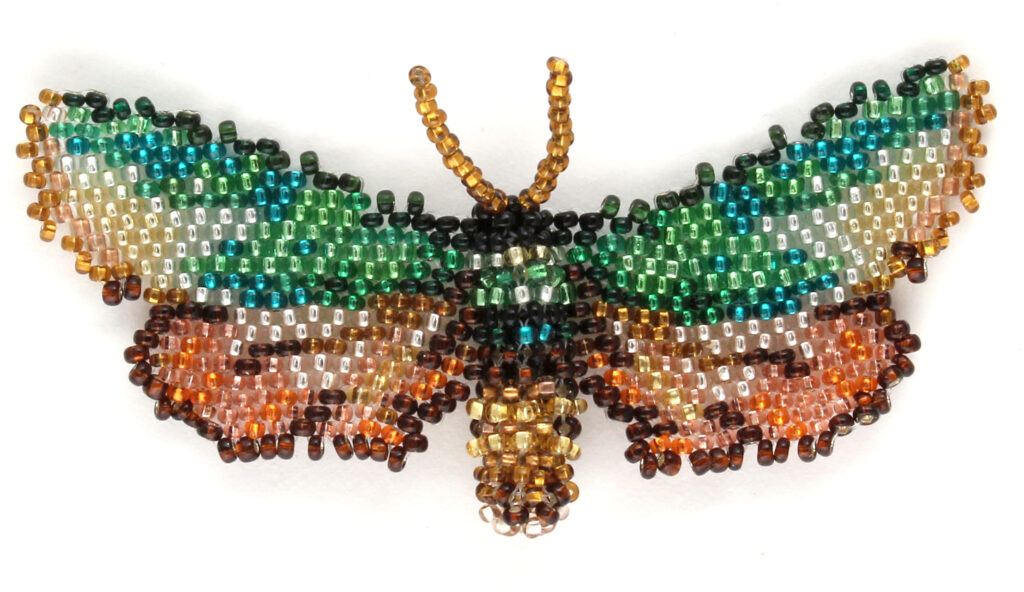
Adscita statices (Linnaeus, 1758), or the Green Forester, is a European day-flying moth
Its wingspan is 25–28 mm.
The bead moth is woven of 19 colours.

Adscita statices (Linnaeus, 1758), or the Green Forester, is a European day-flying moth
Its wingspan is 25–28 mm.
The bead moth is woven of 19 colours.
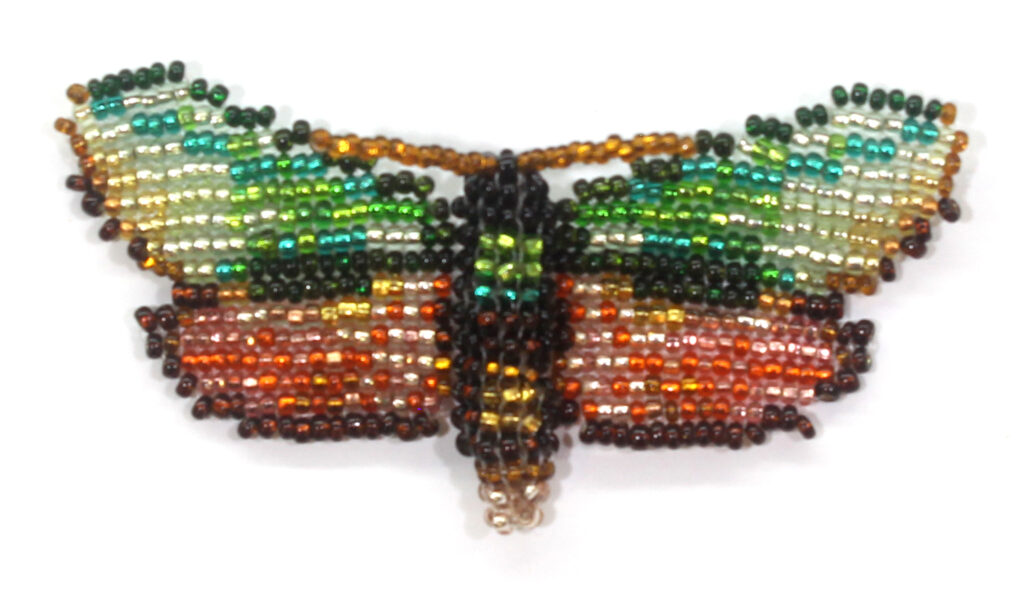
Adscita statices (Linnaeus, 1758), or the Green Forester, is a European day-flying mothIts wingspan is 25–28 mm.
The bead moth is woven of 19 colours.
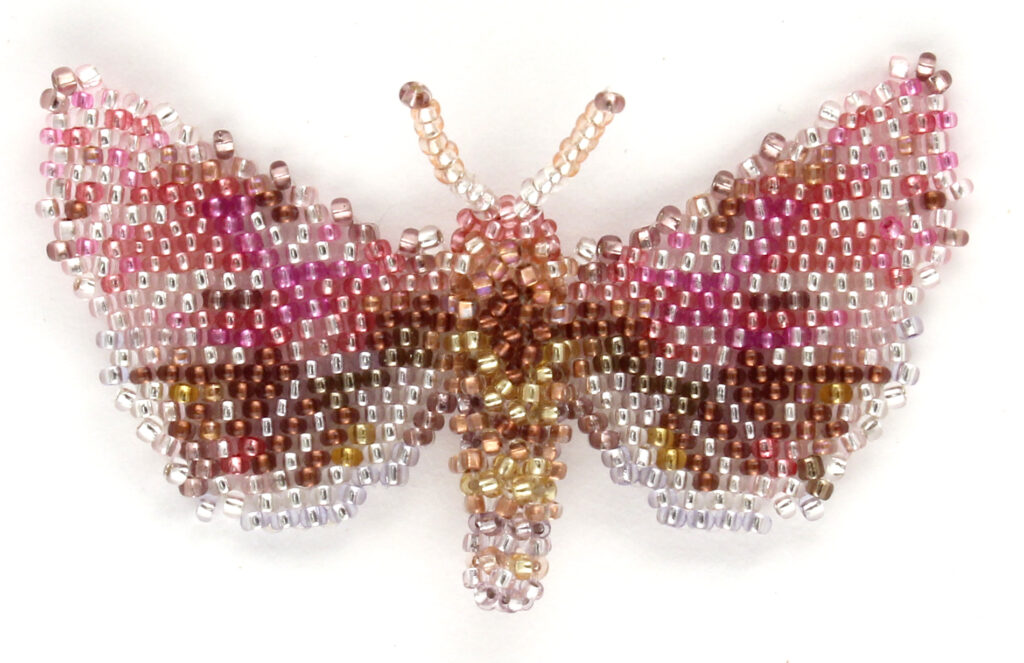
Aedophron rhodites (Eversmann, 1851) inhabits Eastern Mediterranean and through Ukrainian steppes to central Asia.
The wingspan of the real moth is 25 mm.
This beaded moth is woven of 17 colours.
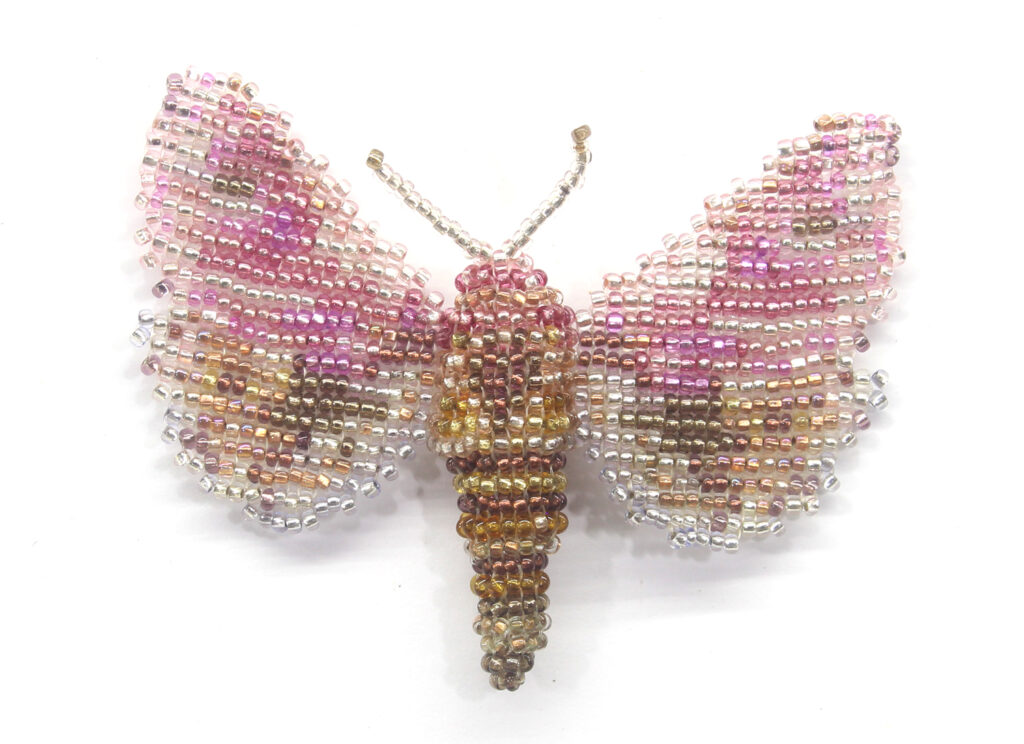
Aedophron rhodites (Eversmann, 1851) inhabits Eastern Mediterranean and through Ukrainian steppes to central Asia.
The wingspan of the real moth is 25 mm.
This beaded moth is loomed of 17 colours.
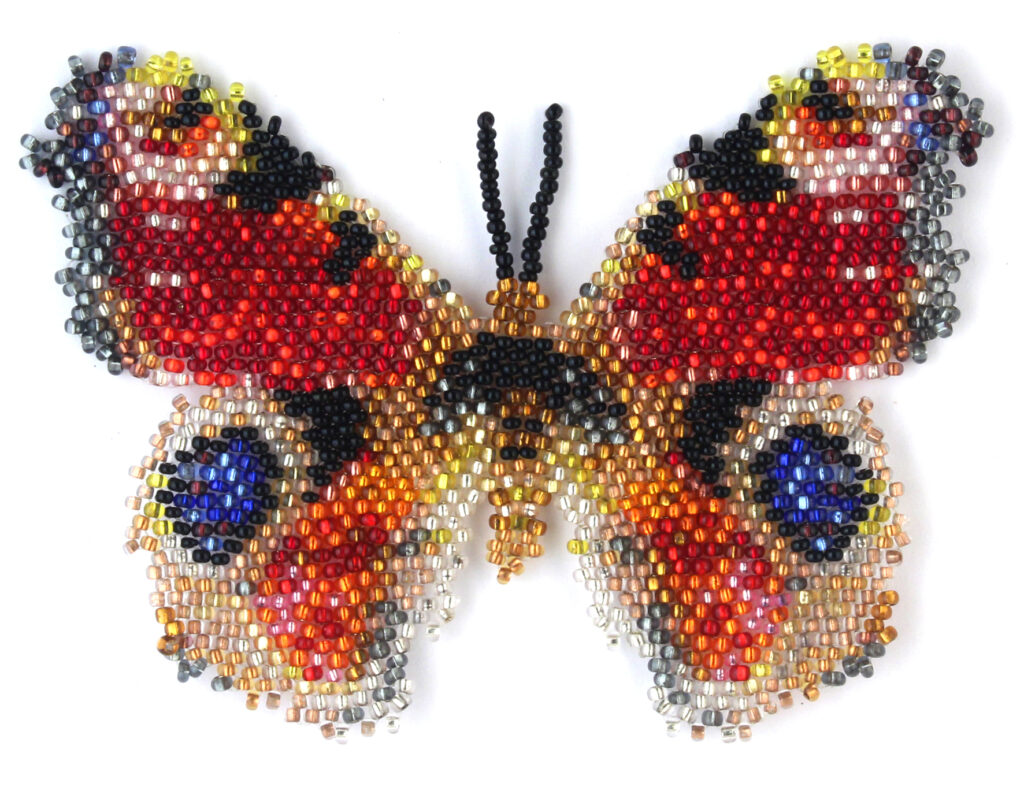
Aglais (Inachis) io (Linnaeus, 1758), or the European Peacock, more commonly known simply as the Peacock butterfly, is found in Europe, temperate Asia as far east as Japan.It is named in honour of nymph Io, the daughter of Ancient Greek river god Inachus.
The span of its wings is 5-7 cm.
This bead butterfly is woven of 29 colours.
The bead pattern is available at https://bead-patterns.com/beadpattern/butterfly-inachis-io-linnaeus
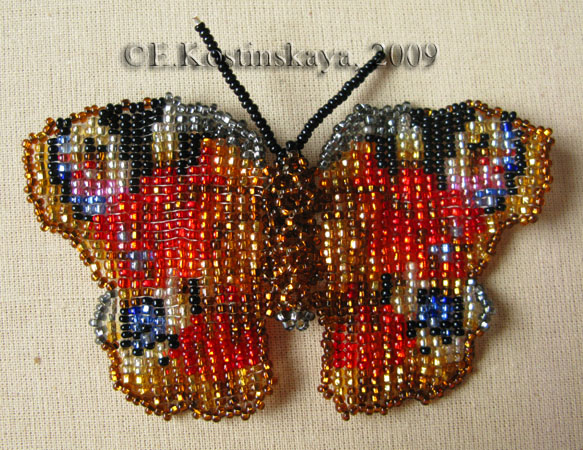
Aglais (Inachis) io (Linnaeus, 1758), or the European Peacock, more commonly known simply as the Peacock butterfly, is found in Europe, temperate Asia as far east as Japan.It is named in honour of nymph Io, the daughter of Ancient Greek river god Inachus.
The span of its wings is 5-7 cm.
This bead butterfly is loomed of 15 colours in 2009.
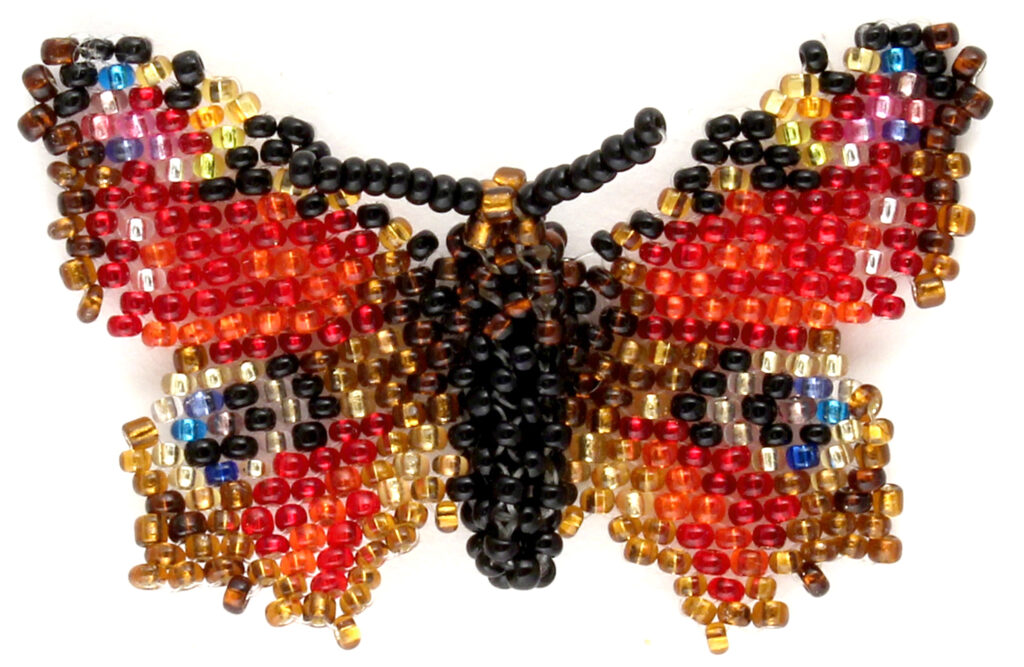
Aglais (Inachis) io (Linnaeus, 1758), or the European Peacock, more commonly known simply as the Peacock butterfly, is found in Europe, temperate Asia as far east as Japan.It is named in honour of nymph Io, the daughter of Ancient Greek river god Inachus.
The span of its wings is 5-7 cm.
This bead butterfly is woven of 22 colours.
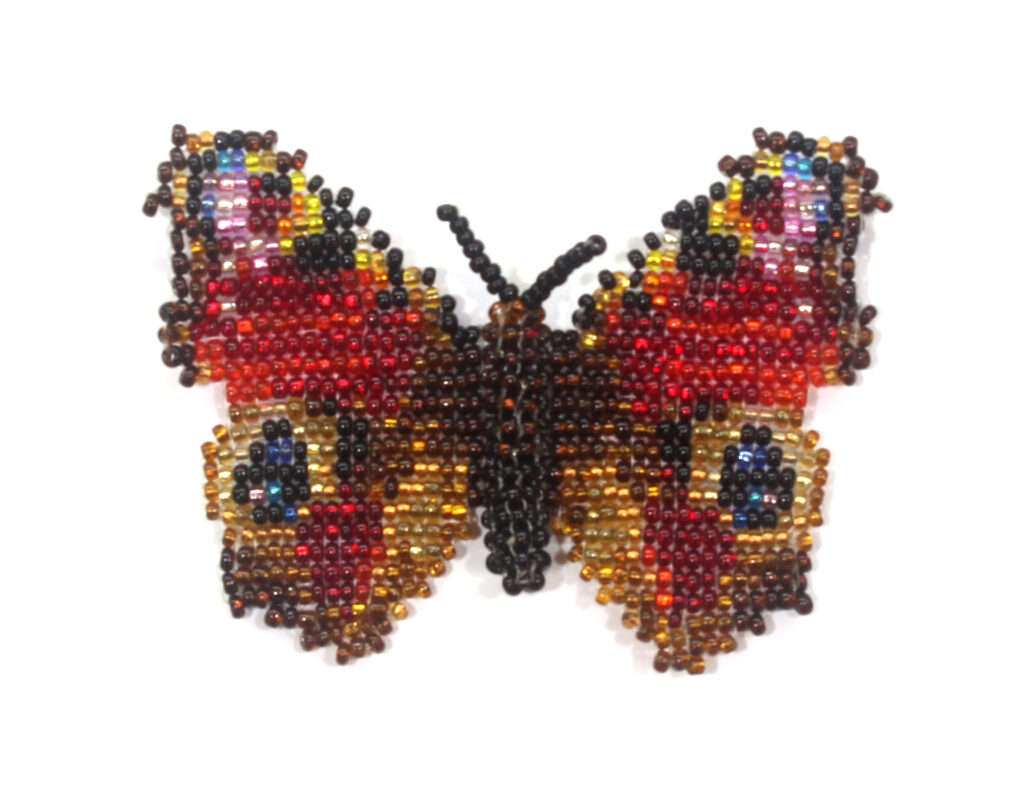
Aglais (Inachis) io (Linnaeus, 1758), or the European Peacock, more commonly known simply as the Peacock butterfly, is found in Europe, temperate Asia as far east as Japan.It is named in honour of nymph Io, the daughter of Ancient Greek river god Inachus.
The span of its wings is 5-7 cm.
This bead butterfly is loomed of 22 colours.
The bead pattern will be available later.
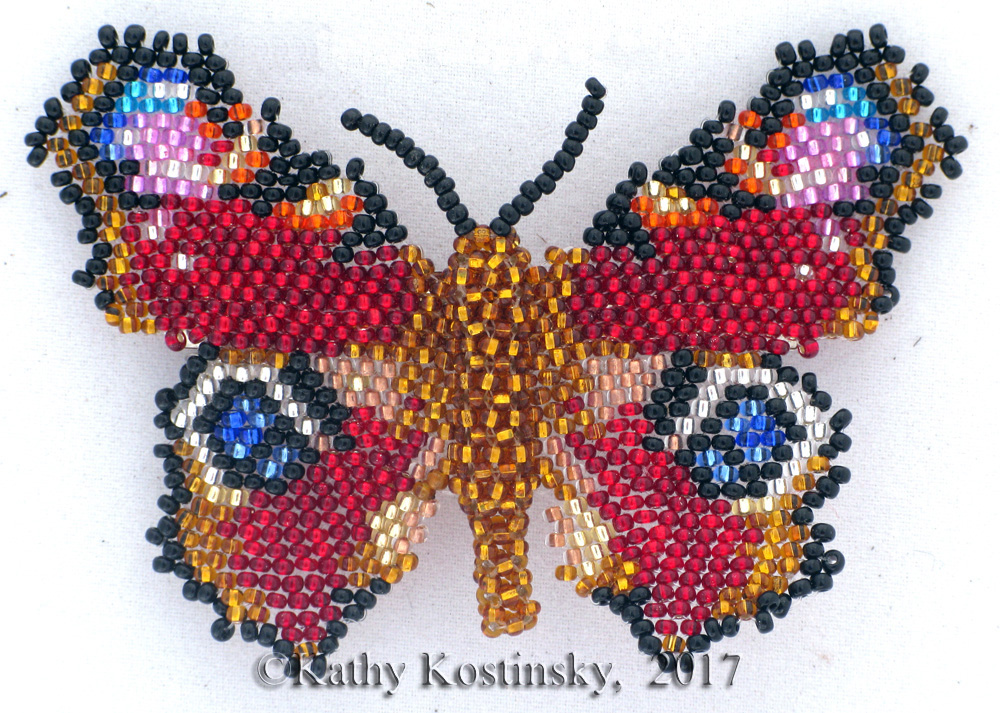
Aglais (Inachis) io (Linnaeus, 1758), or the European Peacock, more commonly known simply as the Peacock butterfly, is found in Europe, temperate Asia as far east as Japan.It is named in honour of nymph Io, the daughter of Ancient Greek river god Inachus.
The span of its wings is 5-7 cm.
This bead butterfly is woven of 13 colours.
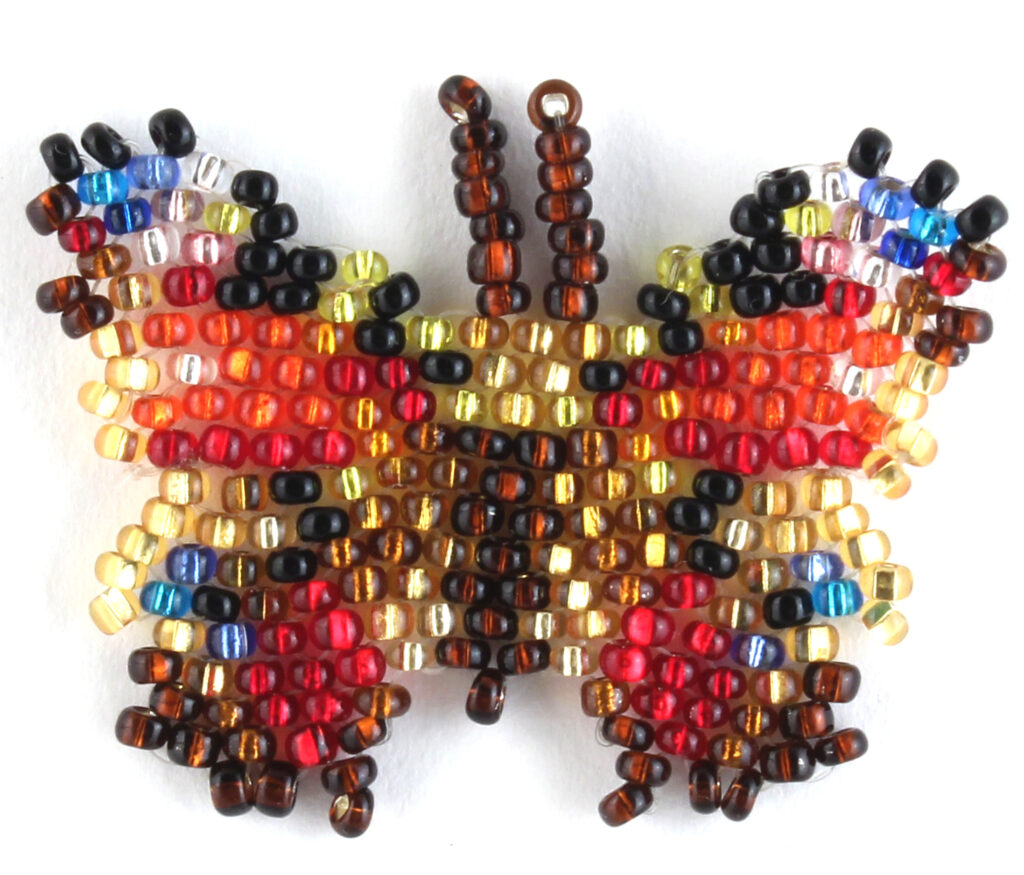
Aglais (Inachis) io (Linnaeus, 1758), or the European Peacock, more commonly known simply as the Peacock butterfly, is found in Europe, temperate Asia as far east as Japan.It is named in honour of nymph Io, the daughter of Ancient Greek river god Inachus.
The span of its wings is 5-7 cm.
This bead butterfly is woven of 17 colours.

Aglais urticae (Linnaeus, 1758), or the Small Tortoiseshell is a European butterfly flying all summer long. It is the official butterfly of Denmark.
Its wingspan is about 40-60 mm.
The bead butterfly is woven of 11 colours.
The bead pattern is available at https://bead-patterns.com/beadpattern/small-tortoiseshell-butterfly-aglais-urticae-mini
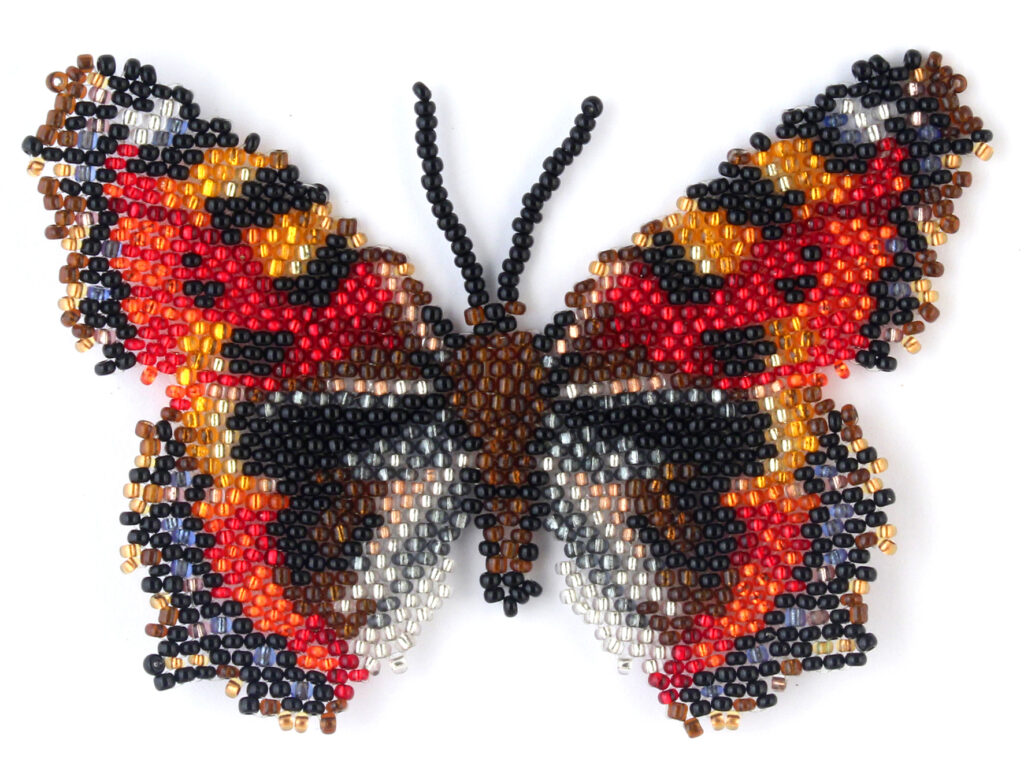
Aglais urticae (Linnaeus, 1758), or the Small Tortoiseshell is a Eurasian butterfly with wingspan of about 5 cm.
This beaded butterfly is woven of 16 colours.
The bead pattern is available at https://bead-patterns.com/beadpattern/butterfly-aglais-urticae
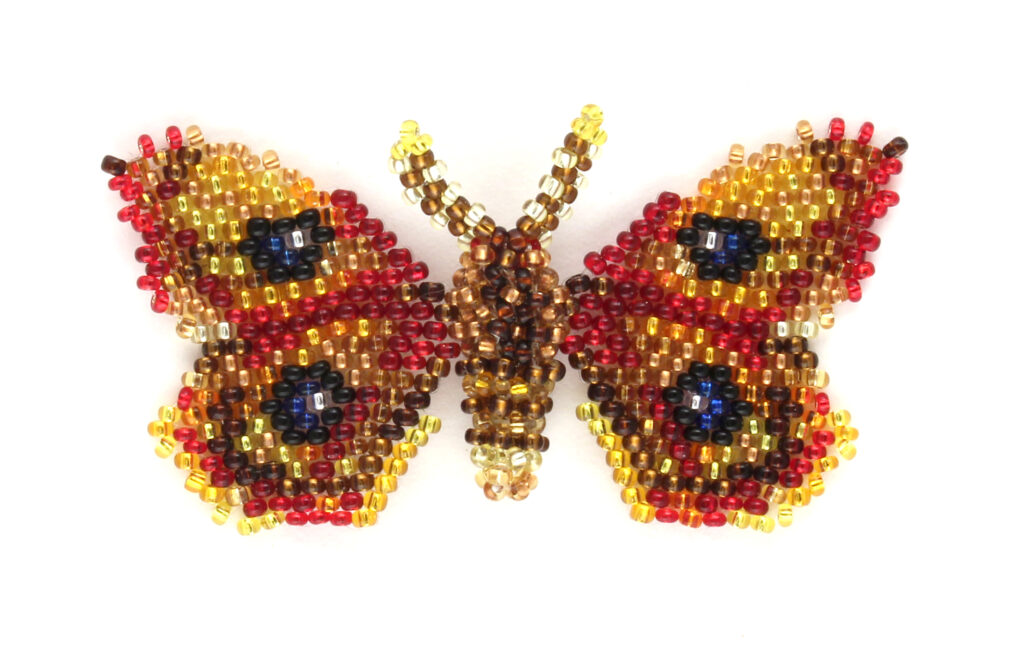
Aglia tau (Linnaeus, 1758) , or the Tau Emperor, is a European moth.
Its wingspan is 64-80 mm.
Though these moths fly mostly at night, males look for females at daytime, too.
Adult aglia tau moths do not eat at all.
The bead moth is woven of 15 colours.
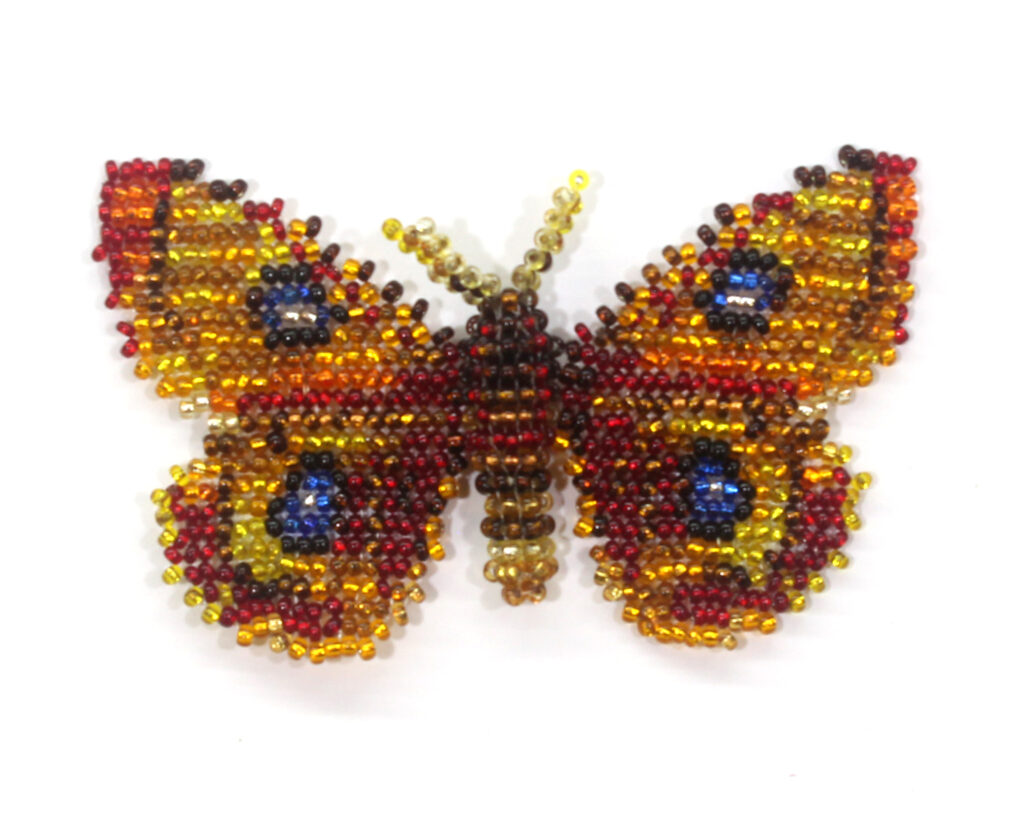
Aglia tau (Linnaeus, 1758) , or the Tau Emperor, is a European moth.
Its wingspan is 64-80 mm.
Though these moths fly mostly at night, males look for females at daytime, too.
Adult aglia tau moths do not eat at all.
The bead moth is loomed of 15 colours.
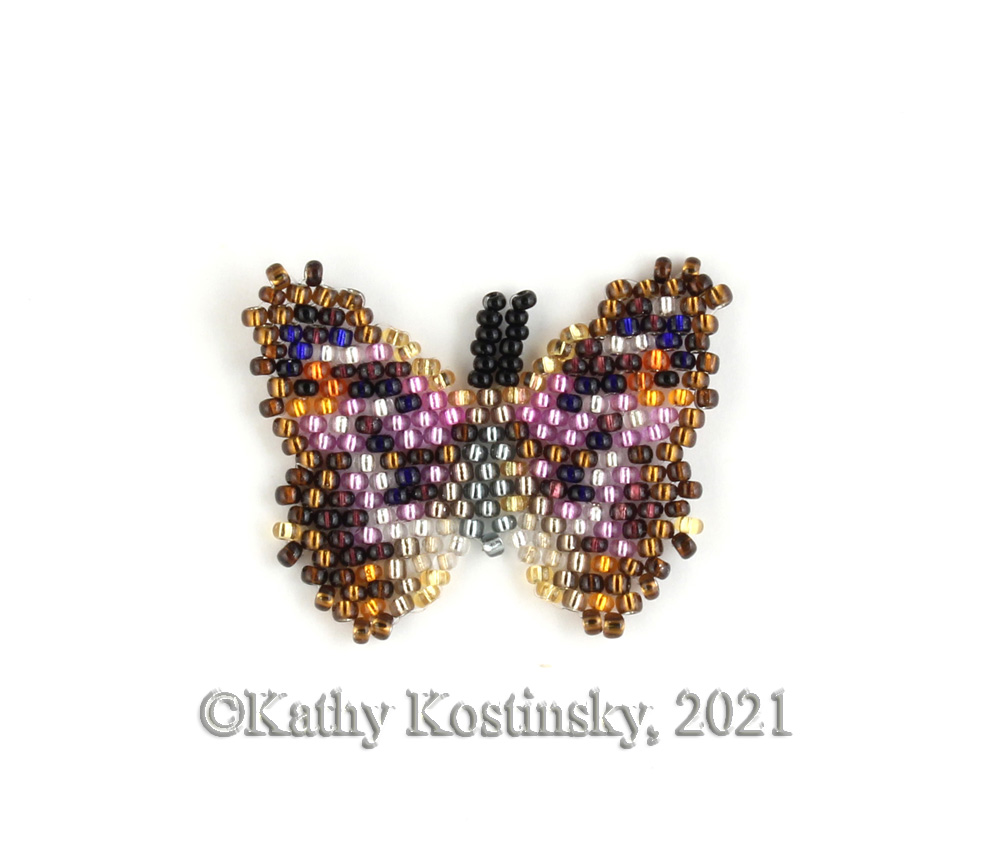
Apatura iris (Linnaeus, 1758), or the Purple Emperor, was first described by the great Swedish naturalist Carl Linnaeus in 1758. The Latin name of the butterfly is linked to Irida, the Greek goddess of rainbow. Apatura iris inhabits European and Asian forests.
The wingspan is 60-80 mm.
The bead butterfly is woven of 14 colours.