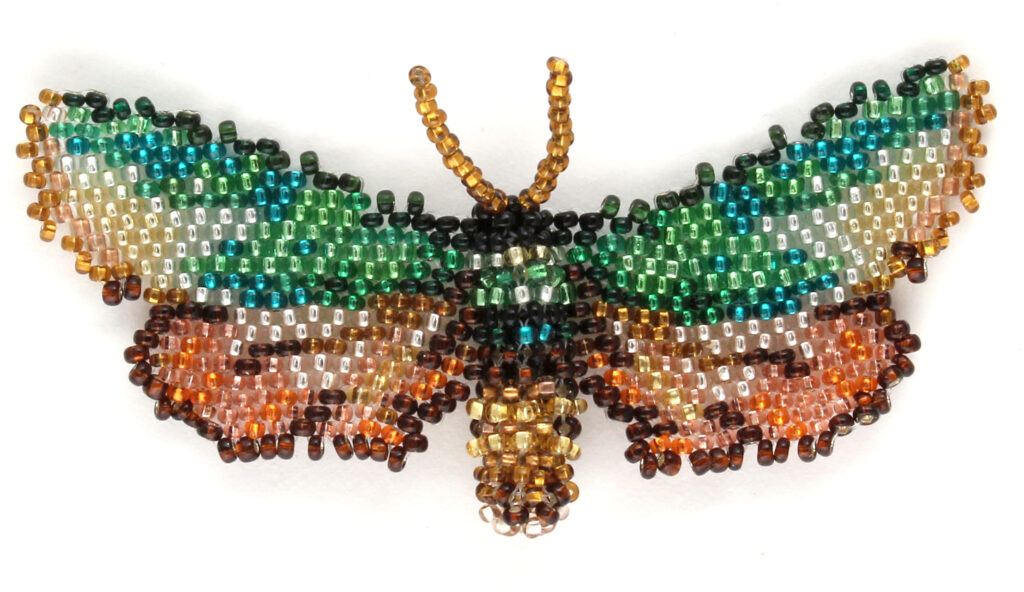
Adscita statices (Linnaeus, 1758), or the Green Forester, is a European day-flying moth
Its wingspan is 25–28 mm.
The bead moth is woven of 19 colours.
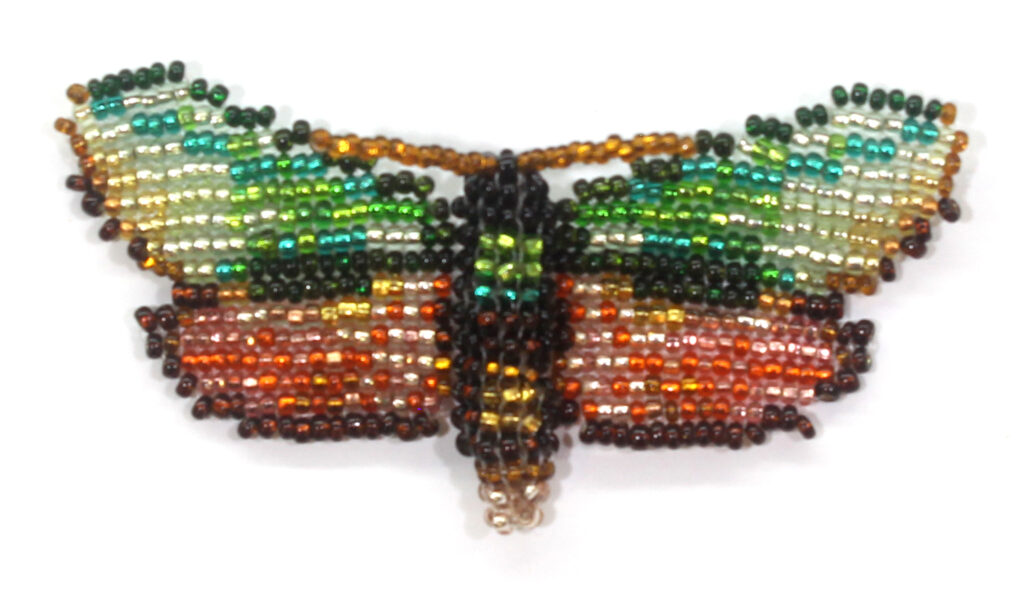
Adscita statices (Linnaeus, 1758), or the Green Forester, is a European day-flying moth
Its wingspan is 25–28 mm.
The bead moth is woven of 19 colours.
Adscita statices (Linnaeus, 1758), or the Green Forester, is a European day-flying mothIts wingspan is 25–28 mm.
The bead moth is woven of 19 colours.
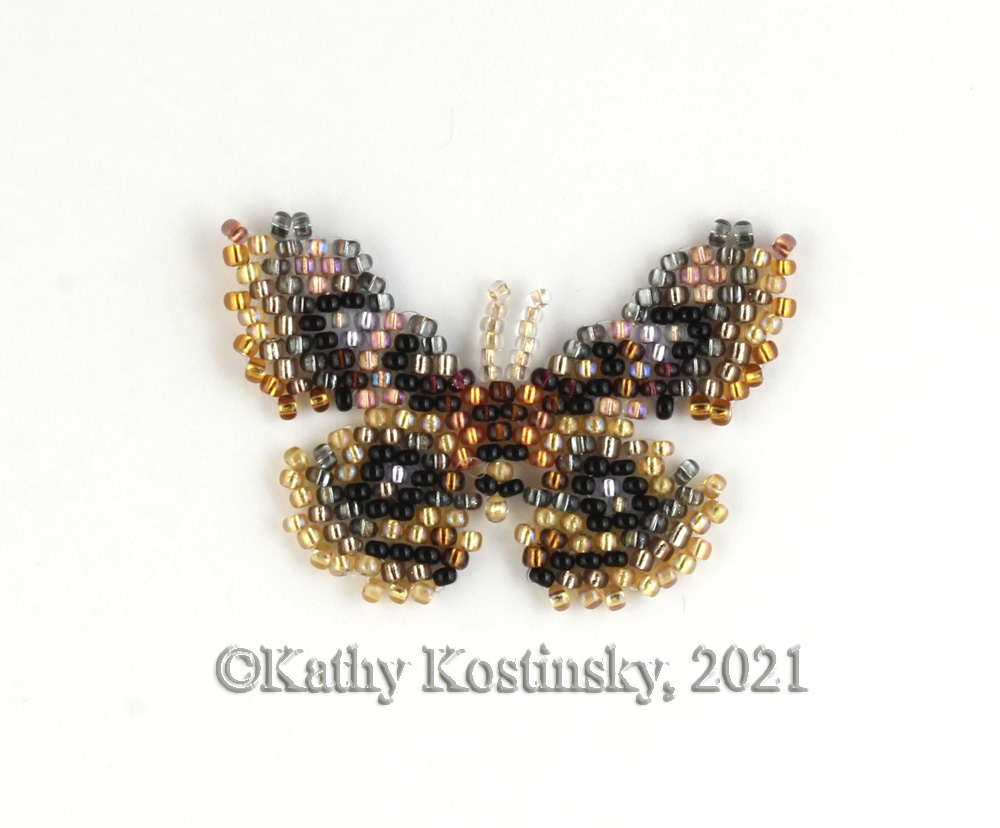
Neoris huttoni (Moore, 1862) moth was first described by British entomologist and illustrator Frederic Moore in 1862.
Neoris huttoni inhabits mountains of Central Asia, mostly at 1500-2000 meters over the sea level. Caterpillars prefer to feed on pistachios and wild almond. Imago (adults)
do not eat, so they live only 2-3 days.
Wingspan is 100-120 mm.
The bead butterfly is woven of 13 colours.
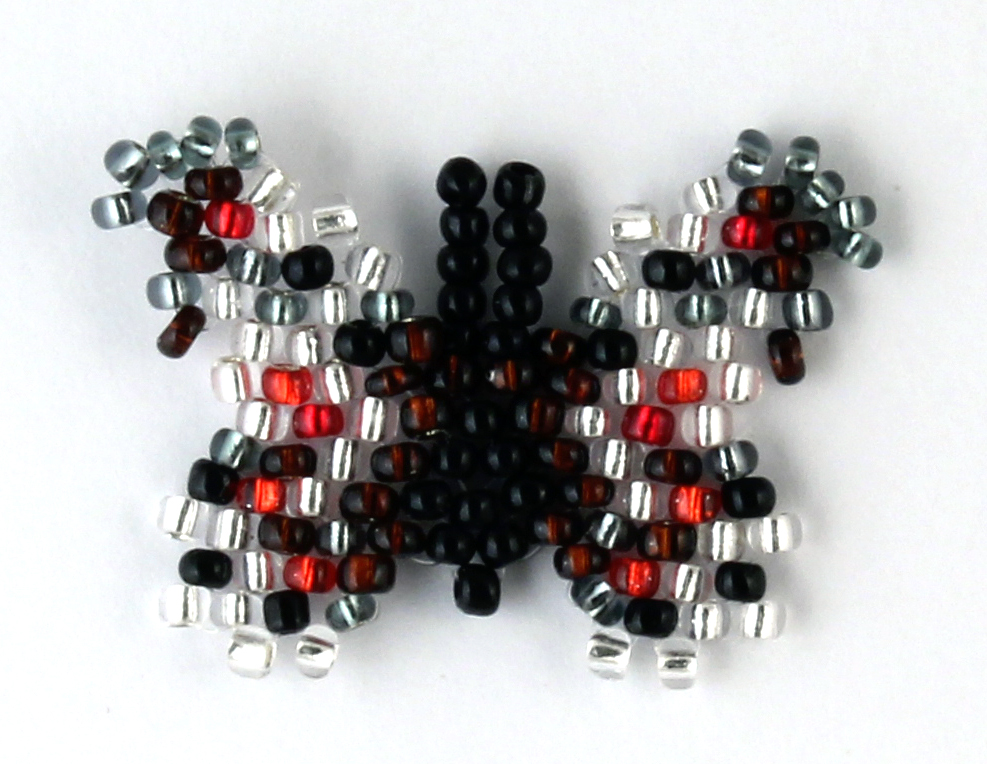
Parnassius apollo (Linnaeus, 1758), also called the Mountain Appolo, is a relict butterfly (one of the first butterflies on the earth). Inhabits mountain areas of Northern Europe and Asia. The butterfly got its name in honour of Apollo, Greek god of arts and poetry.
The wingspan is about 8 cm.
This bead butterfly is woven of 5 colours.
The bead pattern is available at https://bead-patterns.com/beadpattern/butterfly-parnassius-apollo-micro
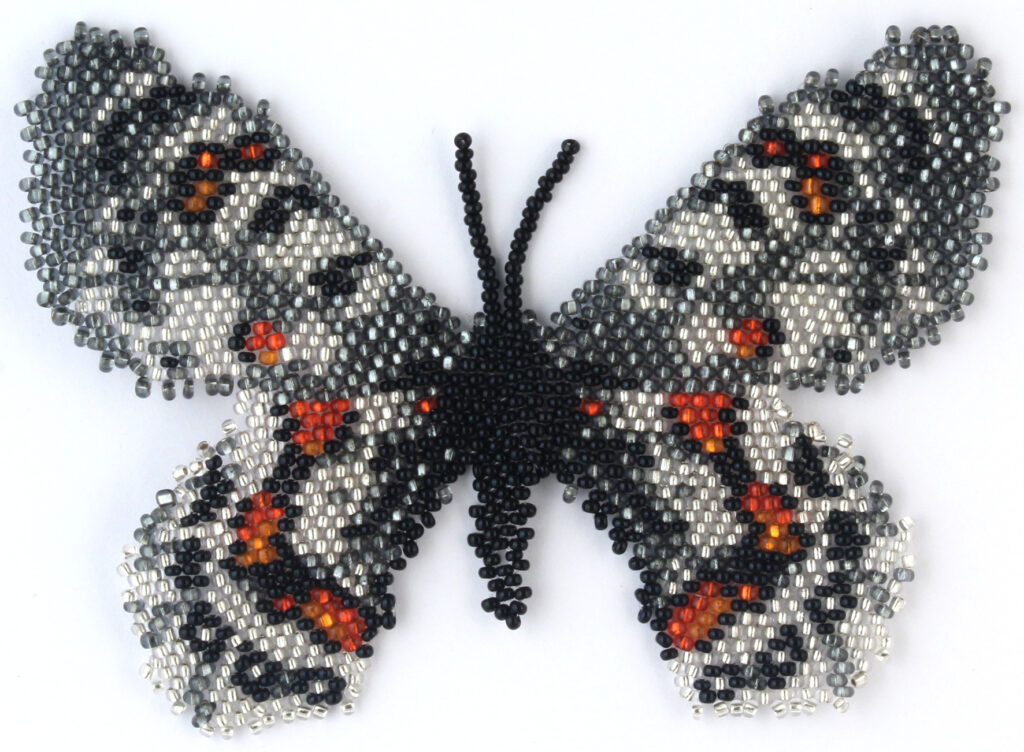
Parnassius hardwickii (Gray, 1831) is a northern circumpolar and montane (alpine and Himalayan) butterfly usually known as Apollo.
This bead butterfly is woven of 5 colours.
The bead pattern is available at https://bead-patterns.com/beadpattern/butterfly-parnassius-hardwiki