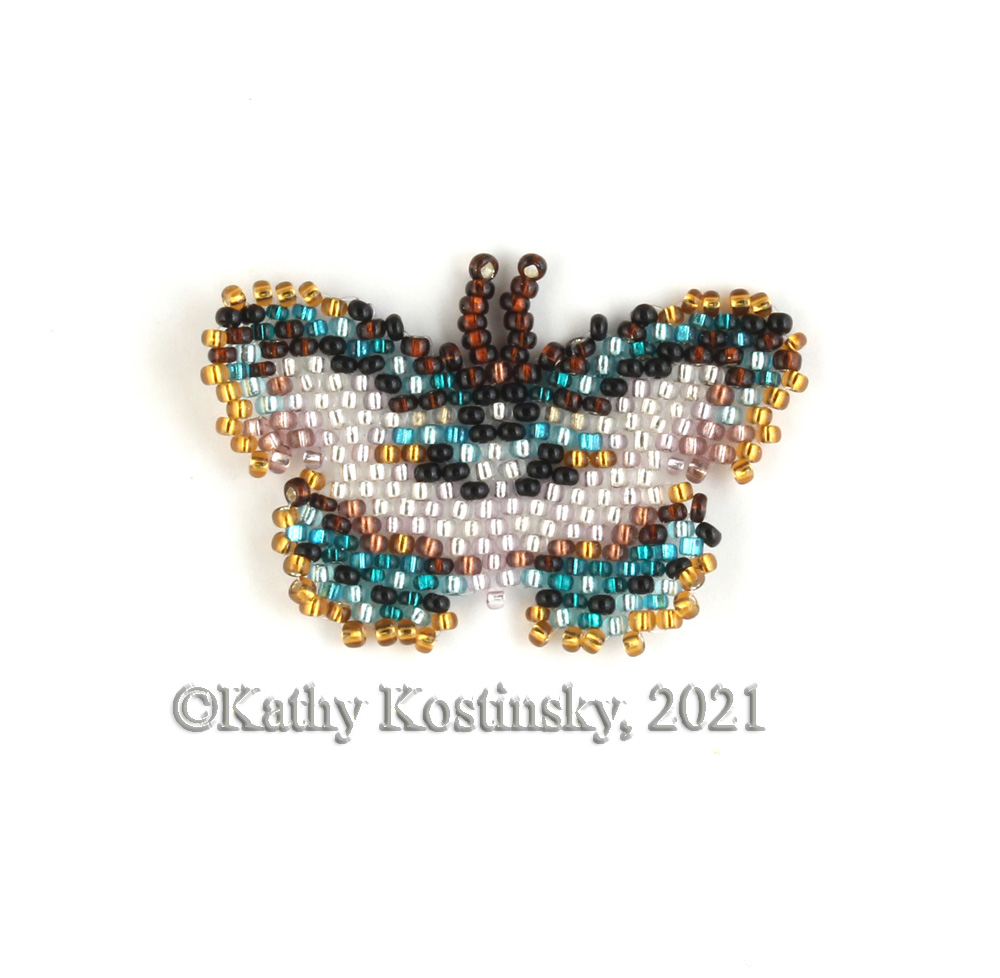
Danis danis (Cramer, 1775), or the Large Green-Banded Blue, first described in 1775 by Dutch entomologist Pieter Cramer, inhabits Australia and New Guinea.
The wingspan of the butterfly is about 70 mm.
The bead butterfly is woven of 11 colours.
Danis danis (Cramer, 1775), or the Large Green-Banded Blue, first described in 1775 by Dutch entomologist Pieter Cramer, inhabits Australia and New Guinea.
The wingspan of the butterfly is about 70 mm.
The bead butterfly is woven of 11 colours.
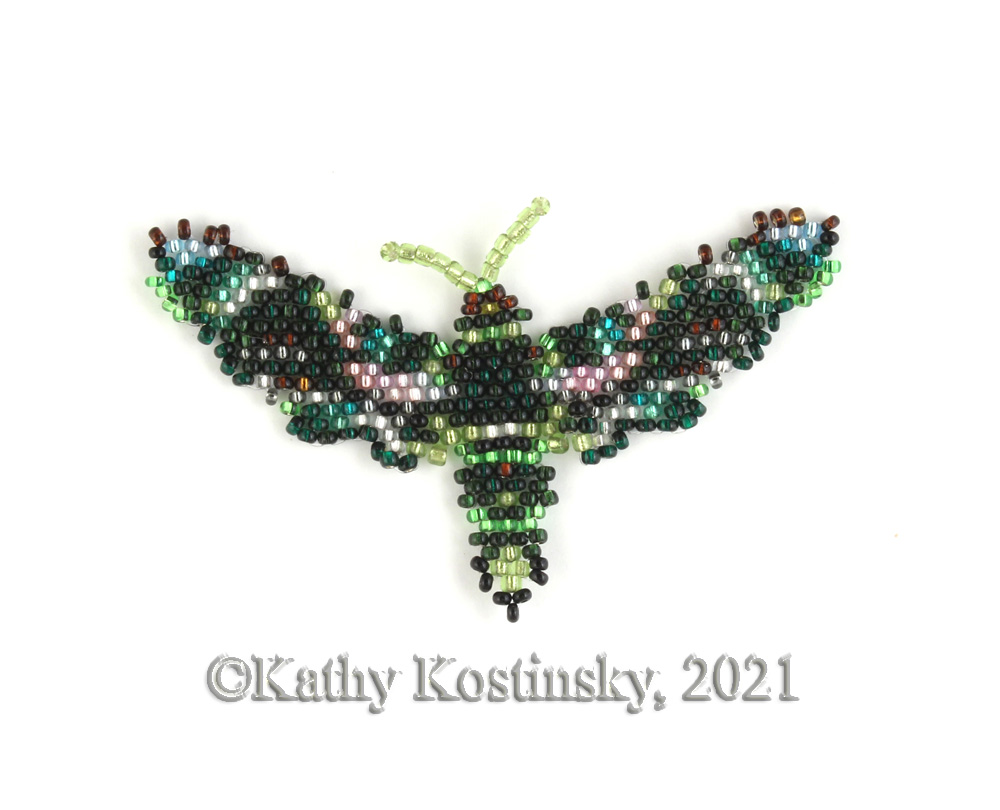
Daphnis nerii (Linnaeus, 1758), or the Oleander Hawk-moth or Army Green moth was described by Carl Linnaeus in 1758.
The moth inhabits wide areas of Africa, Asia and certain Hawaiian Islands. The species migrates to eastern and sothern Europe in summer.
The winspan is 90-100 mm.
The bead butterfly is woven of 16 colours.
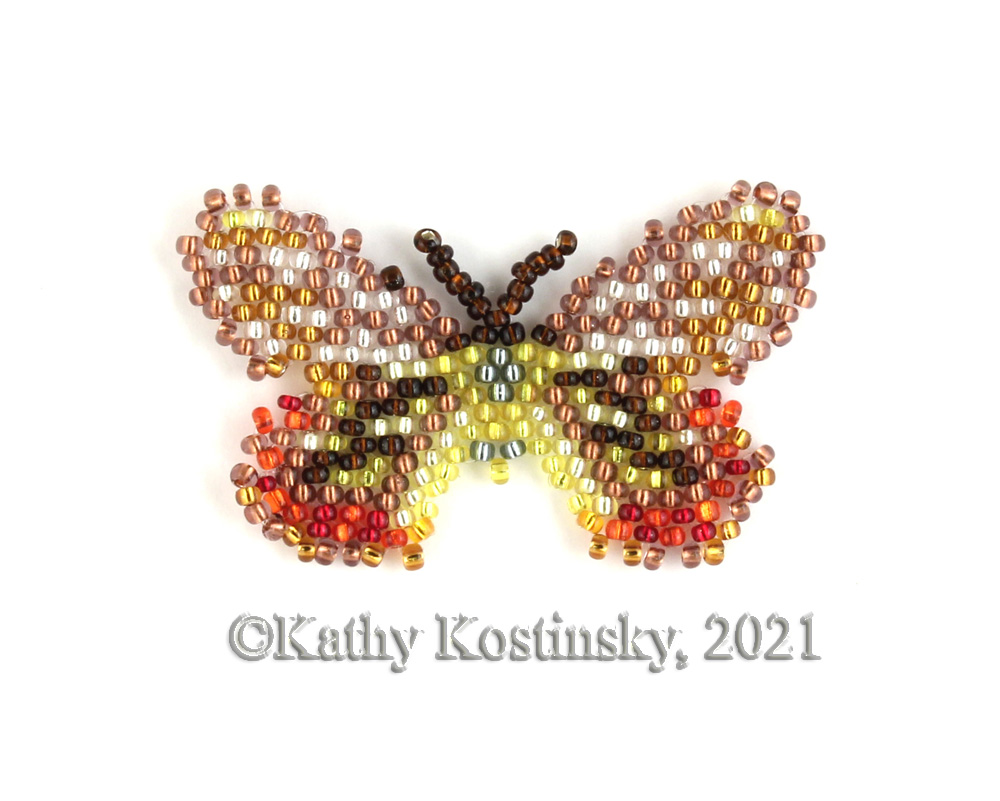
Delias eucharis (Drury, 1773), or the common Jezebel, is found in many areas of south and southeast Asia, especially in the non-arid regions of India, Sri Lanka, Indonesia, Myanmar and Thailand.
This pierid butterfly was first described by British entomologist Dru Drury in 1773.
Bright wings colouration shows te butterfly is unpalatable due to toxins got by the caterpillar from the host plants, mistletoes.
The wingspan is 65-85 mm.
The bead butterfly is woven of 12 colours.
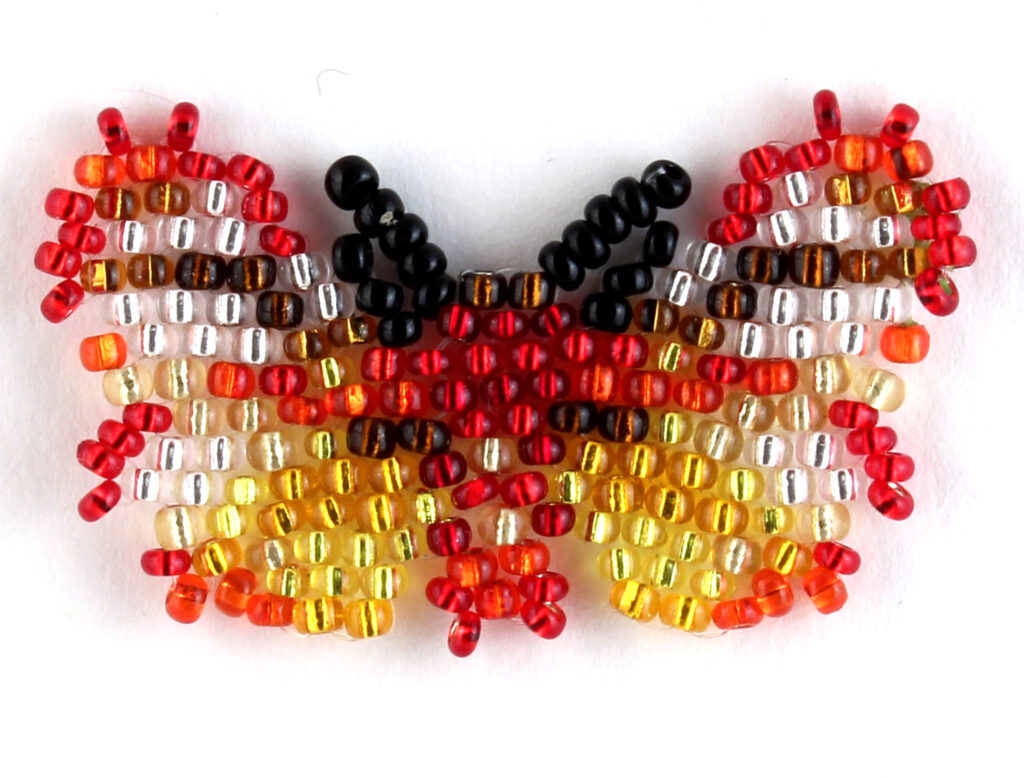
Epicallia villica (Linnaeus, 1758) , or the cream-spot tiger flies in western and southern Europe, Anatolia, western and northern Iran, West Siberia, Southwest Asia and North Africa.
Its wingspan is about 45-60 mm.
The bead moth is woven of 10 colours.
The bead pattern is available at https://bead-patterns.com/beadpattern/cream-spot-tiger-moth-epicallia-villica-mini
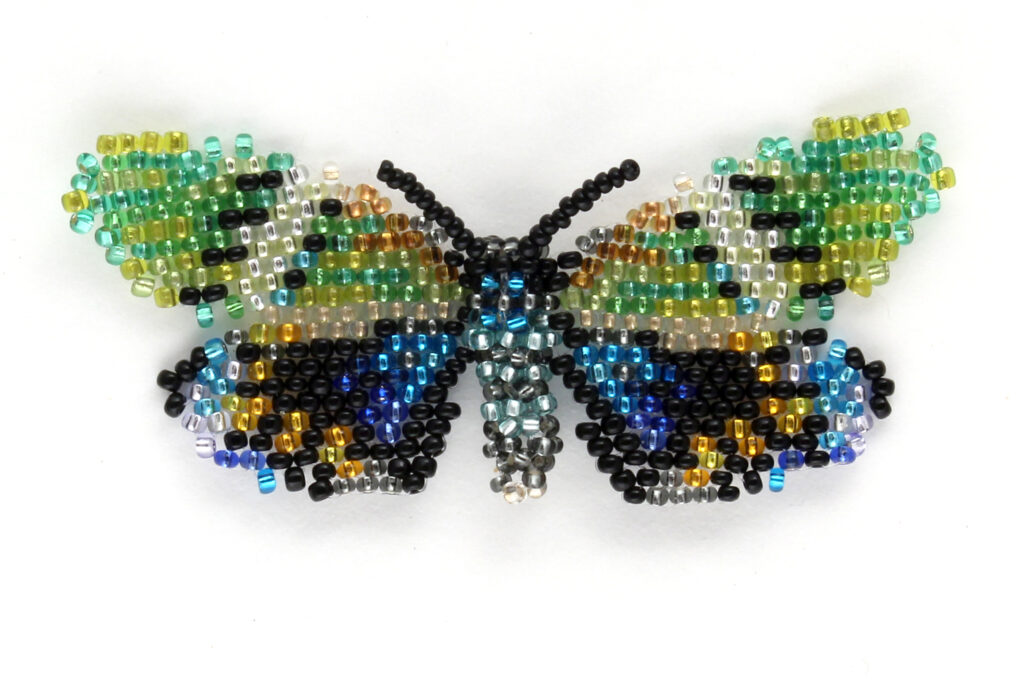
Eterusia repleta (Walker, 1864) is an Asian moth found in Thailand and India.
Its wingspan is 78 mm.
The bead moth is woven of 23 colours.
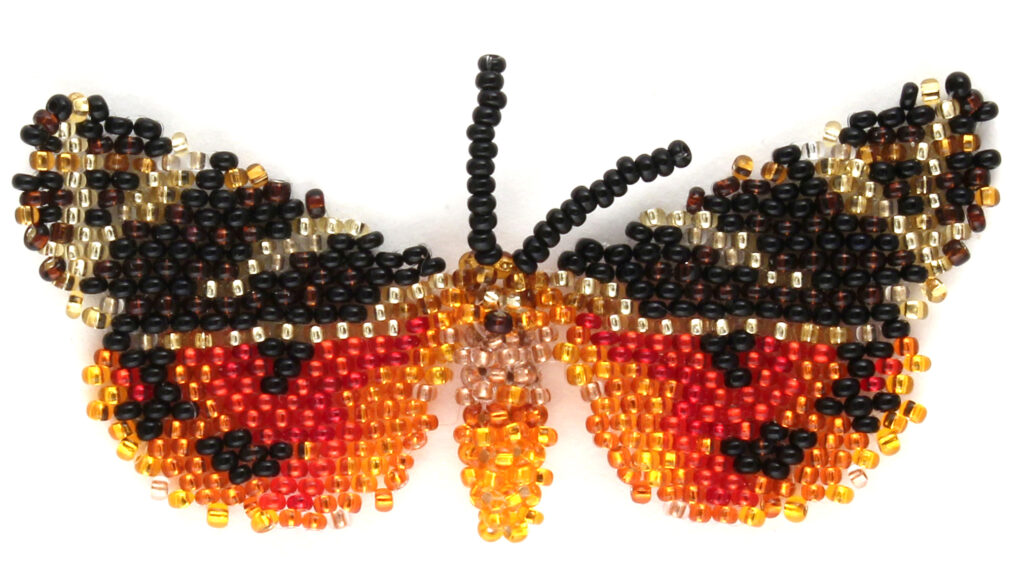
Euplagia quadripunctaria (Poda, 1761), or the Jersey tiger, is a day-flying moth. Its wingspan is 52–65 mm. This moth flies in Europe from Estonia and Latvia in the north to the Mediterranean coast and islands in the south. It is also found in West Russia, South Urals, Asia Minor, Rhodes and nearby islands, the Near East, Caucasus, South Turkmenistan, and Iran. It is also frequent seen in the Channel Islands and was rarely met in the British Isles in Victorian times.
The bead moth is woven of 12 colours.
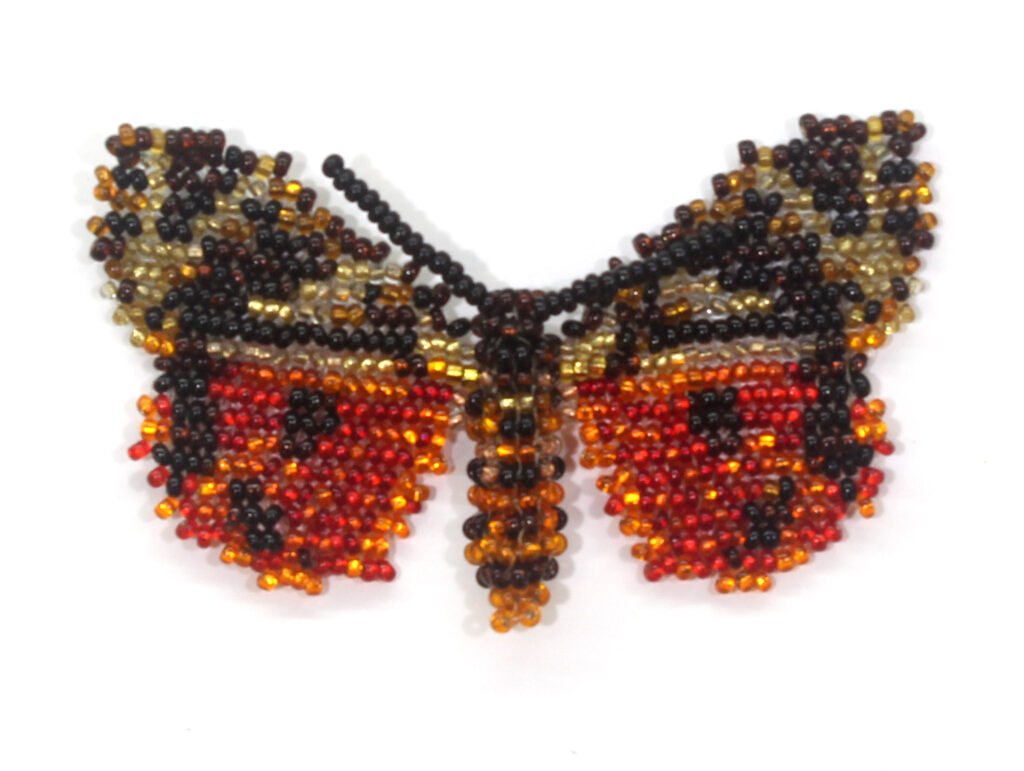
Euplagia quadripunctaria (Poda, 1761), or the Jersey tiger, is a day-flying moth. Its wingspan is 52–65 mm. This moth flies in Europe from Estonia and Latvia in the north to the Mediterranean coast and islands in the south. It is also found in West Russia, South Urals, Asia Minor, Rhodes and nearby islands, the Near East, Caucasus, South Turkmenistan, and Iran. It is also frequent seen in the Channel Islands and was rarely met in the British Isles in Victorian times.
The bead moth is loomed of 12 colours.
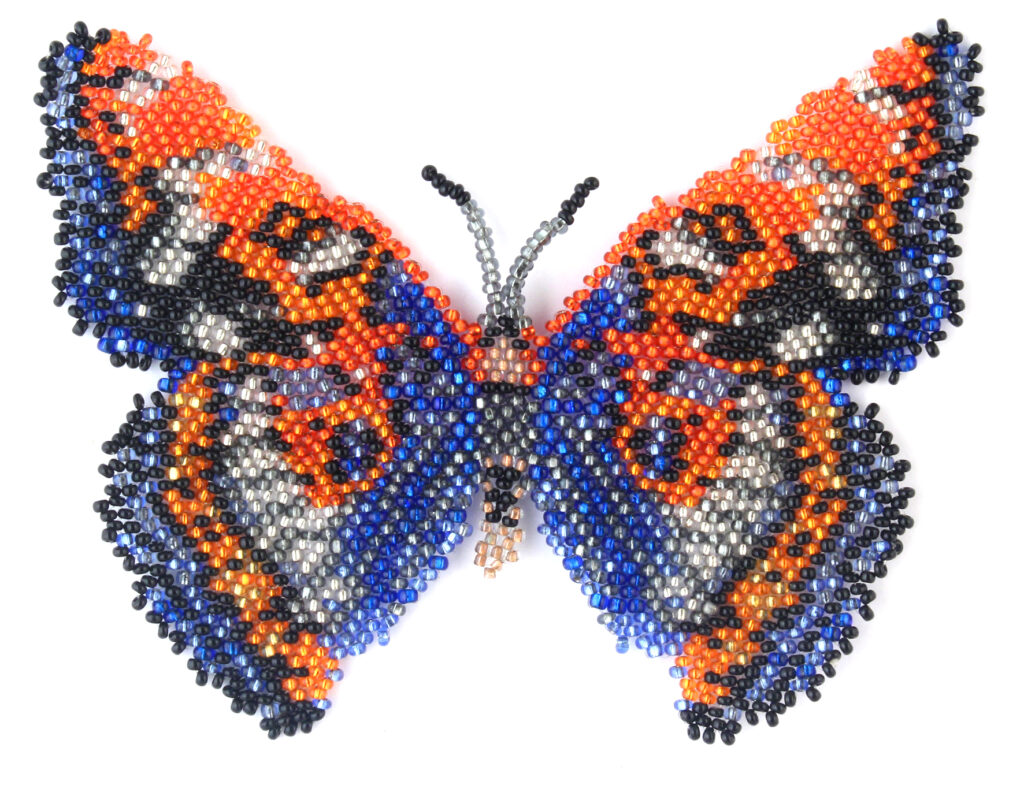
Limenitis populi (Linnaeus, 1758), or the poplar admiral is a European butterfly. Its wingspan is about 7 cm. These butterflies can be seen in June and July in damp forests.
The bead butterfly is woven of 11 colours.
The bead pattern is available at https://bead-patterns.com/beadpattern/butterfly-limentis-populi
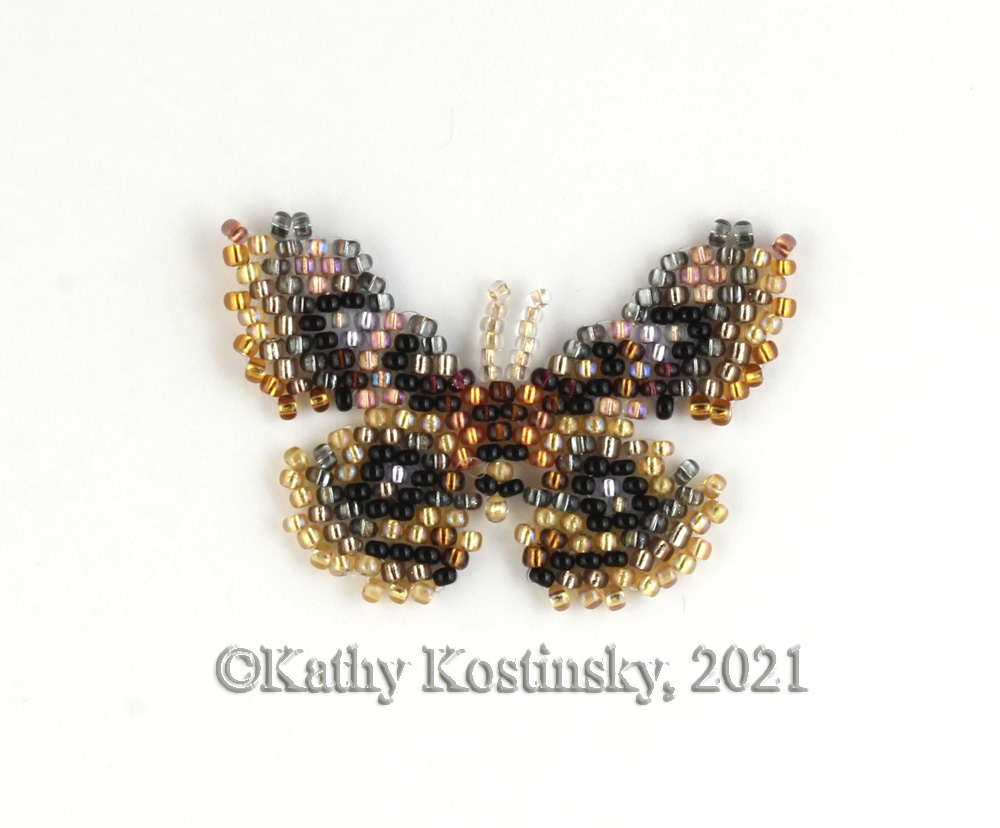
Neoris huttoni (Moore, 1862) moth was first described by British entomologist and illustrator Frederic Moore in 1862.
Neoris huttoni inhabits mountains of Central Asia, mostly at 1500-2000 meters over the sea level. Caterpillars prefer to feed on pistachios and wild almond. Imago (adults)
do not eat, so they live only 2-3 days.
Wingspan is 100-120 mm.
The bead butterfly is woven of 13 colours.
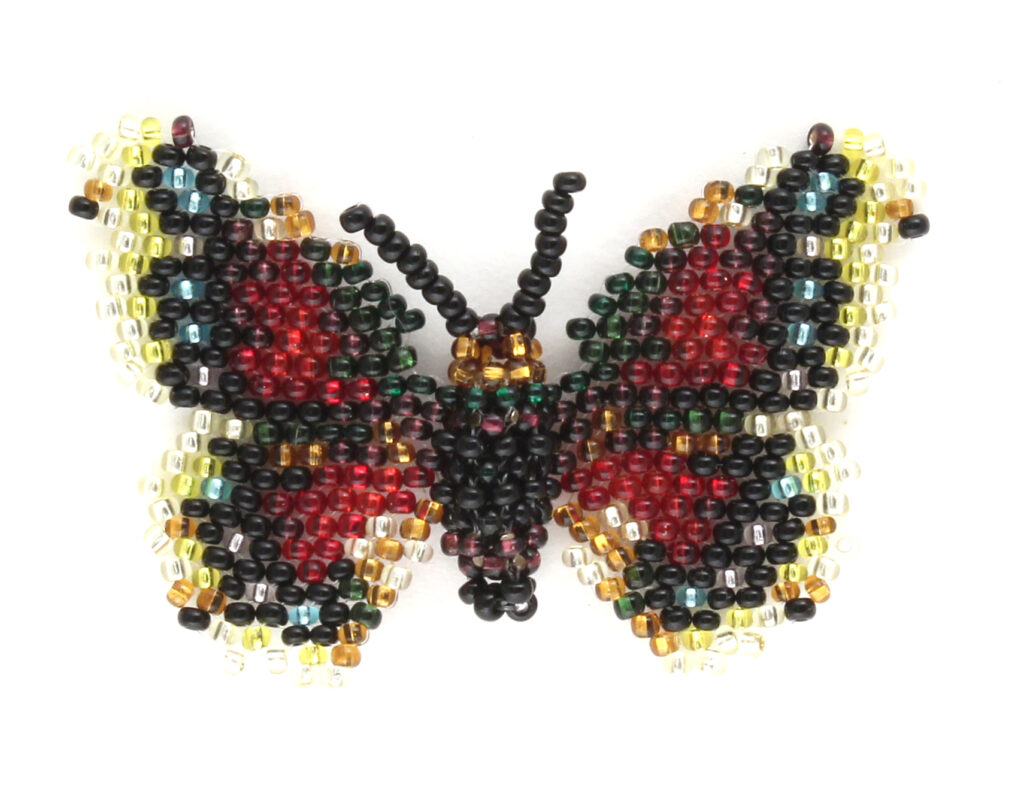
Nymphalis antiopa (Linnaeus, 1758), known as mourning cloak in North America and the Camberwell beauty in Britain, is a large butterfly inhabits Eurasia and North America. It is also the State Insect of Montana, adopted in 2001.
The butterfly’s wingspan is 7-9 cm.
The bead butterfly is woven of 24 colours.
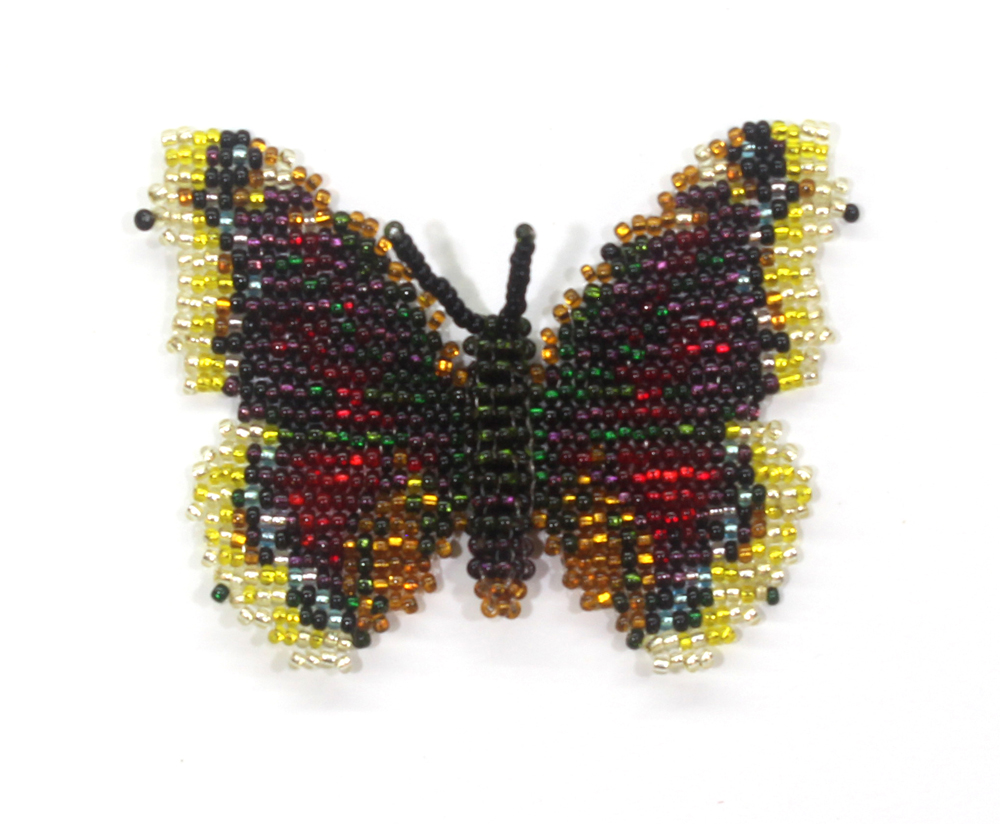
Nymphalis antiopa (Linnaeus, 1758), known as mourning cloak in North America and the Camberwell beauty in Britain, is a large butterfly inhabits Eurasia and North America. It is also the State Insect of Montana, adopted in 2001.
The butterfly’s wingspan is 7-9 cm.
The bead butterfly is loomed of 24 colours.
The bead pattern will be available later.
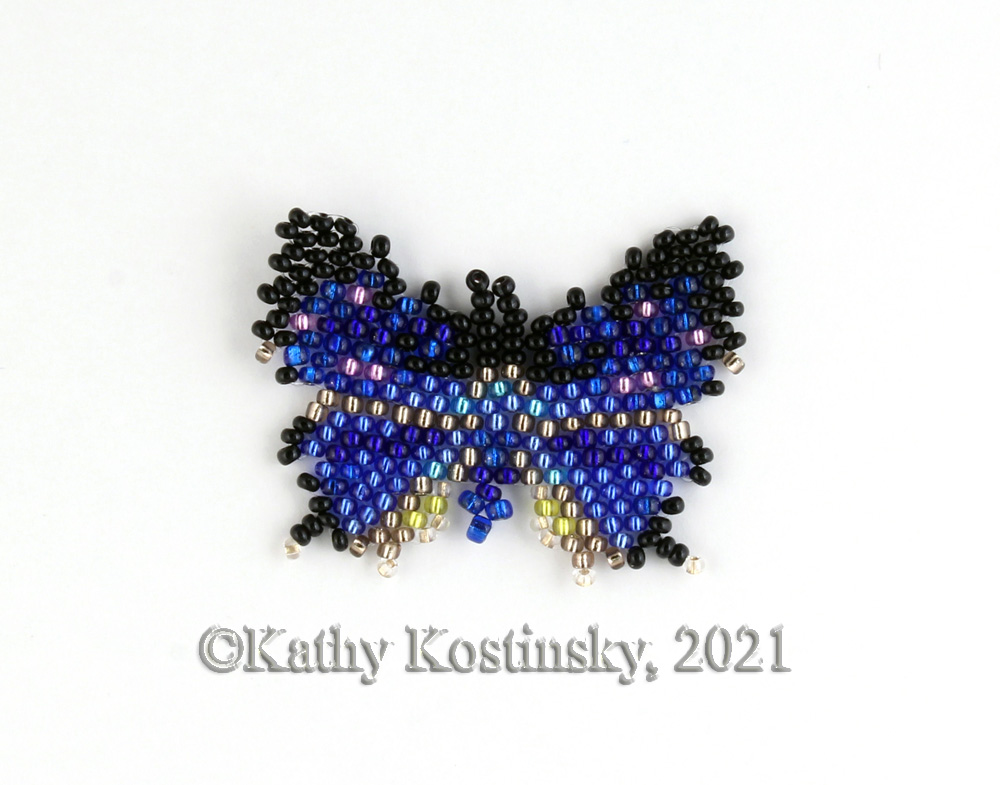
Olynthus narbal (Stoll, 1790) can be met in Panama, Surinam, Guyana,Brazil and Peru.
Its wingspan is about 30 mm.
The bead butterfly is woven of 10 colours.
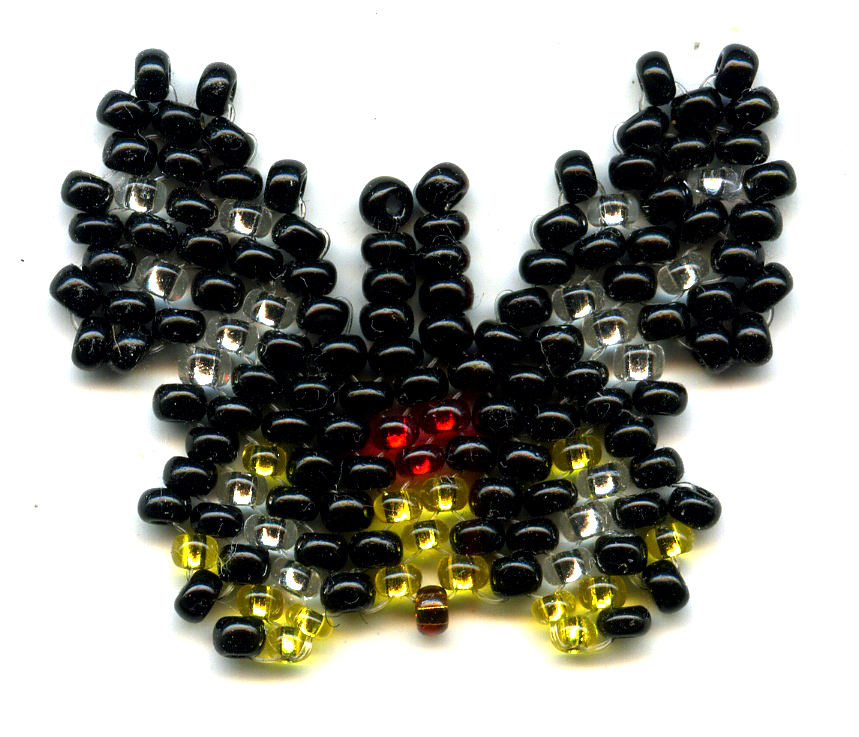
Ornithoptera priamus (Linnaeus, 1758), or Priam’s Birdwing, is named in honor of Priam, the last king of Troy. It inhabits Australia, Papua New Guinea, and Solomon Islands.
The species is very variable, it has of about a hundred subspecies. While the males of the subspecies are multicoloured and extremely different (blue, green, golden, sea-green), the females are more modest in colouring and sometimes look like other Ornithoptera females. But in wingspan the females are much larger than males, they are 20 cm.
This bead butterfly is woven of 5 colours.
The bead pattern is available at https://bead-patterns.com/beadpattern/butterfly-ornithoptera-priamus-female-micro
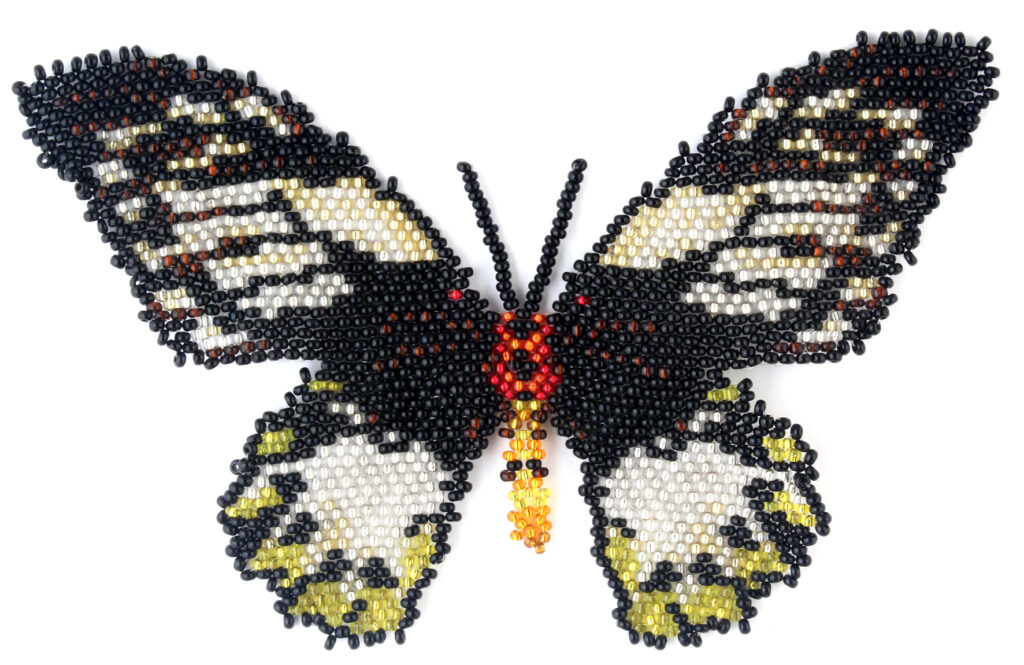
Ornithoptera priamus (Linnaeus, 1758), or Priam’s Birdwing, is named in honor of Priam, the last king of Troy. It inhabits Australia, Papua New Guinea, and Solomon Islands.
The species is very variable, it has of about a hundred subspecies. While the males of the subspecies are multicoloured and extremely different (blue, green, golden, sea-green), the females are more modest in colouring and sometimes look like other Ornithoptera females. But in wingspan the females are much larger than males, they are 20 cm.
This bead butterfly is woven of 11 colours.
The bead pattern is available at https://bead-patterns.com/beadpattern/buttertfly-ornithoptera-priamus-female
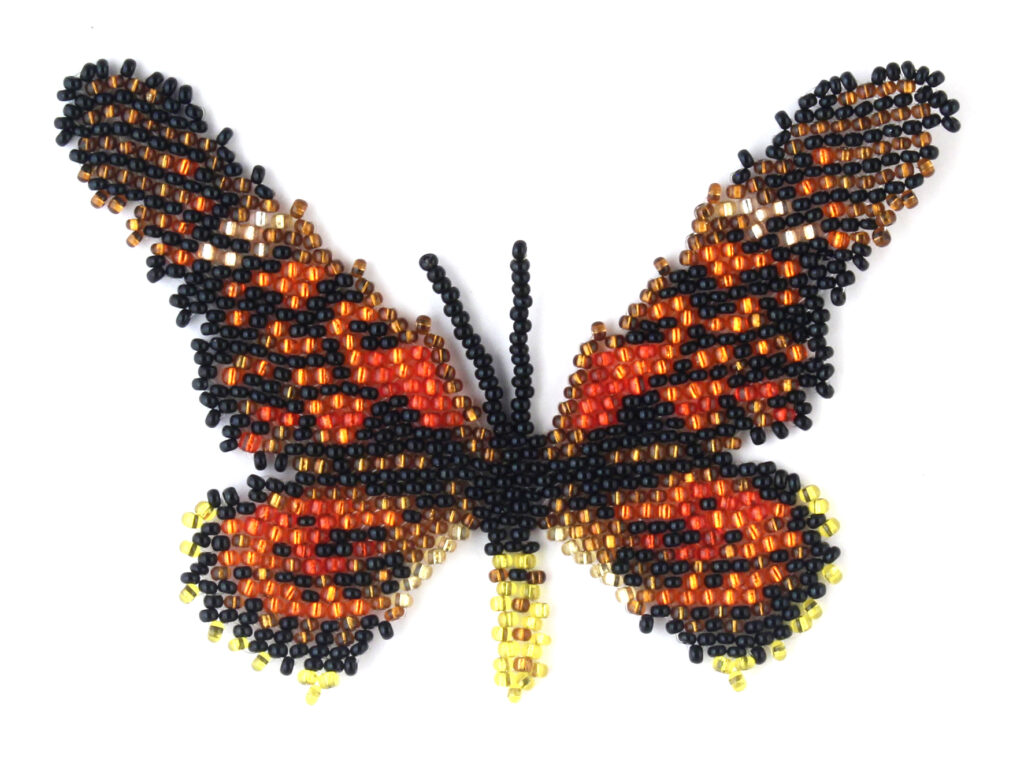
Papilio antimachus (Drury, 1782), or the African giant swallowtail Papilio Antimachus is the biggest African butterfly. Its wingspan is from 18 to 25 cm. Papilio Antimachs was first described by British entomologist Dru Drury in 1782.
These butterflies live in rainforests, males often gather to big crowds on blossoming plants, females prefer to stay on tree tops and very seldom appear on open areas.
This bead butterfly is woven of 9 colours.
The bead pattern is available at https://bead-patterns.com/beadpattern/butterfly-papilio-antimachus-female