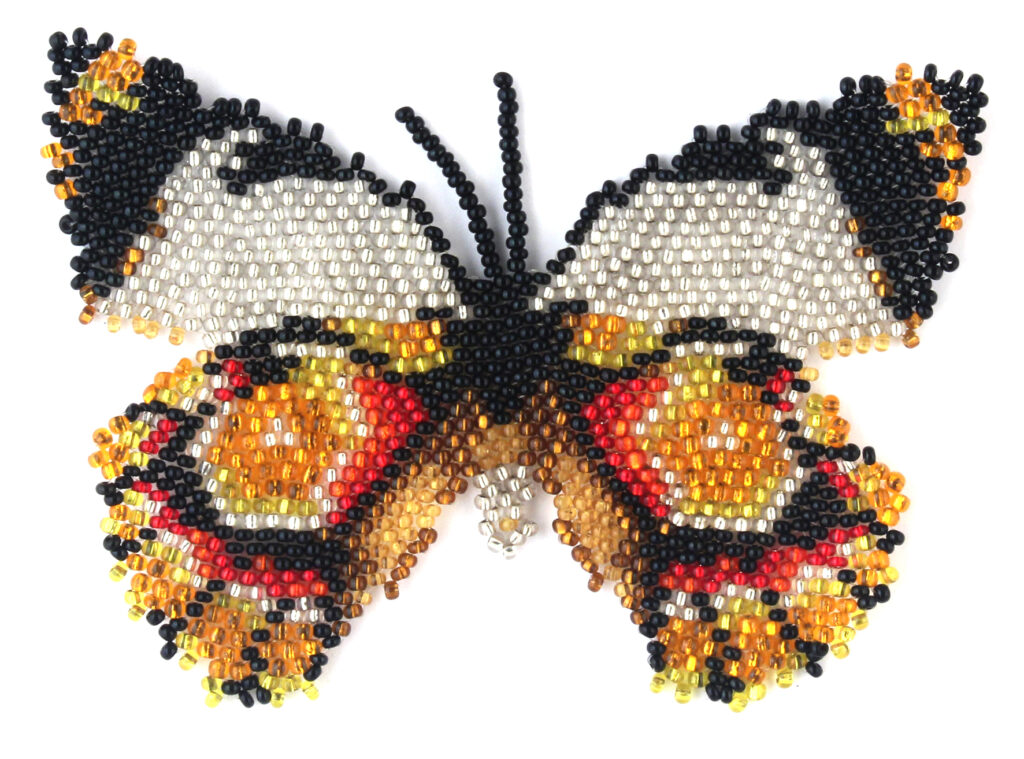
Delias callista (Jordan, 1912) is a butterfly of Papua New Guinea.
Its wingspan is about 5 cm.
This bead butterfly is woven of 11 colours.
The bead pattern is available at https://bead-patterns.com/beadpattern/butterfly-delias-callista
Delias callista (Jordan, 1912) is a butterfly of Papua New Guinea.
Its wingspan is about 5 cm.
This bead butterfly is woven of 11 colours.
The bead pattern is available at https://bead-patterns.com/beadpattern/butterfly-delias-callista
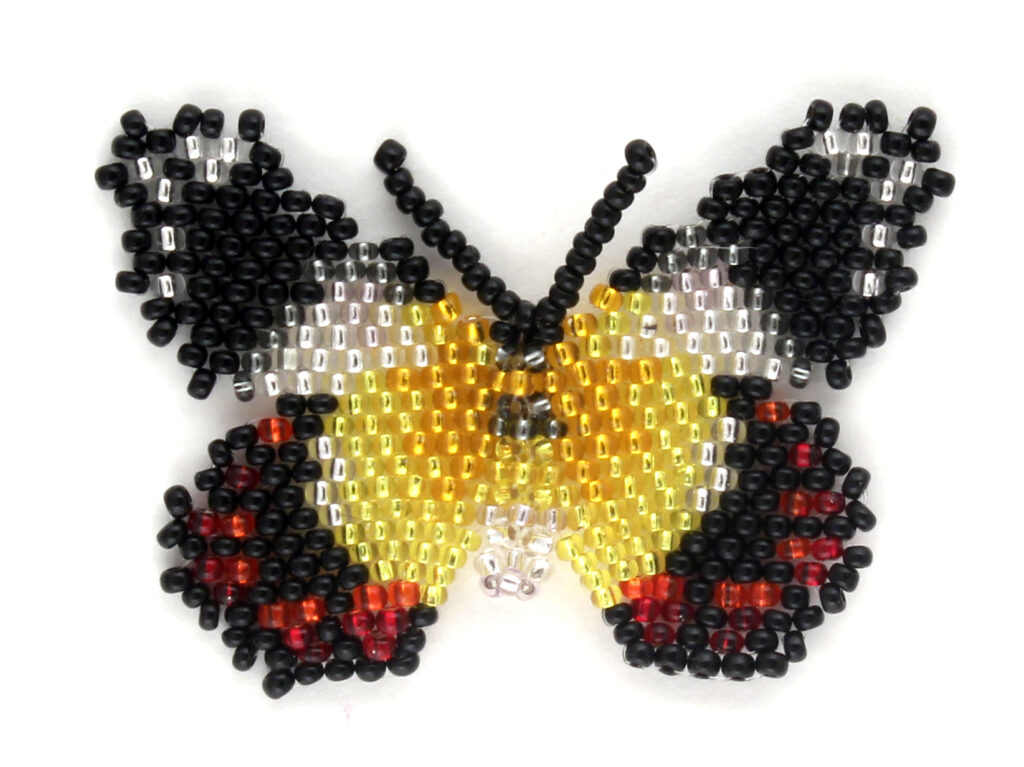
Delias timorensis (Boisduval, 1836) inhabits Australia and Asia.
The wingspan is about 60–70 mm for males and 64–71 mm for females.
The bead butterfly is woven of 10 colours.
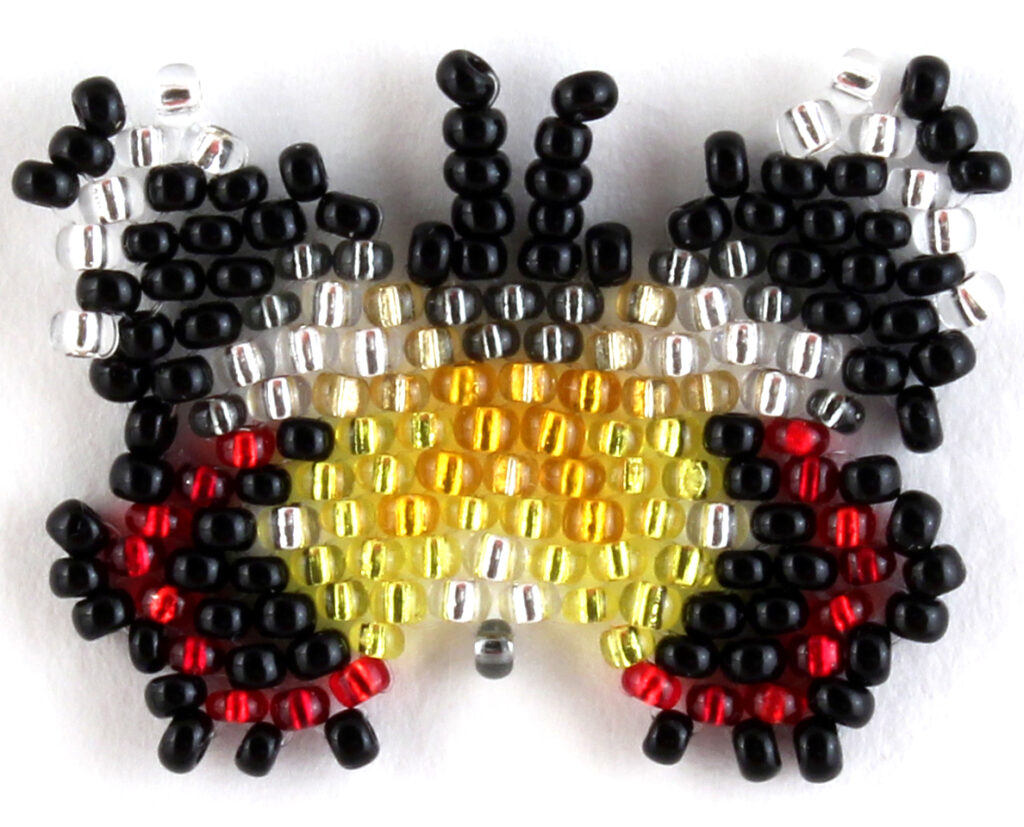
Delias timorensis. babberica (Talbot, 1939) (Babar) is an Australian butterfly.
Its wingspan is about 60-71 mm.
The bead butterfly is woven of 8 colours.
The bead pattern is available at https://bead-patterns.com/beadpattern/butterfly-delias-timorensis-babberica-mini
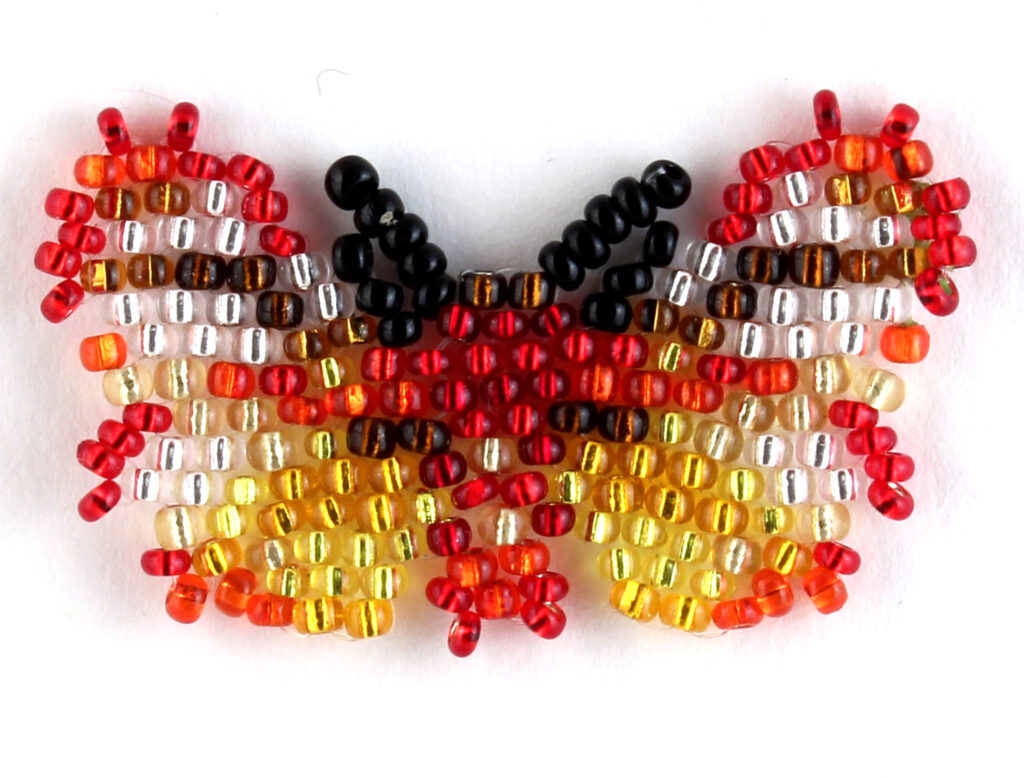
Epicallia villica (Linnaeus, 1758) , or the cream-spot tiger flies in western and southern Europe, Anatolia, western and northern Iran, West Siberia, Southwest Asia and North Africa.
Its wingspan is about 45-60 mm.
The bead moth is woven of 10 colours.
The bead pattern is available at https://bead-patterns.com/beadpattern/cream-spot-tiger-moth-epicallia-villica-mini
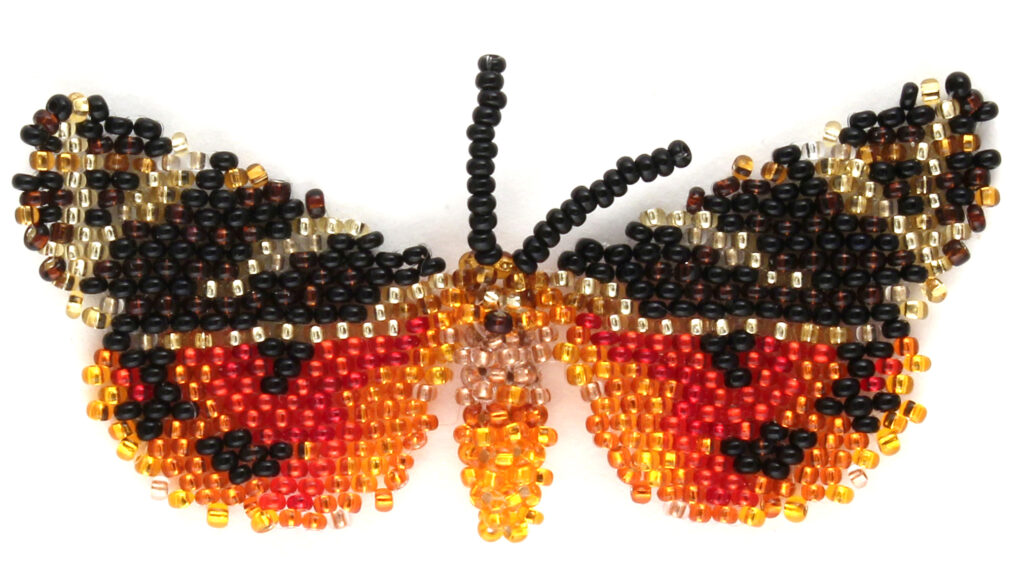
Euplagia quadripunctaria (Poda, 1761), or the Jersey tiger, is a day-flying moth. Its wingspan is 52–65 mm. This moth flies in Europe from Estonia and Latvia in the north to the Mediterranean coast and islands in the south. It is also found in West Russia, South Urals, Asia Minor, Rhodes and nearby islands, the Near East, Caucasus, South Turkmenistan, and Iran. It is also frequent seen in the Channel Islands and was rarely met in the British Isles in Victorian times.
The bead moth is woven of 12 colours.
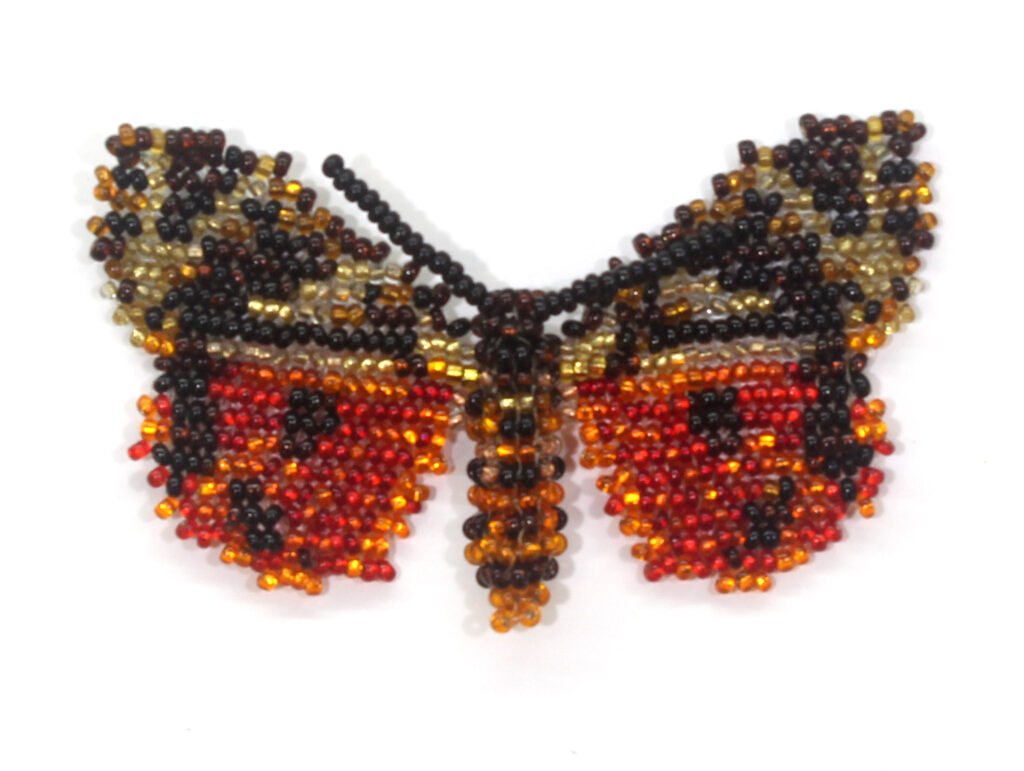
Euplagia quadripunctaria (Poda, 1761), or the Jersey tiger, is a day-flying moth. Its wingspan is 52–65 mm. This moth flies in Europe from Estonia and Latvia in the north to the Mediterranean coast and islands in the south. It is also found in West Russia, South Urals, Asia Minor, Rhodes and nearby islands, the Near East, Caucasus, South Turkmenistan, and Iran. It is also frequent seen in the Channel Islands and was rarely met in the British Isles in Victorian times.
The bead moth is loomed of 12 colours.
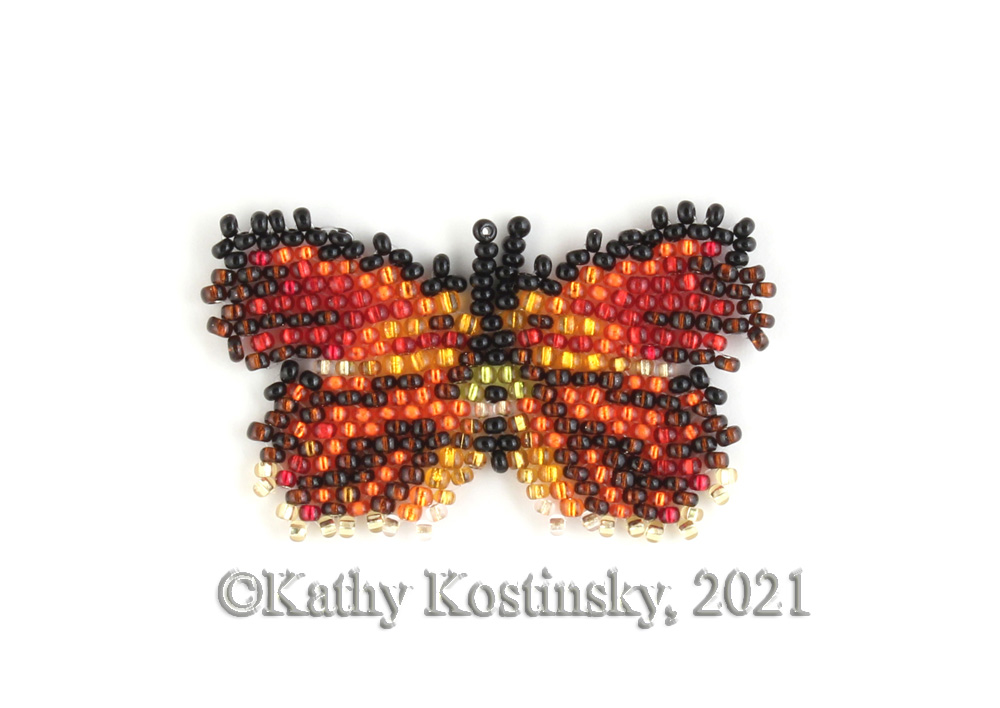
Eurema proterpia (Fabricius, 1775), or the tailed orange, was first described
by Danish zoologist Johan Christian Fabricius in 1775.
This Pieridae butterfly inhabits woodlands, deserts and
subtropics of North and South America.
The wingspan is about 50 mm.
The bead butterfly is woven of 11 colours.
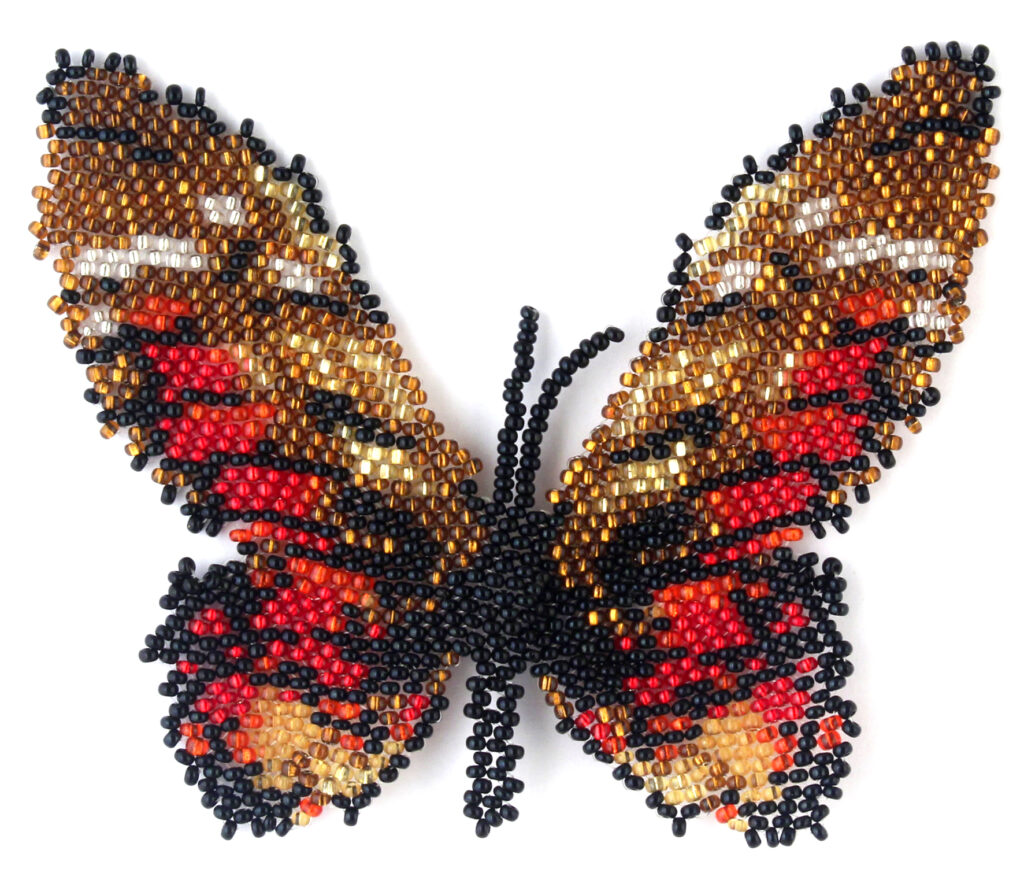
Graphium ridleyanus (White, 1843), or the Acraea swordtail inhabits forests and savannas of Nigeria, Cameroon, Equatorial Guinea, Sao Tome and Principe, Gabon, the Republic of the Congo, Angola, the Central African Republic, the DRC, Chad, southern Sudan, Uganda, Rwanda, Burundi, western Tanzania and Zambia.
The span of its wings is about 8-9 cm.
This bead butterfly is woven of 8 colours.
The bead pattern is available at https://bead-patterns.com/beadpattern/butterfly-graphium-ridleyanus
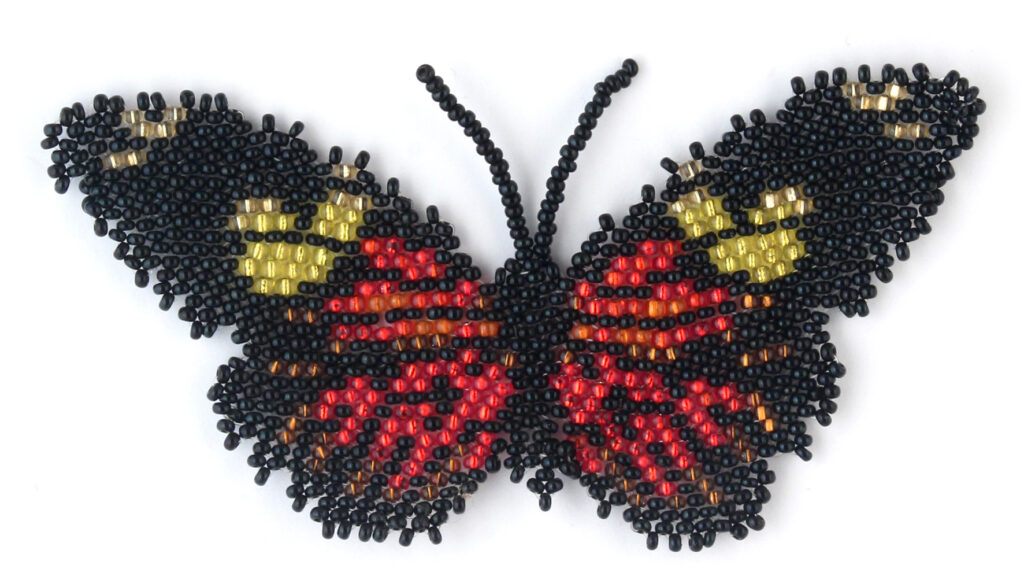
Heliconius doris (Linnaeus, 1771) or the Doris longwing is a butterfly of Central America. Its size is approximately 4X7 cm. Its species name is connected with Doris, the Okeanid nymph, wife of the sea-god Nereus, and the mother of the fifty Nereides.
This beaded butterfly is woven of 7 colours.
The bead pattern is available at https://bead-patterns.com/beadpattern/butterfly-heliconius-doris
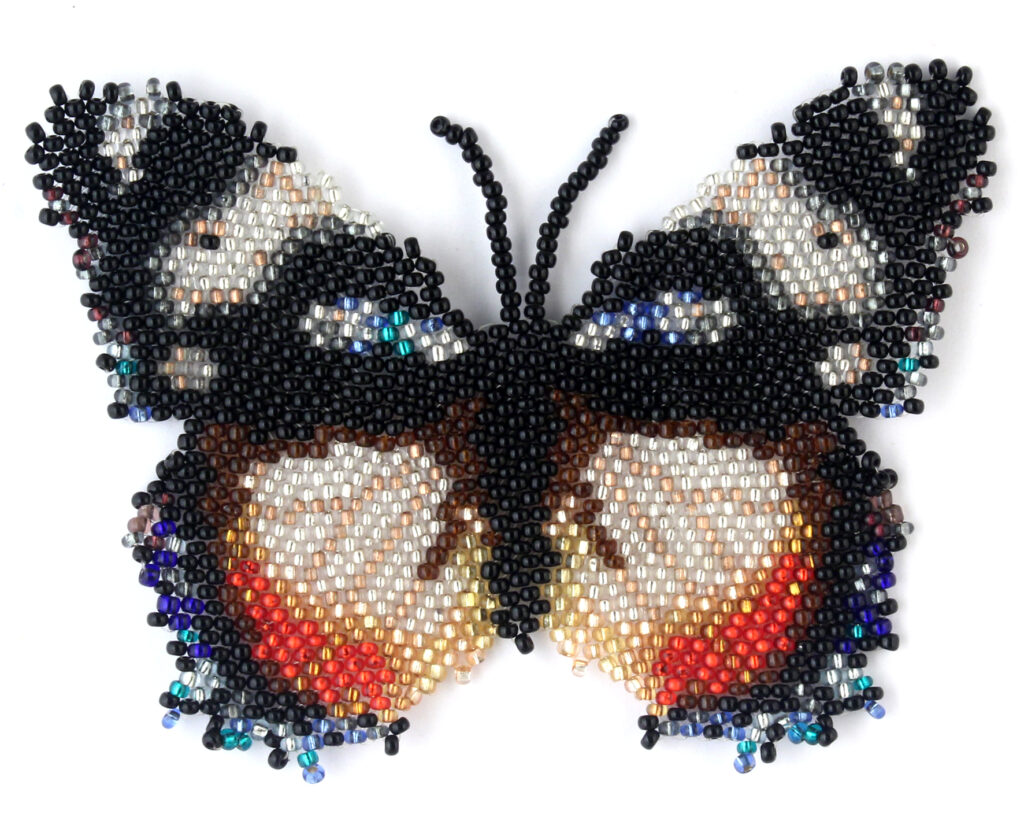
Hypolimnas dexithea (Hewitson, 1863, or Madagascar diadem is a Madagascar endemic. It was described in 1863 by British naturalist William Chapman Hewitson.
The butterfly flies in tropical forests of northern and central parts of the island.
The wingspan is 90 mm.
Natives also call Hypolimnas dexithea triciolor in the memory of the time when France ruled Madagascar.
This bead butterfly is woven of 17 colours.
The bead pattern is available at https://bead-patterns.com/beadpattern/butterfly-hypolimnas-dexithea
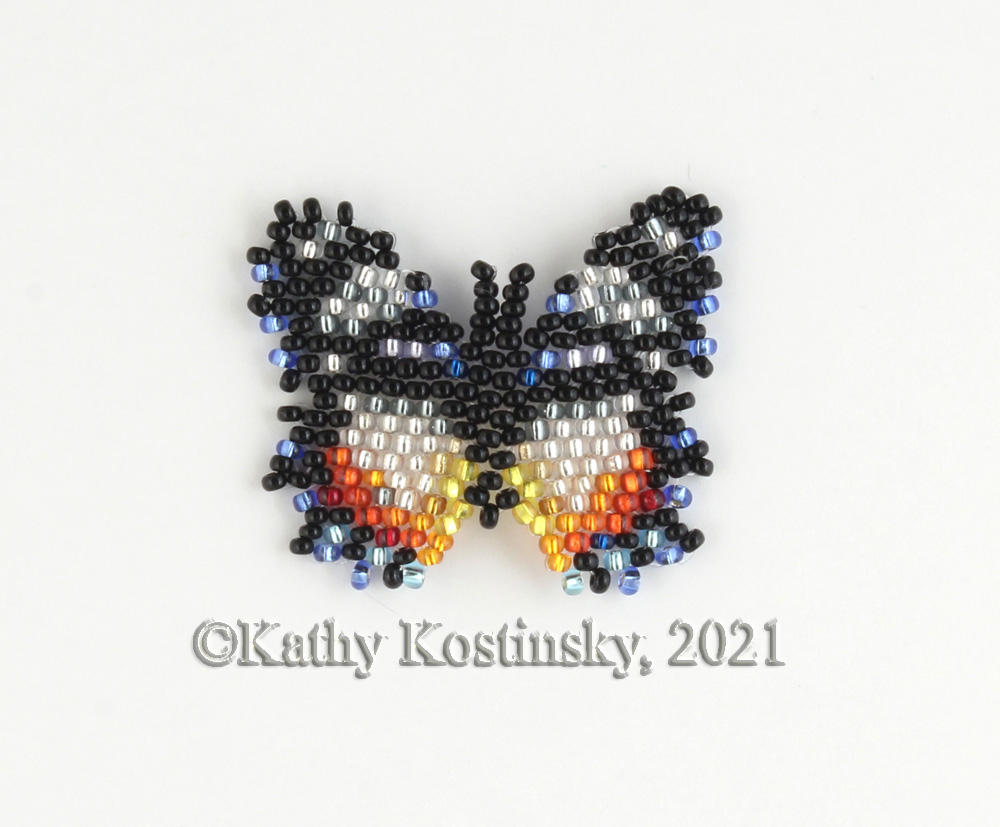
Hypolimnas dexithea (Hewitson, 1863), or Madagascar diadem is a Madagascar endemic. It was described in 1863 by British naturalist William Chapman Hewitson.
The butterfly flies in tropical forests of northern and central parts of the island.
The wingspan is 90 mm.
Natives also call Hypolimnas dexithea triciolor in the memory of the time when France ruled Madagascar.
This bead butterfly is woven of 15 colours.
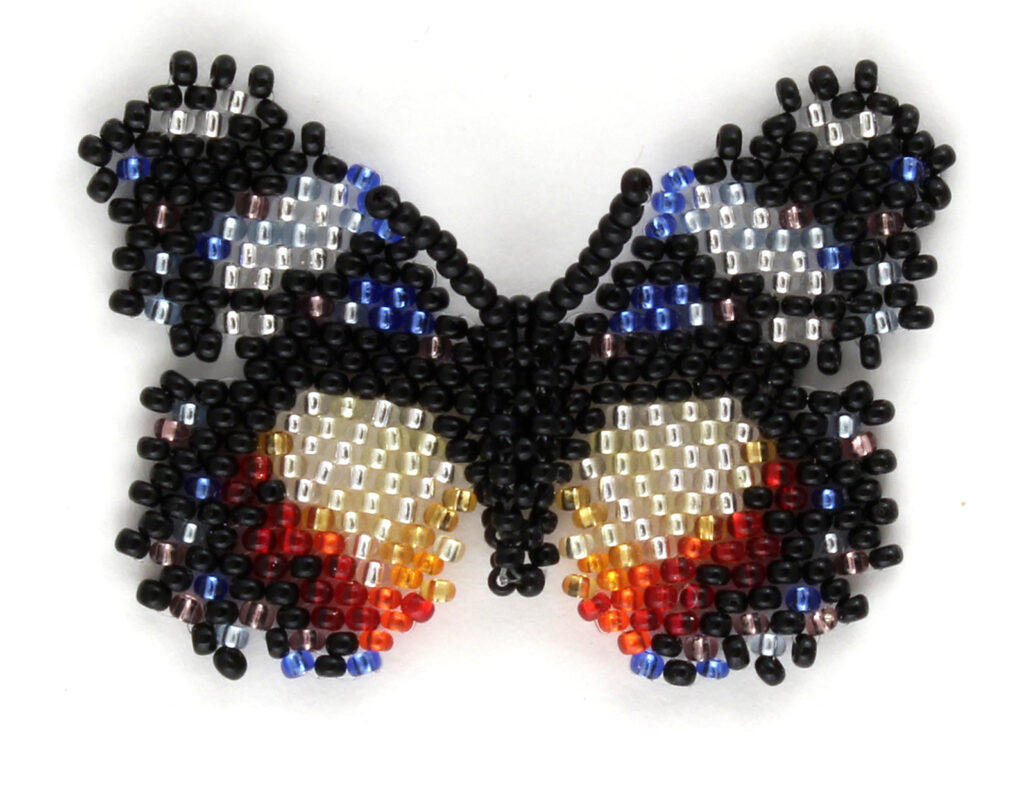
Hypolimnas dexithea (Hewitson, 1863, or Madagascar diadem is a Madagascar endemic. It was described in 1863 by British naturalist William Chapman Hewitson.
The butterfly flies in tropical forests of northern and central parts of the island.
The wingspan is 90 mm.
Natives also call Hypolimnas dexithea triciolor in the memory of the time when France ruled Madagascar.
The bead butterfly is woven of 11 colours.
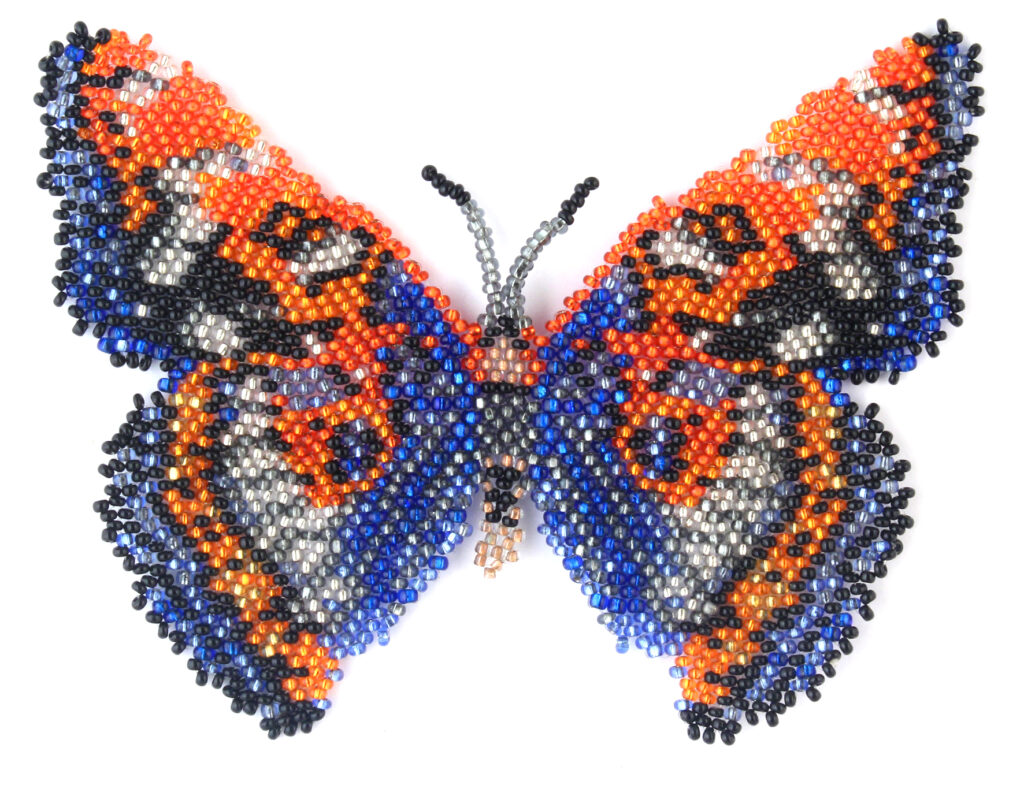
Limenitis populi (Linnaeus, 1758), or the poplar admiral is a European butterfly. Its wingspan is about 7 cm. These butterflies can be seen in June and July in damp forests.
The bead butterfly is woven of 11 colours.
The bead pattern is available at https://bead-patterns.com/beadpattern/butterfly-limentis-populi
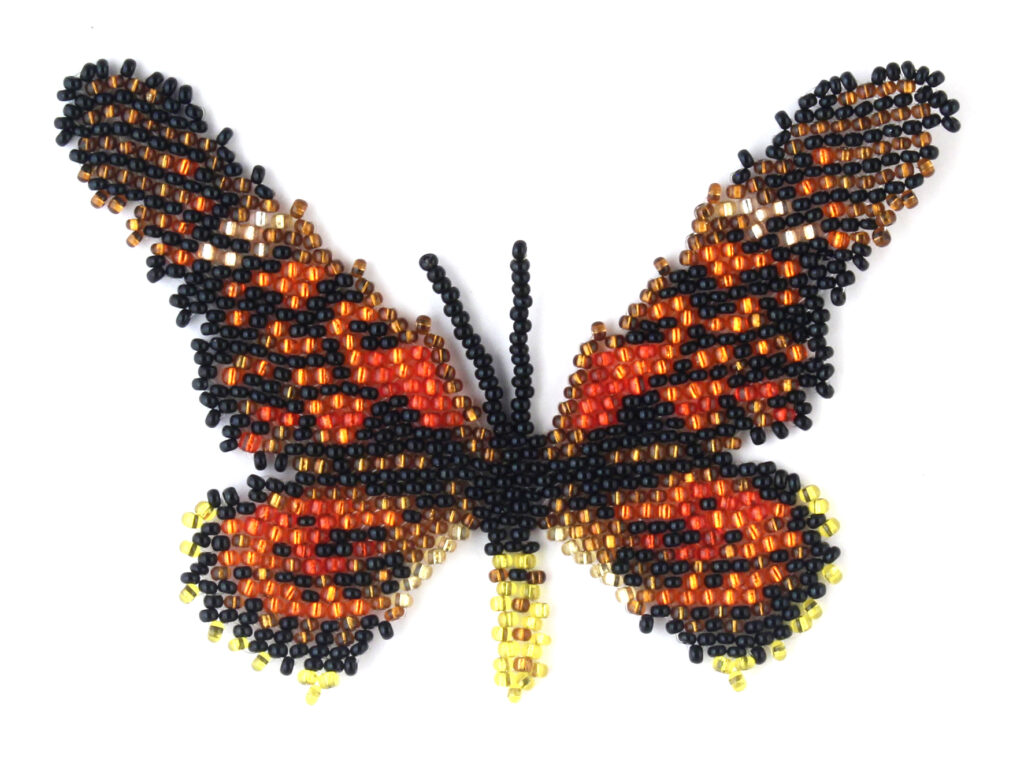
Papilio antimachus (Drury, 1782), or the African giant swallowtail Papilio Antimachus is the biggest African butterfly. Its wingspan is from 18 to 25 cm. Papilio Antimachs was first described by British entomologist Dru Drury in 1782.
These butterflies live in rainforests, males often gather to big crowds on blossoming plants, females prefer to stay on tree tops and very seldom appear on open areas.
This bead butterfly is woven of 9 colours.
The bead pattern is available at https://bead-patterns.com/beadpattern/butterfly-papilio-antimachus-female
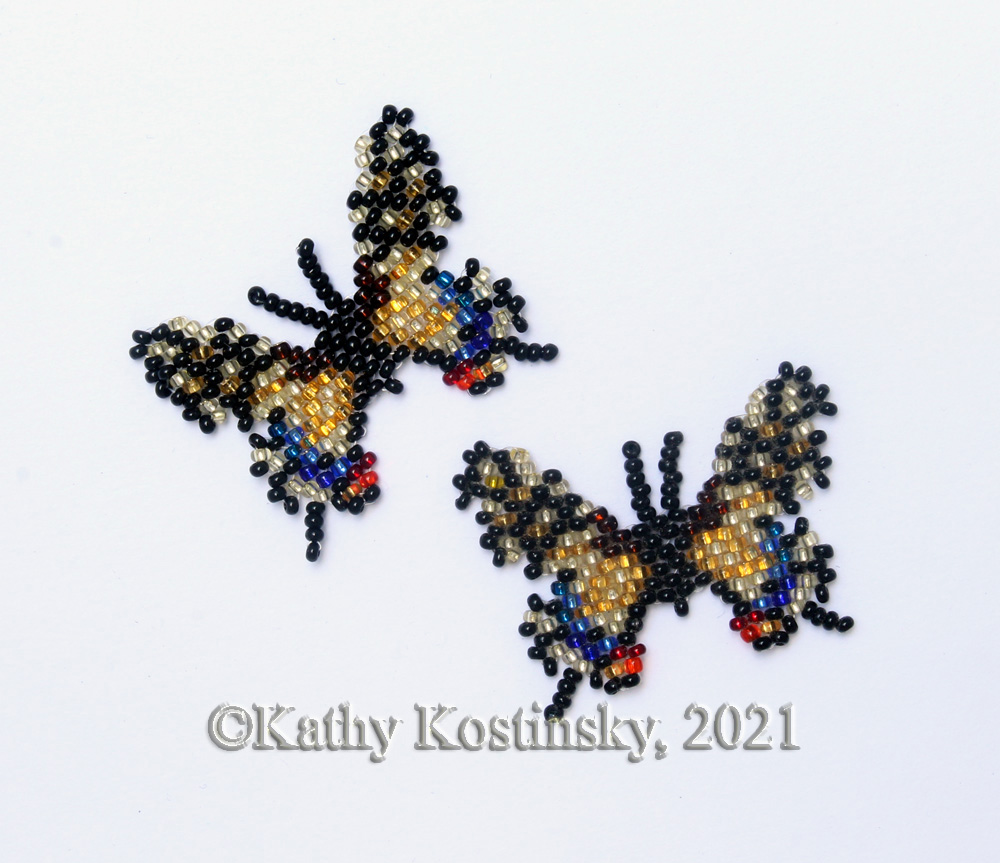
Papilio machaon (Linnaeus, 1758), the Old World swallowtail, is widespread in Europe, Asia and in North America.
The wingspan is 60-90 mm.
This Papilio was named in honor of ancient Greekdoctor Machaon, a son of Asclepius.
This bead butterfly is woven of 9 colours.