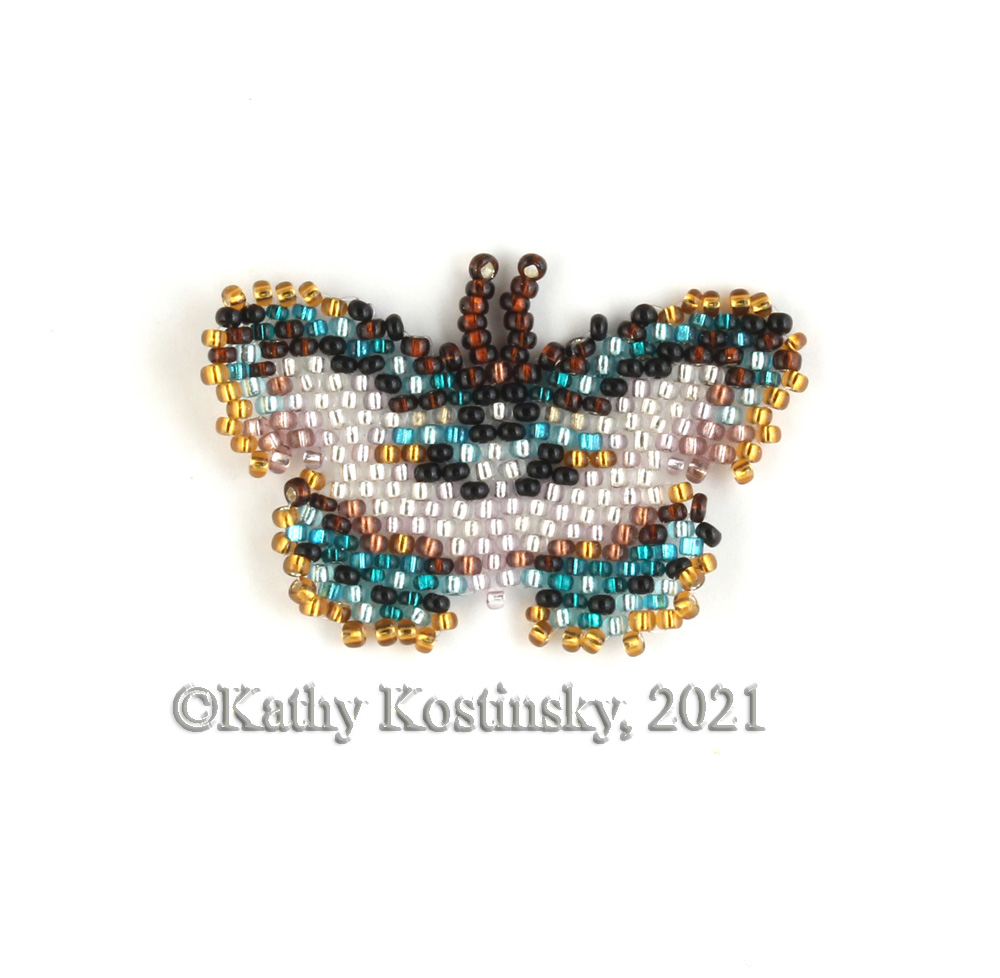
Danis danis (Cramer, 1775), or the Large Green-Banded Blue, first described in 1775 by Dutch entomologist Pieter Cramer, inhabits Australia and New Guinea.
The wingspan of the butterfly is about 70 mm.
The bead butterfly is woven of 11 colours.

Danis danis (Cramer, 1775), or the Large Green-Banded Blue, first described in 1775 by Dutch entomologist Pieter Cramer, inhabits Australia and New Guinea.
The wingspan of the butterfly is about 70 mm.
The bead butterfly is woven of 11 colours.
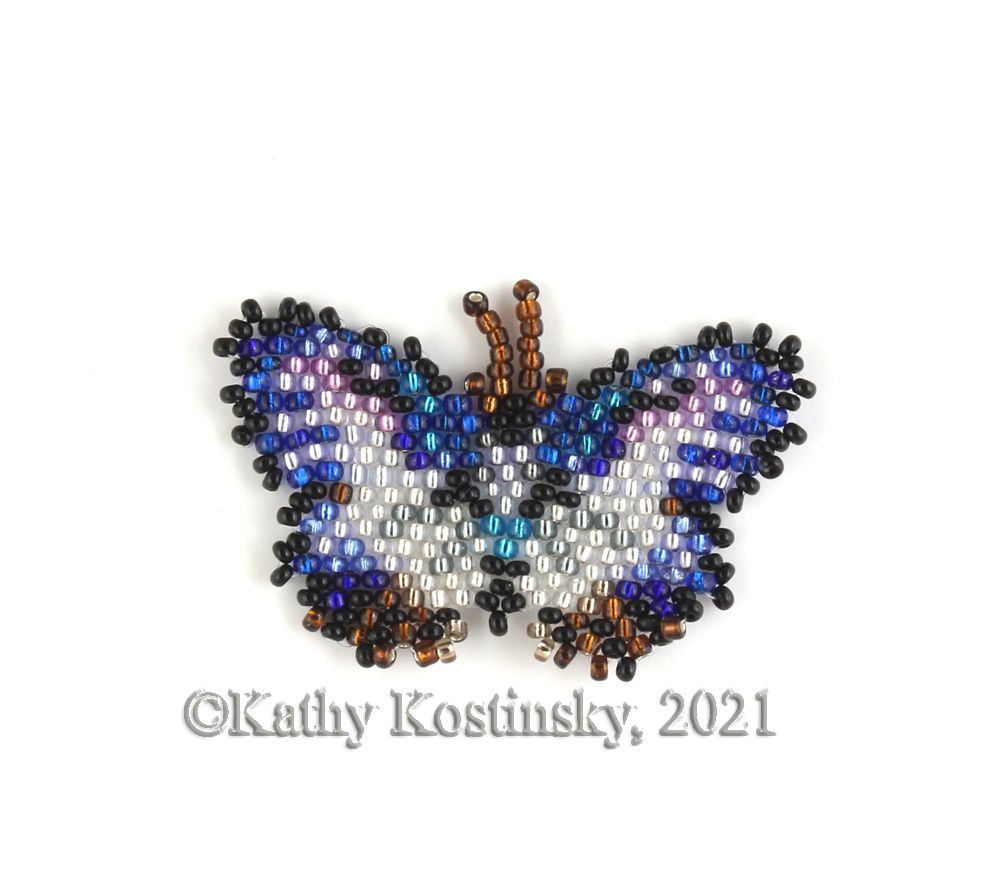
Danis danis (Cramer, 1775), or the Large Green-Banded Blue, first described in 1775 by Dutch entomologist Pieter Cramer, inhabits Australia and New Guinea.
The wingspan of the butterfly is about 70 mm.
The bead butterfly is woven of 15 colours.
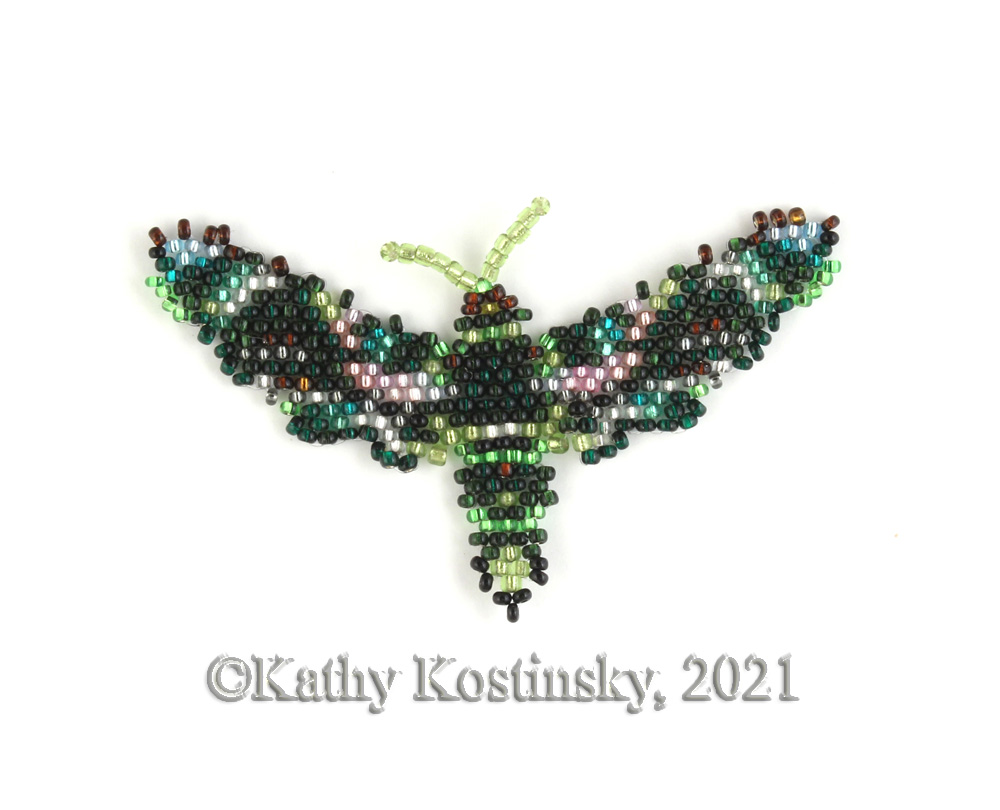
Daphnis nerii (Linnaeus, 1758), or the Oleander Hawk-moth or Army Green moth was described by Carl Linnaeus in 1758.
The moth inhabits wide areas of Africa, Asia and certain Hawaiian Islands. The species migrates to eastern and sothern Europe in summer.
The winspan is 90-100 mm.
The bead butterfly is woven of 16 colours.
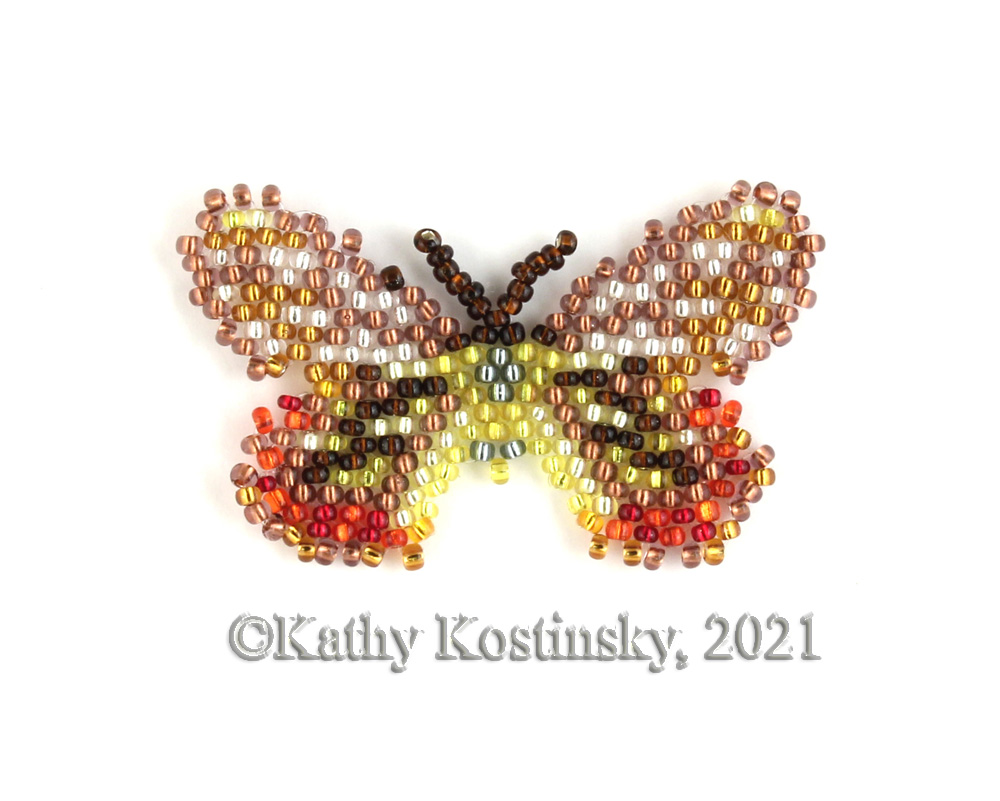
Delias eucharis (Drury, 1773), or the common Jezebel, is found in many areas of south and southeast Asia, especially in the non-arid regions of India, Sri Lanka, Indonesia, Myanmar and Thailand.
This pierid butterfly was first described by British entomologist Dru Drury in 1773.
Bright wings colouration shows te butterfly is unpalatable due to toxins got by the caterpillar from the host plants, mistletoes.
The wingspan is 65-85 mm.
The bead butterfly is woven of 12 colours.
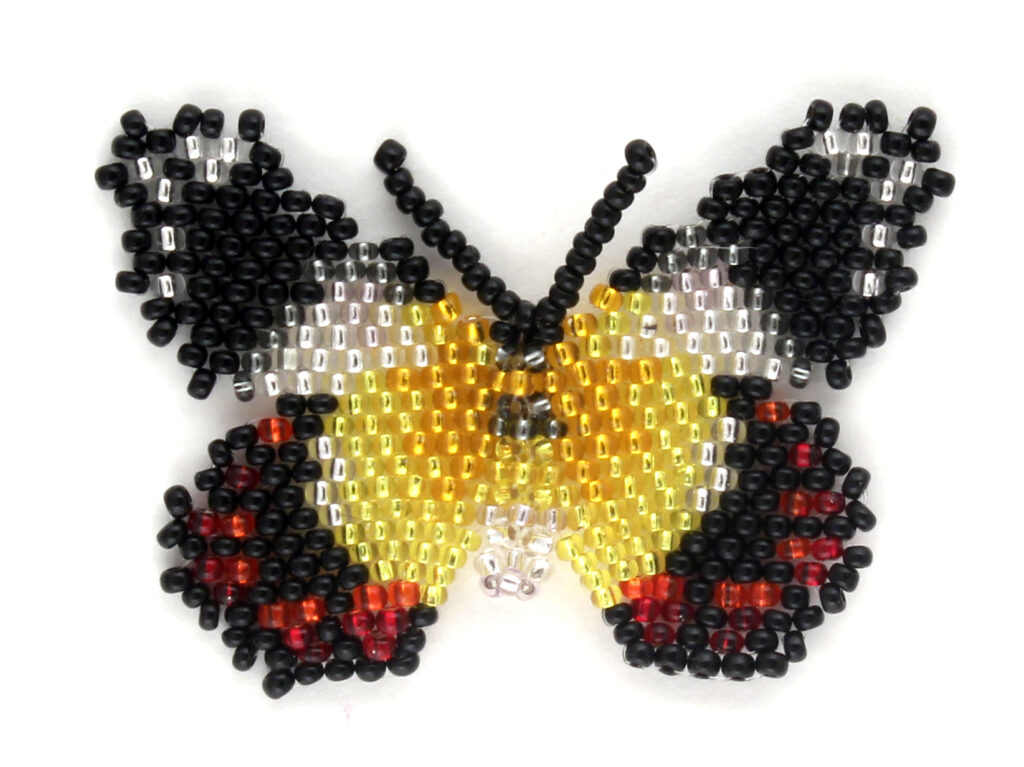
Delias timorensis (Boisduval, 1836) inhabits Australia and Asia.
The wingspan is about 60–70 mm for males and 64–71 mm for females.
The bead butterfly is woven of 10 colours.
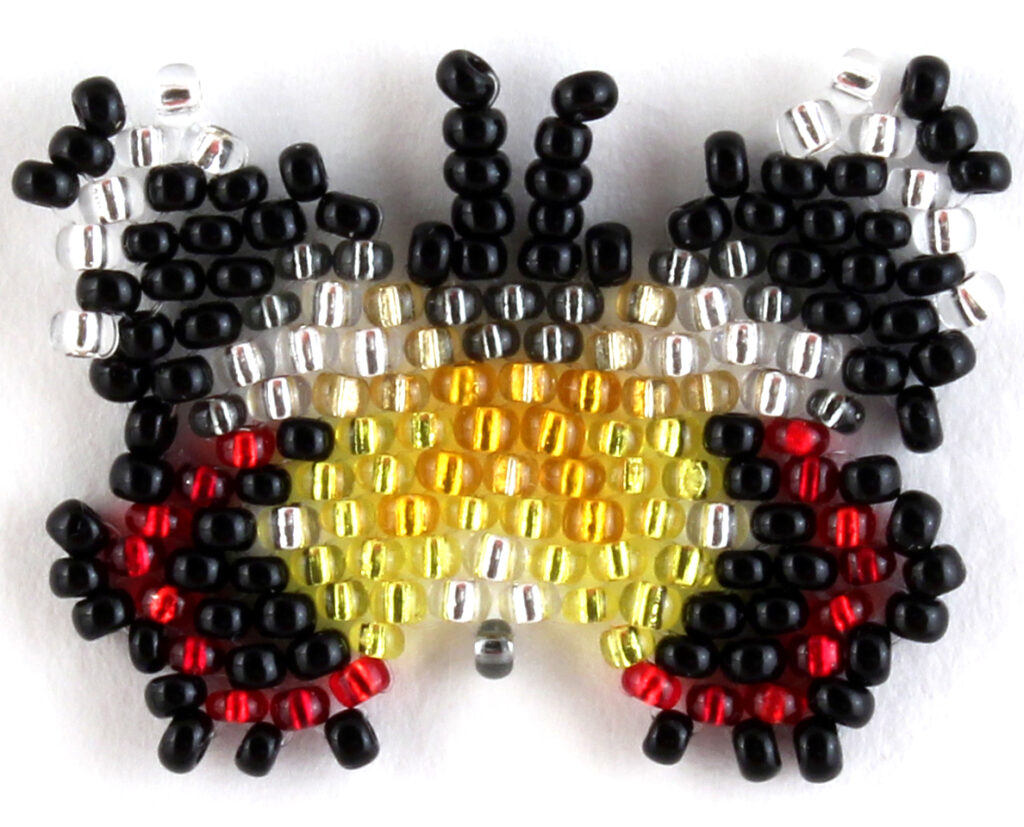
Delias timorensis. babberica (Talbot, 1939) (Babar) is an Australian butterfly.
Its wingspan is about 60-71 mm.
The bead butterfly is woven of 8 colours.
The bead pattern is available at https://bead-patterns.com/beadpattern/butterfly-delias-timorensis-babberica-mini
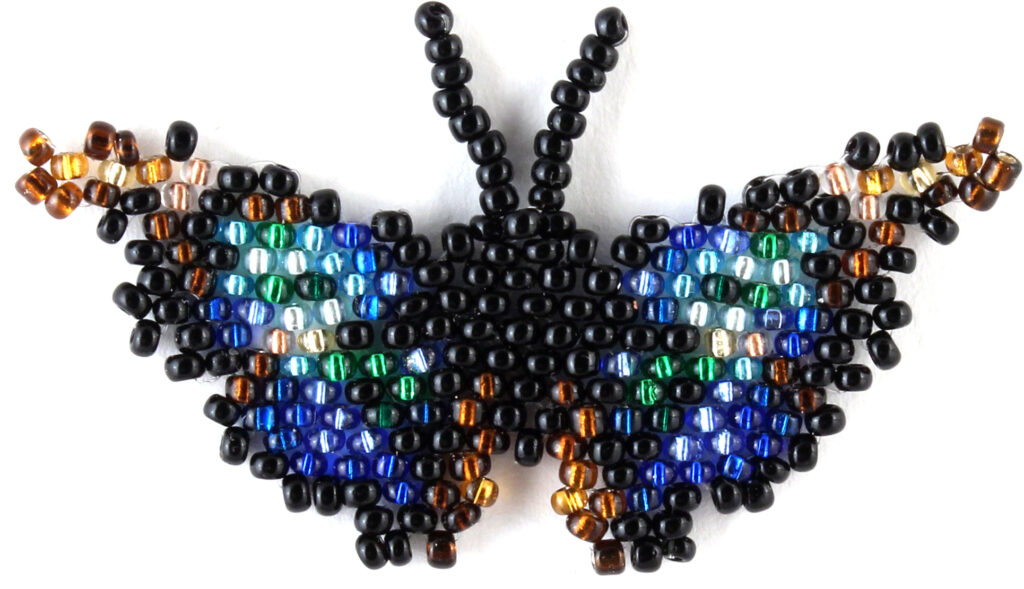
Doxocopa laurentia (Godart, 1823), or common name Turquoise Emperor or Cherubina Emperor is found in Mexico, Brazil, Bolivia, Ecuador, Colombia and Peru.
Its wingspan is about 75 mm.
The bead butterfly is woven of 12 colours.
The bead pattern is available at https://bead-patterns.com/beadpattern/turquoise-emperor-butterfly-doxocopa-laurentia-cherubina-mini
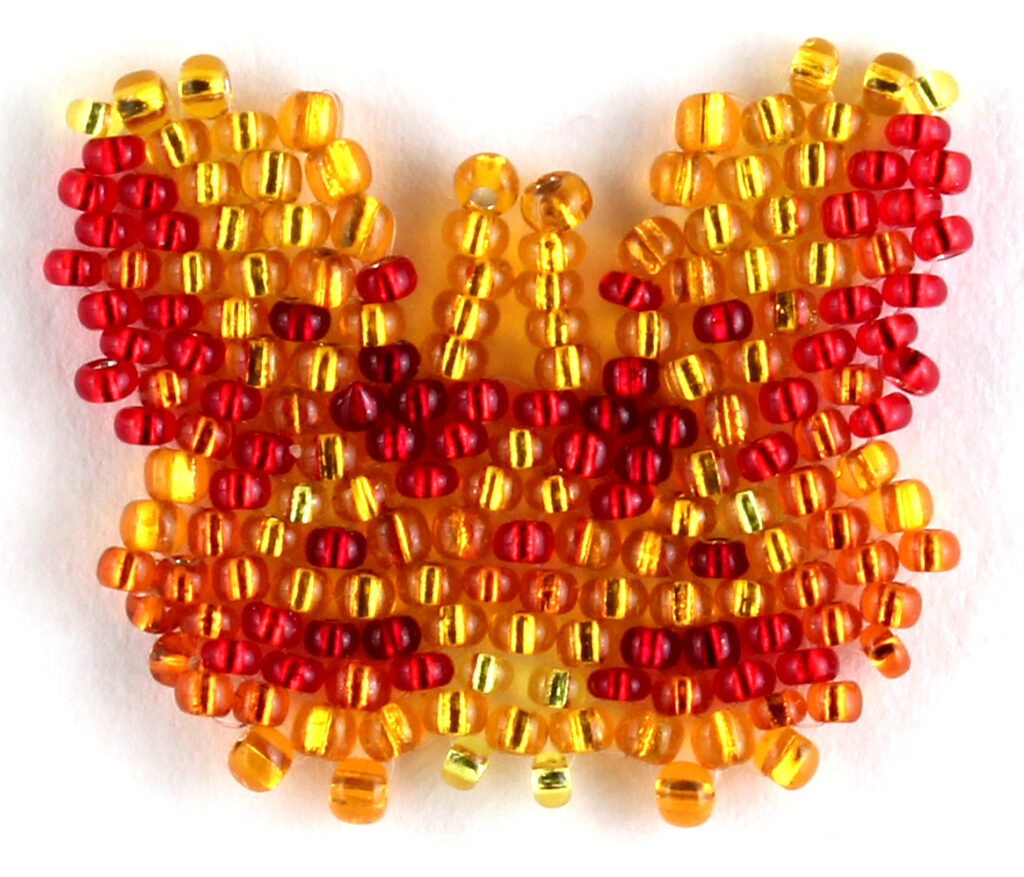
Eacles imperialis (Drury, 1773), or the Imperial moth, is found from Mexico to Canada and from the Rocky Mountains to the Atlantic Coast.
Its wingspan is 80-175 mm.
The bead moth is woven of 7 colours.
The bead pattern is available at https://bead-patterns.com/beadpattern/imperial-moth-eacles-imperialis-mini
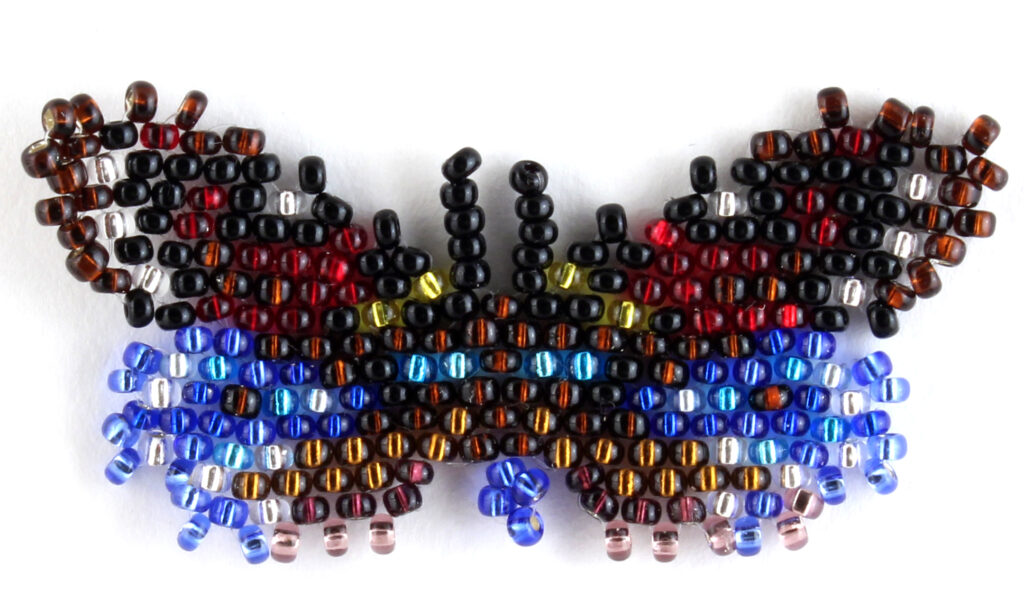
Erasmia sanguiflua (Drury, 1773), or the Indian Blue Moth is found in Burma and Indonesia.
Its wingspan is 75–85 mm.
The bead moth is woven of 14 colours.
The bead pattern is available at https://bead-patterns.com/beadpattern/moth-erasmia-sanguiflua-mini
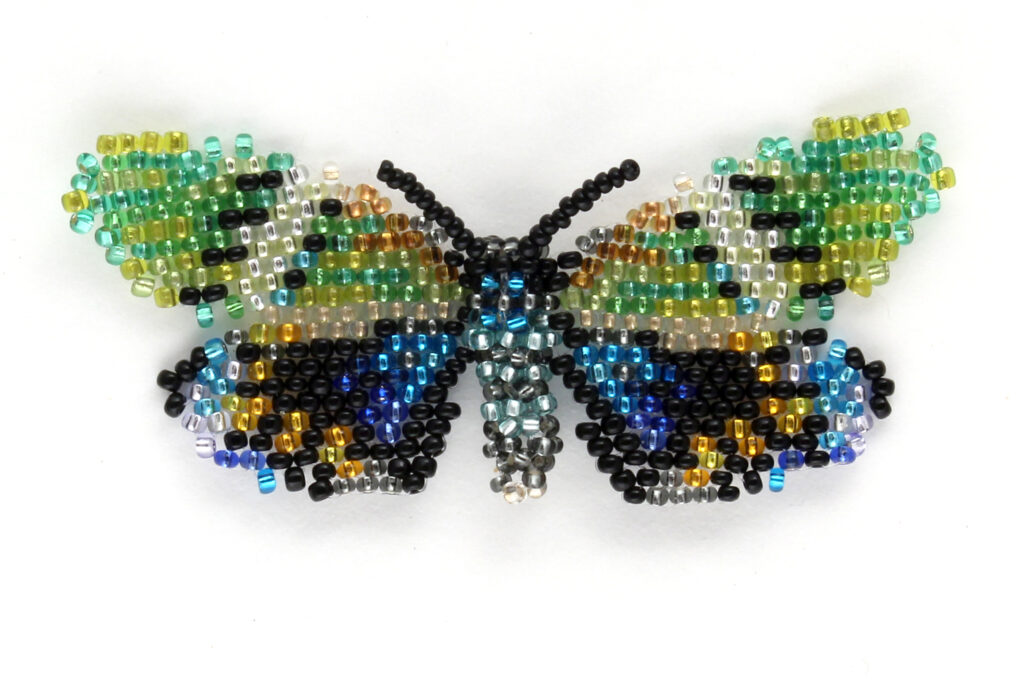
Eterusia repleta (Walker, 1864) is an Asian moth found in Thailand and India.
Its wingspan is 78 mm.
The bead moth is woven of 23 colours.
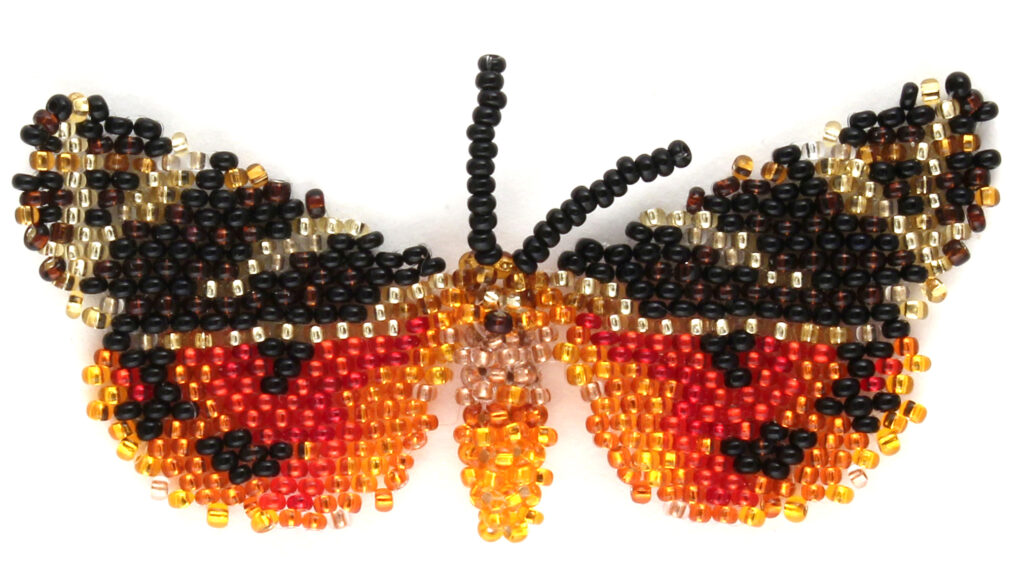
Euplagia quadripunctaria (Poda, 1761), or the Jersey tiger, is a day-flying moth. Its wingspan is 52–65 mm. This moth flies in Europe from Estonia and Latvia in the north to the Mediterranean coast and islands in the south. It is also found in West Russia, South Urals, Asia Minor, Rhodes and nearby islands, the Near East, Caucasus, South Turkmenistan, and Iran. It is also frequent seen in the Channel Islands and was rarely met in the British Isles in Victorian times.
The bead moth is woven of 12 colours.
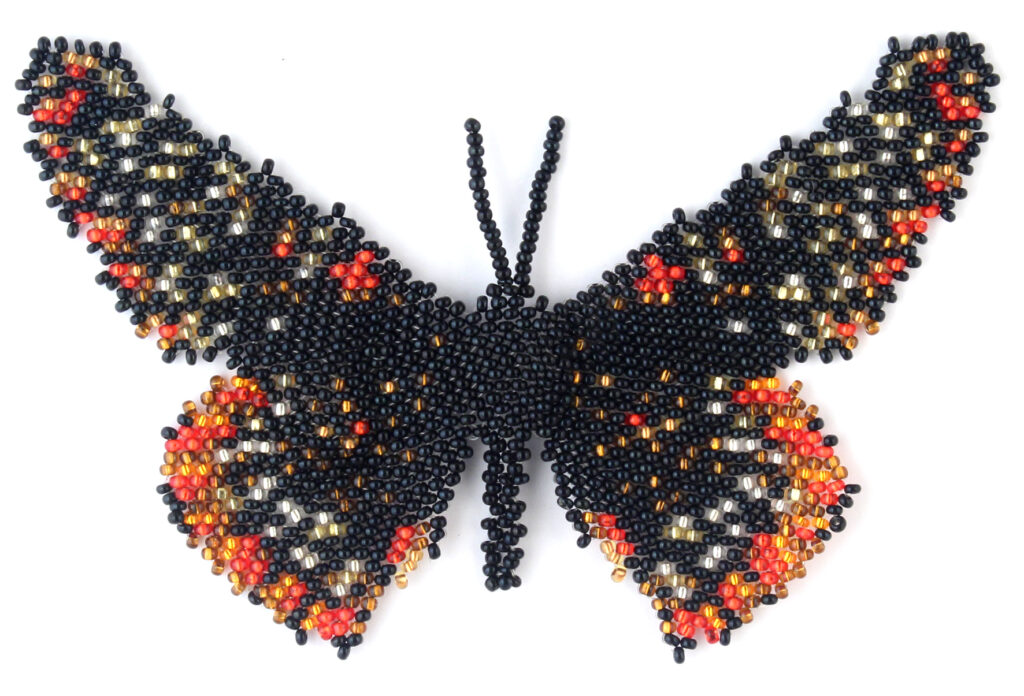
Euphydryas phaeton (Drury, 1773), or Baltimore Checkerspot is a butterfly of North Carolina mountains. Its wingspan is 5-7 cm.
This bead butterfly is woven of 7 colours.
The bead pattern is available at https://bead-patterns.com/beadpattern/butterfly-euphydryas-phaeton
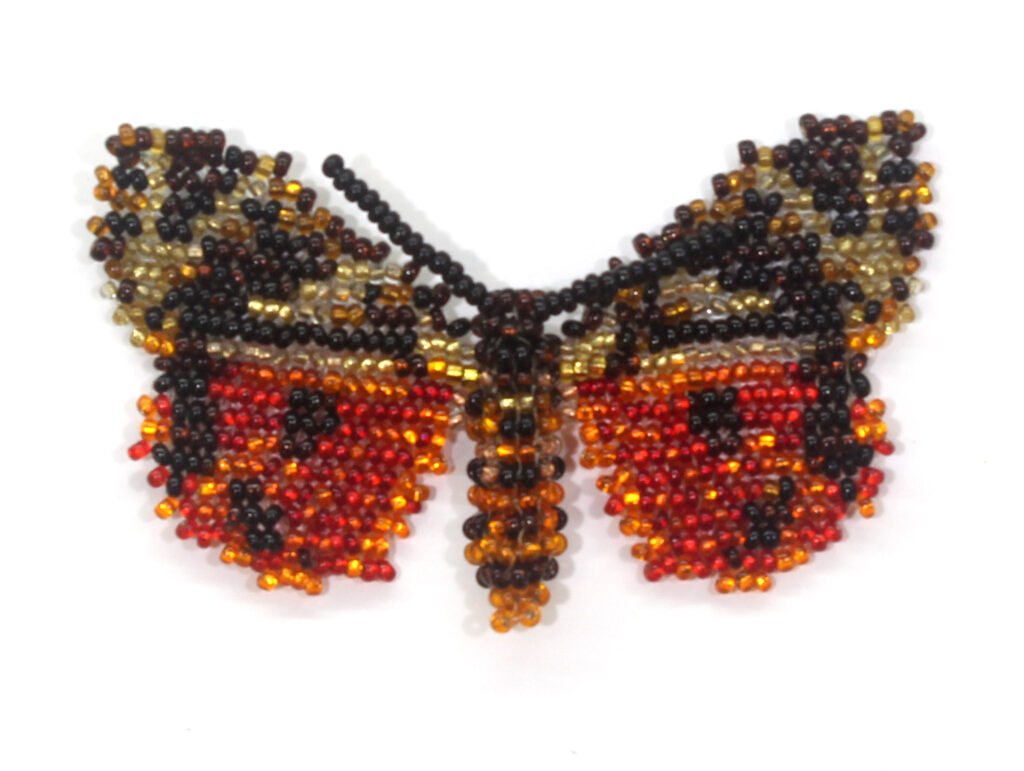
Euplagia quadripunctaria (Poda, 1761), or the Jersey tiger, is a day-flying moth. Its wingspan is 52–65 mm. This moth flies in Europe from Estonia and Latvia in the north to the Mediterranean coast and islands in the south. It is also found in West Russia, South Urals, Asia Minor, Rhodes and nearby islands, the Near East, Caucasus, South Turkmenistan, and Iran. It is also frequent seen in the Channel Islands and was rarely met in the British Isles in Victorian times.
The bead moth is loomed of 12 colours.
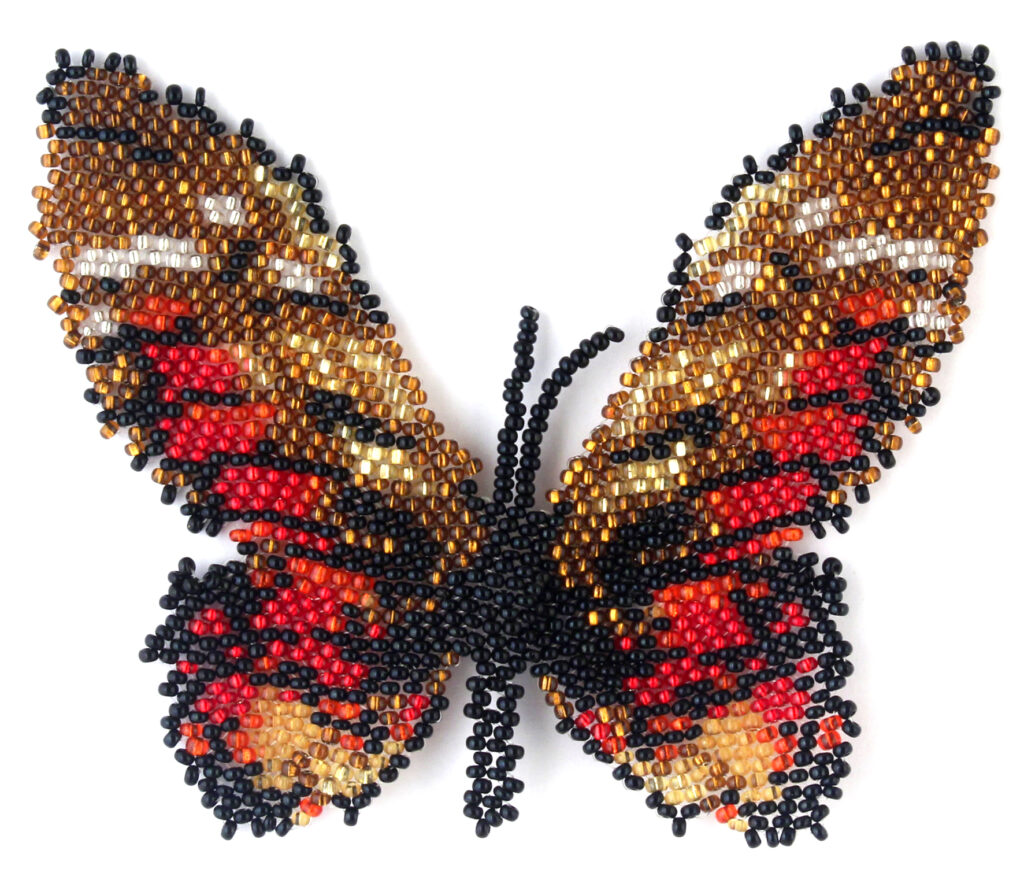
Graphium ridleyanus (White, 1843), or the Acraea swordtail inhabits forests and savannas of Nigeria, Cameroon, Equatorial Guinea, Sao Tome and Principe, Gabon, the Republic of the Congo, Angola, the Central African Republic, the DRC, Chad, southern Sudan, Uganda, Rwanda, Burundi, western Tanzania and Zambia.
The span of its wings is about 8-9 cm.
This bead butterfly is woven of 8 colours.
The bead pattern is available at https://bead-patterns.com/beadpattern/butterfly-graphium-ridleyanus
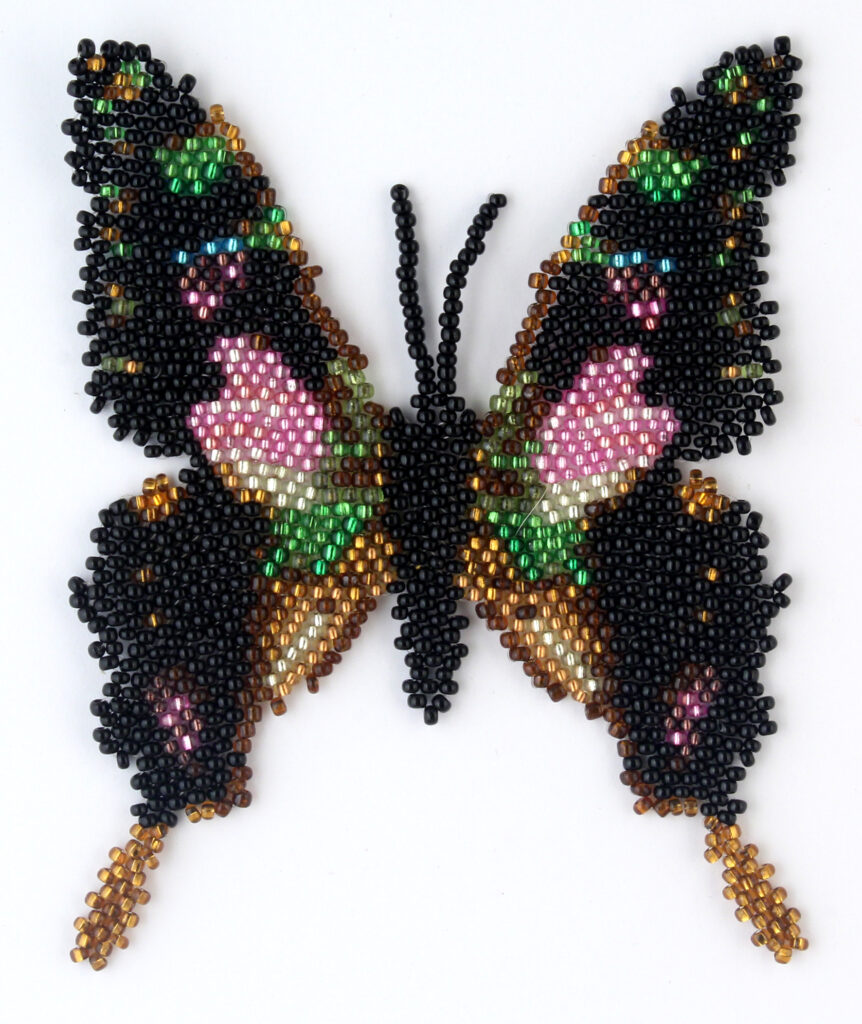
Graphium weiskei (Ribbe, 1900) or Purple Spotted Swallowtail inhabits only mountain regions of Papua New Guinea. It lives at the height 1200-3000 meters above sea level and spends most of its time high in the forest canopy.
The wingspan is 5-6 cm.
This bead butterfly is woven of 16 colours.
The bead pattern is available at https://bead-patterns.com/beadpattern/butterfly-graphium-weiskei